





Top Kubernetes Automation Tools to Streamline Your Workflow

by Tim
October 19, 2025
Kubernetes has become a cornerstone for managing containerized applications, offering scalability and flexibility. However, the complexity of Kubernetes can be a hurdle. That’s where Kubernetes automation tools come in. These tools simplify tasks like deployment, scaling, and monitoring, making Kubernetes more accessible and efficient.
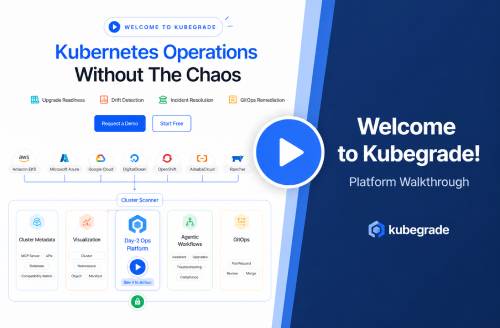
This article explores some of the top Kubernetes automation tools available. These tools can help streamline workflows, reduce operational overhead, and allow teams to focus on building and innovating with platforms like Kubegrade.
Key Takeaways
- Kubernetes automation is crucial for managing complex deployments, improving efficiency, and reducing errors in modern DevOps practices.
- Configuration management tools like Helm, Kustomize, and Ansible streamline application deployment and configuration within Kubernetes.
- CI/CD pipeline automation tools such as Jenkins, GitLab CI, CircleCI, and Argo CD enhance deployment frequency and reliability.
- Infrastructure as Code (IaC) tools like Terraform and Pulumi enable consistent and repeatable infrastructure management through code.
- Monitoring and observability tools, including Prometheus, Grafana, and the ELK Stack, automate the collection, analysis, and visualization of metrics and logs for better application health and performance.
- Selecting the right automation tools depends on specific needs and use cases, with considerations for ease of use, flexibility, and integration capabilities.
- Kubegrade offers a centralized platform to simplify Kubernetes management and automation, providing a comprehensive solution for various automation needs.
Table of Contents
“`html
Introduction to Kubernetes Automation
Kubernetes (K8s) has become a standard for container orchestration, but its complexity can be challenging . As applications grow, managing K8s clusters manually becomes difficult . Kubernetes automation is the practice of using tools and processes to manage, deploy, and scale K8s applications with minimal human intervention .
Kubernetes automation is important for modern DevOps because it increases efficiency, reduces errors, and improves scalability . Automation helps teams deploy applications faster and more reliably. It also allows for better resource utilization and quicker response times to incidents .
Many Kubernetes automation tools are available, each with unique features. This article guides readers in selecting the best Kubernetes automation tools for their needs.
“““html
Configuration Management Tools
Configuration management tools are important for managing and deploying Kubernetes applications. These tools help automate the process of configuring and deploying applications, making it easier to manage complex deployments.
Helm
Helm is a package manager for Kubernetes. It allows users to define, install, and upgrade even the most complex Kubernetes applications. Helm uses charts, which are packages of pre-configured Kubernetes resources, to simplify deployment. For example, a Helm chart can define all the resources needed to run a web application, including deployments, services, and ingress rules.
Helm’s strengths include its ease of use and large community support. However, Helm can be limited in its ability to handle complex configurations.
Kustomize
Kustomize is a Kubernetes configuration customization tool. It allows users to customize Kubernetes resources without modifying the original YAML files. Kustomize uses overlays, which are sets of modifications to apply to a base configuration. For example, Kustomize can be used to change the number of replicas in a deployment or to update the image tag of a container.
Kustomize’s strengths include its flexibility and its ability to manage complex configurations. However, Kustomize can be more difficult to learn than Helm.
Ansible
Ansible is an automation tool that can be used to manage Kubernetes applications. It uses playbooks, which are sets of instructions, to automate tasks. For example, Ansible can be used to deploy applications, configure networking, and manage storage.
Ansible’s strengths include its versatility and its ability to manage a wide range of tasks. However, Ansible can be more complex to set up and use than Helm or Kustomize.
Kubegrade can integrate with these tools to improve configuration management. It provides a centralized platform for managing configurations and deployments, making it easier to track changes and roll back to previous versions.
“““html
Helm: The Kubernetes Package Manager
Helm is a package manager that simplifies Kubernetes application deployment. It streamlines how applications are defined, installed, and upgraded within a Kubernetes cluster. Helm uses packages called “charts,” which contain pre-configured Kubernetes resources.
For example, a Helm chart can define all components needed for a web application: deployments, services, and ingress rules. Instead of managing these resources individually, Helm deploys them as a single unit.
Helm offers several benefits:
- Templating: Helm uses templates to define Kubernetes resources, allowing for customization and reuse.
- Versioning: Helm tracks versions of charts, making it easy to upgrade and rollback deployments.
- Dependency Management: Helm manages dependencies between charts, making sure that all required components are installed.
Helm automates configuration management tasks by providing a repeatable and consistent way to deploy applications.
“““html
Kustomize: Configuration Customization
Kustomize customizes Kubernetes configurations. It lets users tailor application configurations without altering the original YAML files. This approach simplifies managing different environments, such as development, staging, and production.
For example, Kustomize can manage environment-specific settings. Overlays can modify resource requests or environment variables, allowing a single base configuration to adapt to multiple environments.
Kustomize offers benefits like:
- Declarative Configuration: Configurations are defined declaratively, making them easy to understand and manage.
- Simplified Management of Configuration Variations: Kustomize simplifies managing variations across different environments.
“““html
Ansible: Infrastructure Automation for Kubernetes
Ansible is an infrastructure automation tool that works with Kubernetes. It automates tasks like provisioning Kubernetes clusters, deploying applications, and managing configurations. Ansible uses playbooks to automate complex Kubernetes workflows.
For example, an Ansible playbook can automate the process of creating a Kubernetes cluster on a cloud provider, deploying applications to the cluster, and configuring networking and storage.
Ansible provides several benefits:
- Agentless Architecture: Ansible uses SSH to communicate with managed nodes, eliminating the need to install agents.
- Effective Automation Capabilities: Ansible can automate a wide range of tasks, from simple configuration changes to complex application deployments.
“““html
CI/CD Pipeline Automation

CI/CD pipelines are important in Kubernetes deployments. They automate the build, test, and deployment phases of applications, improving deployment frequency and reliability. Kubernetes automation tools play a key role in streamlining CI/CD.
Jenkins
Jenkins is an open-source automation server. It helps automate software development tasks, including building, testing, and deploying applications. Jenkins uses pipelines, which are sets of instructions, to automate these tasks.
GitLab CI
GitLab CI is a part of GitLab that automates the software development lifecycle. It allows users to build, test, and deploy applications directly from their GitLab repositories. GitLab CI uses pipelines defined in YAML files to automate these tasks.
CircleCI
CircleCI is a cloud-based CI/CD platform. It automates the build, test, and deployment phases of applications. CircleCI uses configuration files to define pipelines.
Argo CD
Argo CD is a declarative, GitOps continuous delivery tool for Kubernetes. It automates the deployment of applications to Kubernetes clusters. Argo CD monitors Git repositories for changes and automatically deploys those changes to the cluster.
These tools automate workflows, improving deployment frequency and reliability. They also help to reduce errors and improve the overall quality of software.
Kubegrade complements these tools by providing a centralized management platform for deployments.
“““html
Jenkins: Customizable CI/CD for Kubernetes
Jenkins is a CI/CD tool that can be adapted for Kubernetes. It helps automate builds, tests, and deployments to Kubernetes clusters. Jenkins uses pipelines to automate software development tasks.
To set up Jenkins pipelines, users define Jenkinsfiles that specify the steps to build, test, and deploy applications. These Jenkinsfiles can be stored in the same repository as the application code.
Jenkins offers plugins that can improve Kubernetes integration, such as the Kubernetes plugin and the Docker plugin.
Pros of using Jenkins in a Kubernetes environment include its flexibility and wide range of plugins. Cons include its management overhead, as Jenkins requires configuration and maintenance.
“““html
GitLab CI: Integrated CI/CD within GitLab
GitLab CI offers CI/CD tightly integrated with GitLab repositories. Users define CI/CD pipelines using GitLab CI YAML files for automated builds, tests, and deployments to Kubernetes.
GitLab CI offers features such as auto-scaling runners and review apps. Auto-scaling runners automatically scale the number of runners based on demand, optimizing resource utilization. Review apps create temporary environments for testing changes before they are merged into the main branch.
Benefits of using GitLab CI for Kubernetes deployments include its ease of use and built-in security features.
“““html
CircleCI: Cloud-Based CI/CD for Kubernetes
CircleCI is a cloud-based CI/CD platform optimized for Kubernetes. It helps configure CI/CD pipelines to automate builds, tests, and deployments to Kubernetes clusters.
CircleCI uses orbs and integrations for simplified Kubernetes workflows. Orbs are reusable packages of configuration that simplify complex tasks. Integrations with tools like Helm and kubectl streamline deployments.
Advantages of using CircleCI for Kubernetes include its scalability and ease of setup.
“““html
Argo CD: Declarative GitOps for Kubernetes
Argo CD uses a GitOps approach to Kubernetes deployments. It automates the synchronization of application state from Git repositories to Kubernetes clusters. This ensures that the desired state defined in Git is always reflected in the cluster.
Argo CD manages deployments, rollbacks, and configuration changes. It monitors Git repositories for changes and automatically applies those changes to the Kubernetes cluster.
Benefits of using Argo CD for Kubernetes include its declarative configuration and automated reconciliation.
“““html
Infrastructure as Code (IaC) Tools
Infrastructure as Code (IaC) involves managing and provisioning infrastructure through code, offering consistency and repeatability. It’s beneficial for Kubernetes, where infrastructure can be complex and changeable. Kubernetes automation tools and IaC together help save costs and improve efficiency.
Terraform
Terraform automates the provisioning and management of infrastructure. It uses declarative configuration files to define the desired state of the infrastructure. Terraform then creates and modifies resources to match that state.
Pulumi
Pulumi is another IaC tool. It allows users to define infrastructure using code in familiar programming languages. Pulumi supports languages like Python, JavaScript, and Go.
IaC simplifies infrastructure changes and ensures consistency across environments. For example, updating a Kubernetes cluster can be done by modifying the code and applying the changes, rather than manually configuring each resource.
“““html
Terraform for Kubernetes Infrastructure
Terraform enables Infrastructure as Code for Kubernetes. It provisions and manages Kubernetes clusters across different cloud providers. Terraform uses declarative configuration files to define the desired state of infrastructure, creating and modifying resources to match this state.
Terraform configurations create Kubernetes resources like nodes, networks, and storage. For example, a Terraform configuration can define the number and size of nodes in a Kubernetes cluster, as well as the networking and storage resources.
Benefits of using Terraform for Kubernetes include its declarative syntax and state management capabilities. The declarative syntax simplifies defining infrastructure, while state management tracks the current state of infrastructure, preventing conflicts and errors.
“““html
Pulumi for Kubernetes Infrastructure
Pulumi is an Infrastructure as Code tool for Kubernetes. It defines Kubernetes infrastructure using programming languages like Python, JavaScript, and Go. This allows users to leverage existing skills and tools to manage infrastructure.
Pulumi programs create and manage Kubernetes resources. For example, a Pulumi program can define a Kubernetes deployment, service, and ingress using Python code.
Advantages of using Pulumi for Kubernetes include its strong typing, component model, and support for multiple cloud providers.
“““html
Monitoring and Observability Automation

Monitoring and observability are important in Kubernetes environments. They help ensure the health and performance of applications. Tools like Prometheus, Grafana, and ELK Stack automate the collection, analysis, and visualization of metrics and logs.
Prometheus
Prometheus collects and stores metrics as time-series data. It offers a query language to analyze metrics and generate alerts.
Grafana
Grafana visualizes metrics and logs from various sources, including Prometheus. It creates dashboards to monitor application performance and identify issues.
ELK Stack
The ELK Stack (Elasticsearch, Logstash, Kibana) collects, analyzes, and visualizes logs. It helps in troubleshooting issues and learning about application behavior.
These tools automate alerts and dashboards. For example, automated alerts can notify teams when CPU usage exceeds a threshold, or when error rates increase. Dashboards provide a view of key performance indicators, allowing teams to quickly identify and address issues.
Kubernetes automation tools play a key role in early issue detection and resolution.
“““html
Prometheus: Metrics Collection and Monitoring
Prometheus collects and monitors metrics in Kubernetes. It is configured to scrape metrics from Kubernetes pods and nodes, gathering data on resource usage, application performance, and system health.
PromQL queries analyze metrics and create alerts. For example, a PromQL query can calculate the average CPU usage of a pod over a period of time and trigger an alert if it exceeds a threshold.
Benefits of using Prometheus for Kubernetes monitoring include its multi-dimensional data model and alerting capabilities. The multi-dimensional data model allows for flexible querying and analysis of metrics, while the alerting capabilities enable early detection of issues.
“““html
Grafana: Visualization and Dashboarding
Grafana visualizes metrics and creates dashboards for Kubernetes. It connects to Prometheus to visualize Kubernetes metrics, offering insights into application performance and resource utilization.
Dashboards monitor CPU usage, memory utilization, and network traffic. These dashboards provide a view of key performance indicators, enabling teams to identify and address issues.
Benefits of using Grafana for Kubernetes observability include its customizable dashboards and alerting features.
“““html
ELK Stack: Logging and Analysis
The ELK Stack (Elasticsearch, Logstash, Kibana) provides logging and analysis in Kubernetes. Logstash collects logs from Kubernetes pods and nodes, gathering data on application behavior and system events.
Elasticsearch indexes and stores logs for searching and analysis. This allows users to quickly find and analyze log data.
Kibana visualizes logs and creates dashboards. These dashboards provide a view of log data, enabling teams to identify and troubleshoot issues.
Benefits of using the ELK Stack for Kubernetes observability include its centralized logging and search capabilities.
“““html
Conclusion: Choosing the Right Automation Tools
This article covered several Kubernetes automation tools, including configuration management tools like Helm and Kustomize, CI/CD tools like Jenkins and GitLab CI, and IaC tools like Terraform and Pulumi. Monitoring and observability tools such as Prometheus, Grafana, and the ELK Stack were also discussed.
Automation offers benefits for Kubernetes deployments, including improved efficiency, reduced errors, and scalability. Selecting the right tools depends on specific needs and use cases.
Kubegrade simplifies Kubernetes management and automation. Explore Kubegrade for a comprehensive solution to your Kubernetes automation tools needs.
Start a free trial or request a demo today!
“`

