


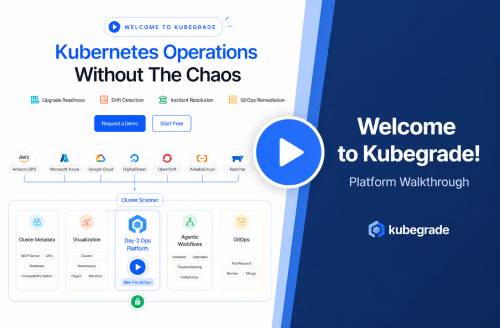


Managed Kubernetes: A Comprehensive Guide

by Tim
October 11, 2025
Managed Kubernetes simplifies the deployment, scaling, and operation of containerized applications. It allows organizations to use Kubernetes without the difficulties of in-house management. With a managed service, a provider handles the underlying infrastructure, including the control plane, while users focus on deploying and managing their applications.
This approach streamlines operations, reduces the burden on teams, and enables businesses to concentrate on development and innovation. Kubegrade offers a platform for secure and automated K8s operations, including monitoring, upgrades, and optimization, making it easier for businesses to adopt and manage Kubernetes.
Key Takeaways
- Managed Kubernetes simplifies application deployment, scaling, and management by abstracting away infrastructure complexities.
- Key benefits include automated upgrades, improved security, better resource utilization, and reduced operational overhead.
- Managed Kubernetes architecture includes a control plane (managed by the provider), worker nodes, and networking components.
- Common use cases include microservices deployment, CI/CD pipelines, big data processing, and machine learning.
- Kubegrade is a platform that simplifies Kubernetes management through automation, monitoring, and optimization.
- Getting started with Kubegrade involves account creation, cluster configuration, and application deployment.
- Optimizing performance and security involves monitoring resource utilization, implementing security policies, and automating updates.
Table of Contents
“`html
Introduction to Managed Kubernetes

Kubernetes (K8s) has become vital for deploying applications [i]. It’s a system that automates the deployment, scaling, and management of applications [i]. As more businesses adopt cloud-native strategies, Kubernetes helps them manage complex application deployments [i].
Managed Kubernetes simplifies cluster management. It offers a platform where the provider handles the underlying infrastructure, upgrades, and security [i]. This approach solves many challenges of traditional Kubernetes setups, such as the need for specialized expertise and the burden of infrastructure maintenance [i].
Kubegrade simplifies Kubernetes cluster management. It’s a platform for secure and automated K8s operations, enabling monitoring, upgrades, and optimization. Managed Kubernetes reduces operational overhead and improves resource utilization. This allows teams to focus on development and innovation rather than infrastructure management.
“““html
Key Benefits of Managed Kubernetes
Managed Kubernetes offers several advantages, including simplified deployment and automated upgrades . Providers handle the intricacies of setting up and maintaining the underlying infrastructure, allowing businesses to focus on application development .
Simplified Deployment
Managed Kubernetes simplifies the deployment process . Instead of spending time on configuration, networking, and provisioning, teams can quickly deploy clusters . This faster deployment helps businesses accelerate their time to market . For example, a growing e-commerce startup can use a managed Kubernetes service to quickly scale its containerized application .
Automated Upgrades
Keeping Kubernetes clusters up to date is important for security and performance . Managed Kubernetes automates updates, reducing the risk of downtime and compatibility issues . Kubegrade streamlines complex processes by enabling users to upgrade clusters seamlessly, reducing upgrade cycles from weeks to hours .
Improved Security
Managed Kubernetes often includes built-in security protocols and expertise in cloud-based security, protecting against vulnerabilities . These services offer security configurations and manage security patches, guaranteeing a secure environment for applications . Kubegrade supports compliance through continuous cluster management, allowing real-time or scheduled patch applications to meet SLAs .
Improved Resource Utilization
Managed Kubernetes improves resource utilization through features like automatic scaling and load balancing . This makes sure businesses pay only for the resources they consume . Kubegrade facilitates rightsizing and cost optimizations by providing tools to monitor cluster health and manage resources effectively .
Reduced Operational Complexity
By abstracting away the intricacies of infrastructure management, Managed Kubernetes reduces operational complexity . This allows development teams to focus on building and deploying applications . Managed Kubernetes helps reduce the engineer scarcity problem because fewer resources are needed to support the day-to-day operations of the cluster .
Cost Savings
Managed Kubernetes can lead to significant cost savings . By automating scaling and load balancing, businesses can optimize their cloud costs . Managed Kubernetes allows you to seamlessly scale your cluster resources up and down as your needs change, translating into significant savings on computing resources . Kubegrade?s advanced cost attribution features are designed for enterprises running complex, multi-cloud, or hybrid environments .
“““html
Simplified Deployment and Management
Managed Kubernetes simplifies how applications are deployed and managed. It includes automated provisioning, scaling, and updates. These features lower the operational burden on development teams .
- Automated Provisioning: Managed Kubernetes automates the setup of the underlying infrastructure. This reduces the time needed to provision resources .
- Automated Scaling: Automatic scaling adjusts resources based on application demand. This ensures optimal performance and cost efficiency .
- Automated Updates: Managed Kubernetes automates updates, decreasing downtime and compatibility issues .
These features allow development teams to focus on coding and innovation rather than infrastructure . For instance, Kubegrade streamlines these processes, providing users with a platform to manage their Kubernetes clusters. This leads to significant time and cost savings. One example is a reduction in deployment times from days to hours. Businesses can also save on operational costs by automating scaling and resource management with Kubegrade.
“““html
Automated Upgrades and Patching
Automated upgrades and patching are important for maintaining a secure and stable Kubernetes environment. Managed Kubernetes automates these tasks, which lowers the risk of downtime and security vulnerabilities .
Manual upgrades can be difficult and prone to error. They often require careful planning and execution to avoid disrupting applications. Automating this process makes sure that upgrades and patches are applied consistently and efficiently .
Benefits of automation:
- Reduced Downtime: Automated upgrades minimize the downtime associated with manual updates .
- Security: Automated patching makes sure that security vulnerabilities are addressed quickly .
- Efficiency: Automation frees up IT teams to focus on other tasks .
Kubegrade offers seamless and reliable upgrades. The platform automates the upgrade process, reducing the risk of errors and downtime. This allows businesses to maintain a secure and stable Kubernetes environment without manual intervention.
“““html
Improved Security
Managed Kubernetes provides security advantages through built-in security policies, access controls, and vulnerability scanning. These features protect Kubernetes clusters from threats .
- Security Policies: Managed Kubernetes includes predefined security policies that enforce best practices.
- Access Controls: Role-based access control (RBAC) restricts access to cluster resources, preventing unauthorized access .
- Vulnerability Scanning: Regular vulnerability scans identify and address potential security issues .
Managed Kubernetes providers help to meet industry standards and regulations. They offer security configurations and manage security patches, guaranteeing a secure environment for applications. Managed Kubernetes can prevent security breaches, such as data leaks and unauthorized access, by implementing strong security measures .
Kubegrade improves the security of Kubernetes clusters. The platform provides security features that help businesses maintain a strong security posture. This makes sure that applications and data are protected from threats.
“““html
Improved Scalability and Resource Utilization
Managed Kubernetes improves how resources are used with features like auto-scaling, load balancing, and resource optimization. These features allow applications to handle different workloads efficiently .
- Auto-Scaling: Automatically adjusts resources based on application demand. This makes sure that applications perform well during peak times .
- Load Balancing: Distributes traffic across multiple instances of an application. This prevents overload and improves availability .
- Resource Optimization: Managed Kubernetes optimizes resource allocation, reducing waste and improving efficiency .
Managed Kubernetes can reduce infrastructure costs through better resource use. By automatically scaling resources, businesses pay only for what they need. Managed Kubernetes optimization tools help users maximize the efficiency of their Kubernetes deployments. This results in lower costs and better performance.
“““html
Grasping Managed Kubernetes Architecture

A Managed Kubernetes cluster consists of several components, each with specific roles. The service provider manages and maintains these components, simplifying Kubernetes management for users .
Control Plane
The control plane manages the cluster. It includes components like the API server, etcd, scheduler, and controller manager . The service provider manages the control plane, guaranteeing its availability and reliability .
Worker Nodes
Worker nodes run applications. They include the kubelet, which communicates with the control plane, and the container runtime, which runs containers . The service provider manages the worker nodes, including patching and scaling .
Networking
Networking enables communication between containers, services, and external clients. It includes components like the Kubernetes service proxy (kube-proxy) and networking plugins . The service provider manages the networking infrastructure, guaranteeing seamless connectivity .
Comparison of Offerings
Different Managed Kubernetes offerings may have variations in architecture and features. Some providers offer more customization options, while others prioritize simplicity and ease of use . It’s important to evaluate these differences when choosing a Managed Kubernetes provider .
Kubegrade fits into this architecture by monitoring, managing, and optimizing the cluster. Kubegrade provides tools for monitoring cluster health, managing resources, and optimizing performance. This helps users to maximize the efficiency and reliability of their Kubernetes deployments.
“““html
Control Plane Components
The Kubernetes control plane includes several components that manage the cluster. In a managed environment, the service provider handles these components, making sure of high availability and reliability .
- API Server: The API server is the front end for the Kubernetes control plane. It exposes the Kubernetes API, which is used to interact with the cluster .
- Scheduler: The scheduler assigns pods to worker nodes based on resource requirements and availability .
- etcd: etcd is a distributed key-value store that stores the cluster’s configuration data .
- Controller Manager: The controller manager runs controller processes that regulate the state of the cluster .
The service provider manages these components, including patching, upgrading, and scaling. This reduces the operational burden on users and makes sure that the control plane is always available .
Kubegrade interacts with the control plane to provide monitoring and management capabilities. It collects data from the API server and other control plane components to provide insights into cluster health and performance. Kubegrade also uses the Kubernetes API to manage resources and automate tasks.
“““html
Worker Node Infrastructure
Worker nodes are machines that run applications in a Managed Kubernetes cluster. The service provider provisions, scales, and maintains these nodes .
- Kubelet: The kubelet is an agent that runs on each worker node. It communicates with the control plane and manages the containers running on the node .
- Kube-Proxy: The kube-proxy is a network proxy that runs on each worker node. It implements Kubernetes service abstraction by routing traffic to the appropriate containers .
- Container Runtime: The container runtime runs containers on the worker node. Common container runtimes include Docker and containerd .
The service provider manages the worker nodes, including provisioning, scaling, and patching. This reduces the operational burden on users and makes sure that the worker nodes are always available .
Kubegrade monitors the health and performance of worker nodes, providing insights into resource utilization and potential issues. This allows users to optimize resource allocation and troubleshoot problems quickly.
“““html
Networking in Managed Kubernetes
Networking enables communication within a Managed Kubernetes cluster. It handles how services are exposed and how pods communicate with each other .
- Service Exposure: Services are exposed using Kubernetes Service objects. These objects provide a stable IP address and DNS name for accessing applications .
- Inter-Pod Communication: Pods communicate with each other using Kubernetes networking. This is typically implemented using a software-defined network (SDN) .
- Network Policies: Network policies control traffic between pods. They allow users to define rules that specify which pods can communicate with each other .
Network policies are managed to control traffic and isolate workloads. This helps to improve security and stability .
Kubegrade integrates with the networking layer to provide monitoring and security features. This allows users to gain visibility into network traffic and enforce security policies. Kubegrade can help detect and prevent network-based attacks, guaranteeing the security of applications.
“““html
Use Cases for Managed Kubernetes
Managed Kubernetes is useful in many scenarios. It helps with microservices deployment, CI/CD pipelines, big data processing, and machine learning .
Microservices Deployment
Managed Kubernetes simplifies the deployment and management of microservices. It provides features like service discovery, load balancing, and auto-scaling, which are important for microservices architectures . Companies like Netflix and Spotify use Kubernetes to manage their microservices .
CI/CD Pipelines
Managed Kubernetes integrates with CI/CD pipelines. This allows teams to automate the deployment of applications. It enables faster feedback loops and speeds up the release process .
Big Data Processing
Managed Kubernetes can be used for big data processing. It provides the resources needed to run big data workloads. Companies like Airbnb use Kubernetes to manage their data processing pipelines .
Machine Learning
Managed Kubernetes supports machine learning workloads. It provides the resources needed to train and deploy machine learning models. It enables faster experimentation and speeds up the development of machine learning applications .
Managed Kubernetes enables faster innovation, improved agility, and better resource use in these use cases. It allows teams to focus on building applications rather than managing infrastructure. Kubegrade supports and improves these scenarios by providing tools for monitoring, managing, and optimizing Kubernetes clusters.
“““html
Microservices Deployment
Managed Kubernetes simplifies the deployment and management of microservices architectures. It provides features like service discovery, load balancing, and fault tolerance .
- Service Discovery: Kubernetes provides service discovery, allowing microservices to find and communicate with each other .
- Load Balancing: Kubernetes load balances traffic across multiple instances of a microservice, guaranteeing high availability .
- Fault Tolerance: Kubernetes provides fault tolerance by automatically restarting failed microservices .
Companies like Netflix and Spotify have adopted Kubernetes for microservices. Kubernetes helps them manage the complexity of their microservices architectures .
Kubegrade supports and improves microservices deployments by providing tools for monitoring and scaling. Kubegrade allows users to monitor the health and performance of their microservices, identify issues, and scale resources as needed. This makes sure that microservices are always available and performing optimally.
“““html
CI/CD Pipelines
Managed Kubernetes integrates with CI/CD pipelines to enable faster and more reliable software releases. It automates the deployment and testing of applications .
Benefits of using Managed Kubernetes for CI/CD:
- Reduced Deployment Time: Managed Kubernetes automates the deployment process, reducing the time it takes to release new software .
- Improved Code Quality: Managed Kubernetes enables automated testing, which helps to improve code quality .
- Increased Reliability: Managed Kubernetes provides features like rolling updates and rollbacks, which increase the reliability of software releases .
Managed Kubernetes automates the deployment and testing of applications, making the release process faster and more reliable. This allows teams to deliver new features and bug fixes more quickly .
Kubegrade streamlines CI/CD workflows and provides visibility into the deployment process. This allows teams to track the progress of deployments, identify issues, and resolve them quickly. Kubegrade helps teams to automate their CI/CD pipelines and improve the reliability of their software releases.
“““html
Big Data Processing
Managed Kubernetes can be used for big data processing workloads. It provides features like resource management, and data locality .
- Scalability: Kubernetes can scale big data workloads to handle large amounts of data .
- Resource Management: Kubernetes provides resource management features to allocate resources to big data workloads .
- Data Locality: Kubernetes can be configured to schedule big data workloads on nodes that are close to the data, improving performance .
Companies like Airbnb have adopted Kubernetes for big data processing. Kubernetes helps them manage their data processing pipelines .
Kubegrade supports and optimizes big data processing on Kubernetes. It provides tools for resource allocation and performance monitoring. Kubegrade helps users to optimize their big data workloads and improve performance.
“““html
Machine Learning
Managed Kubernetes supports machine learning workloads. It simplifies the deployment and management of machine learning models .
Benefits of using Managed Kubernetes for machine learning:
- Improved Scalability: Managed Kubernetes enables machine learning models to scale to handle large amounts of data .
- Better Resource Utilization: Managed Kubernetes optimizes resource use for machine learning workloads .
- Simplified Deployment: Managed Kubernetes simplifies the deployment of machine learning models .
Managed Kubernetes simplifies the deployment and management of machine learning models. This allows data scientists and machine learning engineers to focus on building and training models rather than managing infrastructure .
Kubegrade streamlines machine learning workflows and provides the resources needed for training and inference. Kubegrade allows users to easily deploy and manage machine learning models, and it provides the resources needed to train and run those models. Kubegrade helps teams to accelerate their machine learning projects and improve the performance of their models.
“““html
Getting Started with Kubegrade
This section provides a step-by-step guide on how to get started with Kubegrade for Managed Kubernetes. It covers the initial setup process, including account creation, cluster configuration, and application deployment .
- Account Creation: The first step is to create an account on the Kubegrade platform. Visit the Kubegrade website and follow the instructions to create an account .
- Cluster Configuration: Once you have an account, you can configure your Kubernetes cluster. Kubegrade supports multiple Managed Kubernetes providers. Select your provider and follow the instructions to connect your cluster to Kubegrade .
- Application Deployment: After configuring your cluster, you can deploy applications using Kubegrade. Kubegrade provides a user-friendly interface for deploying and managing applications .
Practical tips and best practices for optimizing performance and security:
- Monitor Resource Utilization: Use Kubegrade to monitor resource use and identify potential bottlenecks .
- Implement Security Policies: Implement security policies to protect your Kubernetes clusters from threats .
- Automate Updates: Automate updates to make sure that your Kubernetes clusters are always up-to-date with the latest security patches .
Kubegrade simplifies Kubernetes management. Explore Kubegrade’s documentation and support resources for assistance.
“““html
Account Creation and Initial Setup
This section guides users through creating an account on Kubegrade. It provides instructions on how to navigate the platform and configure initial settings .
- Visit the Kubegrade Website: Go to the Kubegrade website .
- Create an Account: Click on the “Sign Up” button and follow the instructions to create an account. You will need to provide your email address and create a password .
- Verify Your Email: Check your email inbox for a verification email from Kubegrade. Click on the link in the email to verify your account .
- Log In: Log in to your Kubegrade account using your email address and password .
- Configure Initial Settings: Once you are logged in, you will be prompted to configure your initial settings. This includes setting up your profile and configuring your security preferences .
Set up security measures during the initial setup to protect your account and data.
“““html
Connecting Your Kubernetes Cluster
This section provides a guide on how to connect an existing Kubernetes cluster to Kubegrade. It covers different connection methods and offers tips for common issues .
- Choose a Connection Method: Kubegrade offers different ways to connect your Kubernetes cluster. You can use the Kubegrade agent or integrate with cloud provider APIs .
- Install the Kubegrade Agent (if applicable): If you choose to use the Kubegrade agent, download the agent from the Kubegrade website and install it on your Kubernetes cluster. Follow the instructions provided by Kubegrade .
- Integrate with Cloud Provider APIs (if applicable): If you choose to integrate with cloud provider APIs, follow the instructions provided by Kubegrade to configure the integration .
- Verify the Connection: Once you have connected your Kubernetes cluster to Kubegrade, verify the connection by checking the Kubegrade dashboard. You should see your Kubernetes cluster listed in the dashboard .
Kubegrade connects to and manages the cluster without compromising its integrity. It uses secure communication protocols and access controls to protect your Kubernetes cluster .
“““html
Deploying Your First Application
This section walks users through deploying their first application on a Managed Kubernetes cluster using Kubegrade. It provides an example application and demonstrates how to deploy it using Kubegrade’s deployment tools .
- Create a Deployment: In the Kubegrade dashboard, create a new deployment for your application. Provide a name for your deployment and select the Kubernetes cluster you want to deploy to .
- Configure Application Settings: Configure application settings, such as resource limits and scaling policies. You can specify the amount of CPU and memory to allocate to your application, as well as the minimum and maximum number of replicas .
- Deploy the Application: Deploy the application by clicking on the “Deploy” button. Kubegrade will automatically create the necessary Kubernetes resources, such as deployments, services, and pods .
- Verify the Deployment: Verify the deployment by checking the Kubegrade dashboard. You should see your application running in the dashboard .
Kubegrade simplifies application deployment with features like automated rollouts and rollbacks. These features make it easy to deploy and manage applications on Kubernetes, even for users who are new to Kubernetes.
“““html
Optimizing Performance and Security
This section offers tips for optimizing the performance and security of Kubernetes clusters using Kubegrade. It covers resource optimization, security hardening, and monitoring .
- Resource Optimization: Use Kubegrade to monitor resource utilization and identify potential bottlenecks. Adjust resource limits and scaling policies to optimize resource allocation .
- Security Hardening: Implement security policies to protect your Kubernetes clusters from threats. Use Kubegrade to scan for vulnerabilities and enforce security best practices .
- Monitoring: Monitor the health and performance of your Kubernetes clusters using Kubegrade. Set up alerts to be notified of potential issues .
Kubegrade’s tools can be used to identify and address performance bottlenecks and security vulnerabilities. By optimizing resources and implementing security best practices, you can improve the efficiency and security of your Kubernetes deployments.
“““html
Conclusion
Managed Kubernetes offers benefits, making it important in modern application development. It simplifies deployment, automates upgrades, improves security, and optimizes resource use. Managed Kubernetes helps teams focus on building applications rather than managing infrastructure .
Kubegrade simplifies Kubernetes cluster management, enabling secure, operations. Readers should explore Kubegrade further and consider it for their Kubernetes needs.
Sign up for a free trial or request a demo to see how Kubegrade can help you simplify your Kubernetes management.
“`

