New

Data Evolves. Your Monitoring Should Too. Introducing Flexible Thresholds.

GitOps
Remediation

Trusted by platform teams running Kubernetes at scale

No more firefighting

Git-Based Change Proposals

Generate pull requests for fixes rather than making direct mutations to the cluster. This Git-driven approach ensures that all changes are documented and subject to version control, allowing for easier rollbacks and enhanced collaboration within your teams.

Approval-Driven Execution

Ensure that every change follows a structured review and approval process. Kubegrade enforces governance by requiring approvals before changes are applied to your clusters, minimizing the risk of unauthorized modifications and enhancing operational compliance.

Consistent Remediation Patterns

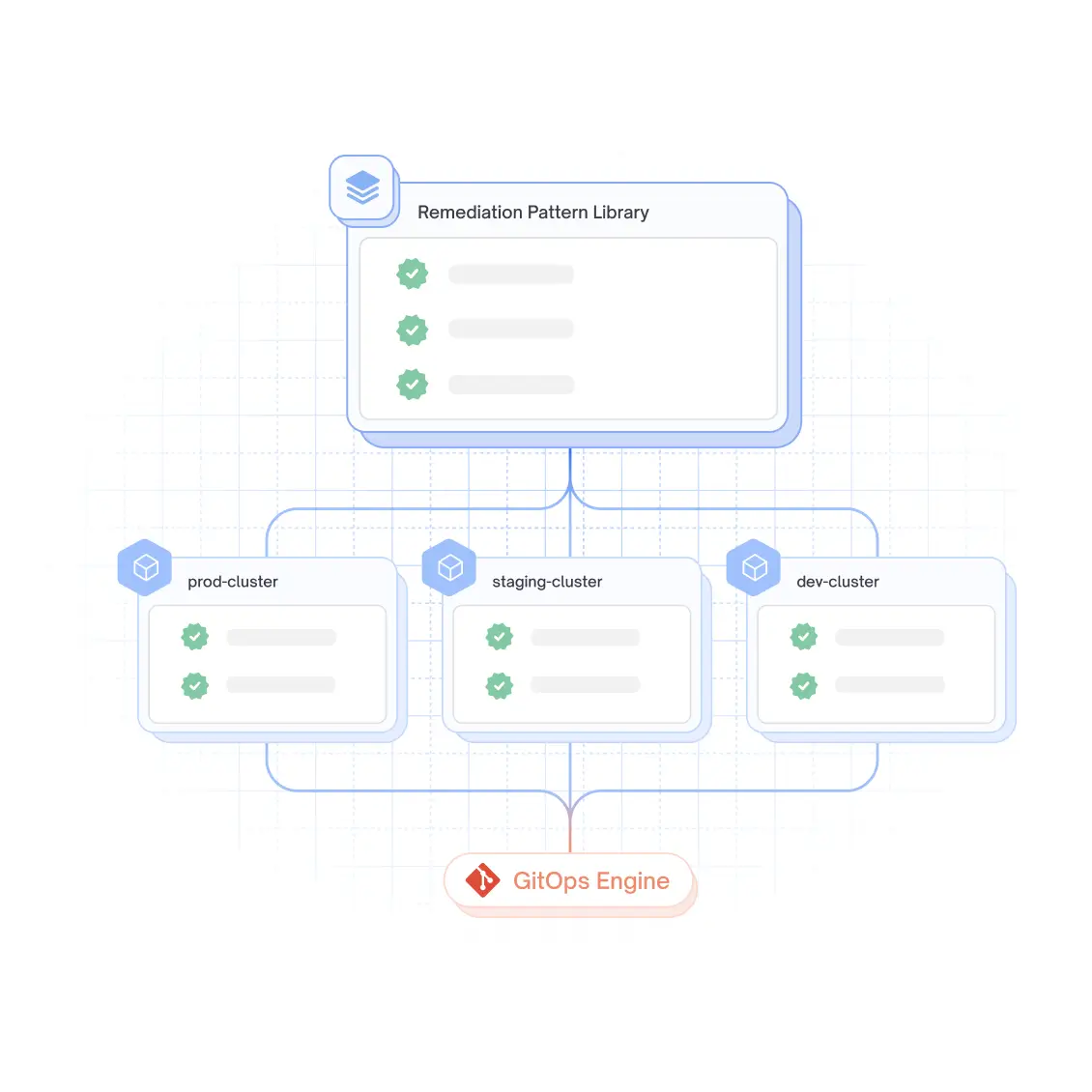
Apply standardized fixes across multiple clusters without manual repetition. Kubegrade GitOps Engine provides predefined remediation patterns that help maintain consistency in how issues are addressed, reducing variability and ensuring best practices are followed throughout your environments.

Audit-Ready Change History

Maintain a complete, traceable record of all remediations performed within your clusters. Kubegrade’s audit-ready change history allows you to track all changes, providing visibility into who made alterations, when they were made, and the nature of those changes. This transparency is crucial for compliance and governance audits.

Conclusion

Fix issues without breaking governance using Kubegrade GitOps Engine. By implementing a Git-based remediation layer, you can enhance safety, traceability, and compliance in your Kubernetes environments, ensuring that all modifications align with your organization’s operational standards.

People are loving Kubegrade, see what you are missing

“We introduced Kubegrade across a few clusters during a recent upgrade cycle. What used to take days of manual checks and coordination was reduced to a structured workflow with clear visibility. The ability to generate pull requests for fixes instead of making direct changes gave our team a lot more confidence.”

— Head of Platform Engineering, Northbridge Financial

“Our environments are a mix of cloud and client-managed infrastructure, which usually makes standardization difficult. Kubegrade helped us get a consistent view of what’s actually running versus what’s defined in code. The drift detection alone surfaced issues we didn’t know we had.”

— DevOps Lead, Atlas Digital Systems

“We deal with constant alerts and troubleshooting requests from internal teams. Since using Kubegrade, we’ve been able to prioritize what actually matters and resolve issues faster. Having context tied to each problem, along with suggested fixes, has reduced a lot of back-and-forth between teams.”

— Site Reliability Engineer, VertexCloud Technologies

Frequently asked questions

What is Kubegrade GitOps Engine?

Kubegrade GitOps Engine is a remediation layer that leverages Git-based workflows to enforce safe and auditable fixes within Kubernetes environments.

How do Git-Based Change Proposals work?

Instead of making direct changes to a cluster, the engine generates pull requests for fixes, providing a controlled mechanism for managing modifications and ensuring they are versioned.

What is the importance of Approval-Driven Execution?

This feature requires that every proposed change undergo a thorough review and obtain necessary approvals, significantly reducing the risk of unauthorized changes.

How does Consistent Remediation Patterns benefit my organization?

By using predefined remediation patterns, teams can ensure that issues are addressed uniformly across clusters, adhering to organizational practices and
standards.

What is included in the Audit-Ready Change History?

Kubegrade maintains a detailed record of all remediations, offering insights into change origins, timestamps, and the individuals involved, which is essential for compliance auditing.

Featured articles

All in one place

Comprehensive and centralized solution for data governance, and observability.