





Kubernetes Orchestration: A Comprehensive Guide

by Tim
June 18, 2025
Kubernetes orchestration is vital for managing modern applications. It automates the deployment, sizing, and management of containerized applications. Kubernetes, often called K8s, provides the tools to manage thousands of containers, handle networking, size based on workloads, and ensure self-healing if issues arise.
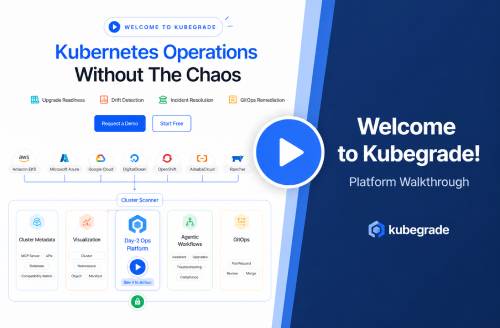
Kubegrade simplifies Kubernetes cluster management, offering a platform for secure and automated K8s operations. This includes monitoring, upgrades, and optimization, making it easier for businesses to manage their containerized environments efficiently.
Key Takeaways
- Kubernetes is a container orchestration platform that automates the deployment, scaling, and management of containerized applications.
- Key components of Kubernetes include the control plane, nodes, pods, deployments, and services, which work together to manage application lifecycles.
- Kubernetes offers benefits such as improved resource utilization, automated scaling, high availability, and faster deployment cycles.
- Best practices for Kubernetes orchestration include proper resource allocation, comprehensive monitoring and logging, robust security measures, and well-planned update strategies.
- Tools like Kubegrade can simplify Kubernetes management by providing features for resource optimization, security, and deployment automation.
Table of Contents
Introduction to Kubernetes Orchestration

Kubernetes has become a key tool for managing applications in today’s world. It is designed to manage containers, which are packages that include everything an application needs to run. This includes code, runtime, system tools, libraries, and settings.
Orchestration, in the context of Kubernetes, refers to the automated management, scaling, and networking of these containers. It handles the difficulties of deploying and running applications, making sure they operate smoothly. Kubernetes orchestration is important because it allows businesses to deploy, manage, and scale applications efficiently.
Kubegrade is a platform designed to simplify Kubernetes cluster management. It provides secure, flexible, and automated Kubernetes operations. Kubegrade helps with monitoring, upgrades, and optimization, making Kubernetes easier to use.
How Kubernetes Orchestration Works
Kubernetes works through several key components that work together to manage applications. These components include the control plane, nodes, pods, deployments, and services.
- Control Plane: This is the brain of Kubernetes. It manages the cluster and makes decisions about scheduling and deployment.
- Nodes: These are the worker machines where your applications run. Each node has the necessary services to run pods.
- Pods: A pod is the smallest deployable unit in Kubernetes. It represents a single instance of an application. Pods can contain one or more containers that are deployed and scaled together.
- Deployments: Deployments manage the desired state of your application. They ensure that the specified number of pod replicas are running at all times. If a pod fails, the deployment automatically recreates it.
- Services: Services provide a stable IP address and DNS name for accessing pods. They act as a load balancer, distributing traffic across multiple pods.
These components interact to automate tasks. For example, when you deploy an application, you define the desired state in a deployment. Kubernetes then makes sure that the actual state matches the desired state. If a pod fails, Kubernetes automatically restarts it. If you need to scale your application, Kubernetes adds or removes pods as needed.
Think of Kubernetes as a self-driving car for your applications. You set the destination (desired state), and Kubernetes takes care of the driving (deployment, scaling, healing) without you having to constantly steer.
Core Components: Control Plane, Nodes, and Pods
Kubernetes uses a few key parts to keep everything running smoothly. These parts are the control plane, nodes, and pods.
- Control Plane: This is the main control center. It makes all the decisions about what should run and where. It’s like the captain of a ship, deciding where the ship goes and what tasks need to be done. The control plane includes components like the API server, scheduler, and controller manager.
- Nodes: These are the workers that carry out the control plane’s orders. Each node is a machine (either physical or virtual) that runs the applications. They’re like the crew of the ship, carrying out the captain’s orders. Nodes run services like the kubelet and kube-proxy, which communicate with the control plane.
- Pods: Pods are the smallest units in Kubernetes. They contain one or more containers that run together on a node. Think of a pod as a shipping container that holds all the parts needed for an application to run.
The control plane tells the nodes what to do, and the nodes make sure the pods are running correctly. If a pod fails, the control plane notices and tells a node to start a new one. This system helps manage applications and keep them running as expected.
Deployments and Services: Managing Application Lifecycle
Deployments and services are important for managing applications in Kubernetes. They help make sure that applications are always available and can be updated easily.
- Deployments: A deployment manages application updates and rollbacks. It allows you to define the desired state of your application, and Kubernetes makes sure the actual state matches. If you need to update your application, you can change the deployment configuration, and Kubernetes will automatically update the pods. If something goes wrong, you can easily roll back to a previous version.
- Services: A service provides a stable endpoint for accessing your application. It acts as a load balancer, distributing traffic across multiple pods. This helps your application remain available even if some pods fail. Services also provide a consistent way to access your application, regardless of how many pods are running.
For example, imagine you have an application running in three pods. You create a service that points to these pods. When a user accesses the application, the service distributes the traffic across the three pods. If one of the pods fails, the service automatically redirects traffic to the remaining pods. If you need to update the application, you can update the deployment. Kubernetes will then create new pods with the updated version and replace the old ones, without any downtime.
Together, deployments and services make it easier to manage the application lifecycle, making sure high availability and scalability.
Automation: Scaling, Healing, and Resource Management
Kubernetes is very good at automating tasks, which reduces the need for manual work and improves how well applications run. Three important areas of automation are scaling, self-healing, and resource management.
- Scaling: Kubernetes can automatically increase or decrease the number of application instances based on demand. If traffic to your application increases, Kubernetes can add more pods to handle the load. If traffic decreases, it can remove pods to save resources. This automatic scaling makes sure your application performs well under varying conditions.
- Self-Healing: Kubernetes continuously monitors the health of your applications. If a container fails, Kubernetes automatically restarts it. If a pod fails, Kubernetes recreates it on another node. This self-healing capability helps your application stay available, even when things go wrong.
- Resource Management: Kubernetes optimizes how resources are allocated to applications. You can specify how much CPU and memory each container needs, and Kubernetes will make sure that these resources are available. It also prevents one application from using too many resources, which could affect other applications.
For example, consider an e-commerce website that experiences a surge in traffic during a sale. Kubernetes can automatically scale up the number of web server pods to handle the increased load. If a web server pod crashes, Kubernetes will automatically restart it. This automation helps the website remain responsive and available, even during peak traffic periods.
This automation improves efficiency and reliability by reducing manual intervention. Kubernetes handles these tasks automatically, freeing up developers and operations teams to focus on other important work.
Benefits of Using Kubernetes Orchestration

Using Kubernetes orchestration offers several advantages that can significantly benefit businesses. These benefits include improved resource use, automated scaling, high availability, and faster deployment.
- Improved Resource Use: Kubernetes optimizes the use of resources by allocating them efficiently to containers. This means you can run more applications on the same hardware, reducing infrastructure costs.
- Automated Scaling: Kubernetes automatically scales applications based on demand. This makes sure that applications can handle traffic spikes without performance degradation. Automated scaling also reduces the need for manual intervention, freeing up resources for other tasks.
- High Availability: Kubernetes provides high availability by automatically restarting failed containers and rescheduling them on healthy nodes. This helps applications stay available, even when there are hardware or software failures.
- Faster Deployment: Kubernetes simplifies the deployment process, allowing you to deploy applications more quickly and easily. This faster deployment helps businesses respond more quickly to changing market conditions.
For example, a company that switches to Kubernetes might see a significant reduction in infrastructure costs because of better resource use. They might also see improved application performance because of automated scaling. Also, they could deploy new features more quickly because of the simplified deployment process.
Kubegrade helps these benefits by providing a simplified management platform. It makes it easier to manage Kubernetes clusters, further reducing costs and improving efficiency.
Improved Resource Utilization and Cost Savings
Kubernetes helps optimize resource use, which can lead to significant cost savings. It achieves this through techniques like bin packing and by allowing you to set resource requests and limits.
- Bin Packing: Kubernetes uses bin packing to efficiently place containers onto nodes. It tries to fill each node as much as possible without overloading it. This reduces the number of nodes needed, which lowers infrastructure costs.
- Resource Requests and Limits: You can specify how much CPU and memory each container needs (resource requests). You can also set limits to prevent a container from using too many resources. This makes sure that resources are allocated fairly and efficiently.
For example, a case study might show that a company reduced its server costs by 30% after switching to Kubernetes. This is because Kubernetes allowed them to run more applications on the same number of servers. By efficiently allocating resources, Kubernetes helps reduce the overall infrastructure footprint and associated costs.
Kubegrade can provide tools and features that further improve resource optimization, making it easier to manage and fine-tune resource allocation in Kubernetes clusters.
Automated Scaling and High Availability
Kubernetes makes it easier to manage changing workloads with automated scaling and keeps applications running smoothly with self-healing features. These capabilities improve application reliability and the user experience.
- Horizontal Pod Autoscaling (HPA): Kubernetes can automatically adjust the number of pods based on CPU utilization or other metrics. If an application is experiencing high traffic, HPA adds more pods to handle the load. When the traffic decreases, HPA removes pods to save resources.
- Self-Healing: Kubernetes monitors the health of pods and automatically restarts them if they fail. If a node goes down, Kubernetes reschedules the pods on other available nodes. This self-healing capability helps make sure that applications remain available, even in the face of failures.
For example, an online store can use HPA to automatically scale up the number of web server pods during a flash sale. If a pod crashes, Kubernetes will automatically restart it. This helps the website remain responsive and available, providing a better experience for customers.
Kubegrade simplifies the setup and management of scaling and high availability settings. It makes it easier to configure HPA and manage the self-healing capabilities of Kubernetes, reducing the operational burden.
Faster Deployment Cycles and Increased Agility
Kubernetes streamlines how applications are deployed, which helps businesses release updates more quickly and become more adaptable. Features like rolling updates and rollbacks reduce downtime and risk during deployments.
- Rolling Updates: Kubernetes allows you to update applications without any downtime. It gradually replaces old pods with new ones, making sure that the application remains available throughout the update process.
- Rollbacks: If something goes wrong during an update, Kubernetes allows you to quickly roll back to a previous version. This minimizes the impact of failed deployments and helps maintain application stability.
For example, a software company can use Kubernetes to release new features every week instead of every month. This faster release cycle allows them to respond more quickly to customer feedback and get new products to market faster. By simplifying deployments and reducing the risk of downtime, Kubernetes helps businesses become more agile and competitive.
Kubegrade contributes to increased agility by simplifying deployment workflows. It provides tools that make it easier to manage deployments and rollbacks, helping teams release updates more quickly and confidently.
Best Practices for Kubernetes Orchestration
To get the most out of Kubernetes orchestration, it’s important to follow some key best practices. These practices cover resource allocation, monitoring, security, and update strategies.
- Proper Resource Allocation: Accurately define resource requests and limits for your containers. This helps Kubernetes schedule pods efficiently and prevents resource contention.
- Monitoring and Logging: Implement comprehensive monitoring and logging to track the health and performance of your applications. This allows you to quickly identify and resolve issues.
- Security Considerations: Secure your Kubernetes cluster by implementing network policies, using role-based access control (RBAC), and regularly scanning for vulnerabilities.
- Update Strategies: Use rolling updates to deploy new versions of your applications without downtime. Test updates in a staging environment before deploying them to production.
Here are some practical tips:
- Use namespaces to organize your resources and isolate environments.
- Use labels and selectors to manage and group pods.
- Automate deployments using CI/CD pipelines.
Kubegrade helps users follow these best practices by providing features for resource management, monitoring, security, and deployment automation. It simplifies the process of managing Kubernetes clusters and helps make sure that applications are running efficiently and securely.
Resource Management and Optimization
Effective resource management is crucial for running Kubernetes efficiently. This involves setting appropriate resource requests and limits for containers, monitoring resource usage, and optimizing allocations.
- Resource Requests and Limits: Define how much CPU and memory each container needs (requests). Also, set limits to prevent containers from using too many resources. Accurate requests and limits help Kubernetes schedule pods efficiently and prevent resource contention.
- Monitoring Resource Usage: Use monitoring tools to track CPU, memory, and disk usage of your containers and nodes. This data helps you identify resource bottlenecks and optimize allocations.
- Adjusting Allocations: Based on monitoring data, adjust resource requests and limits as needed. If a container consistently uses more resources than requested, increase the request. If a container is using very few resources, decrease the request to free up resources for other containers.
Here are some tips for optimizing resource use:
- Right-size your containers by accurately estimating their resource needs.
- Use horizontal pod autoscaling (HPA) to automatically adjust the number of pods based on resource utilization.
- Regularly review and adjust resource allocations to make sure they are aligned with application needs.
Kubegrade can assist with resource monitoring and optimization by providing tools to visualize resource usage and manage resource allocations within Kubernetes clusters.
Monitoring, Logging, and Observability
Monitoring, logging, and observability are important for keeping Kubernetes environments healthy and reliable. Proper monitoring and logging help you understand how your applications are behaving and quickly identify and resolve issues.
- Effective Monitoring Dashboards: Set up monitoring dashboards to visualize key metrics, such as CPU utilization, memory usage, and request latency. These dashboards provide a quick overview of the health and performance of your applications and infrastructure.
- Logging Pipelines: Implement logging pipelines to collect and centralize logs from all your containers and nodes. Centralized logging makes it easier to search and analyze logs to troubleshoot issues.
- Tools for Monitoring and Logging: Use tools like Prometheus and Grafana for monitoring, and Elasticsearch and Kibana for logging. These tools provide strong features for collecting, storing, and analyzing metrics and logs.
Here are some best practices for collecting and analyzing metrics and logs:
- Collect metrics at regular intervals to track trends and identify anomalies.
- Use structured logging to make logs easier to parse and analyze.
- Set up alerts to notify you of critical issues, such as high CPU utilization or application errors.
Kubegrade simplifies monitoring and logging configuration by providing integrations with popular monitoring and logging tools. This makes it easier to set up and manage monitoring and logging pipelines in Kubernetes clusters.
Security Best Practices
Security is a key part of Kubernetes orchestration. It’s important to protect the control plane, nodes, and pods, and to regularly scan for vulnerabilities. Here are some security best practices:
- Network Policies: Use network policies to control traffic between pods. This helps isolate applications and prevent unauthorized access.
- Role-Based Access Control (RBAC): Implement RBAC to restrict access to Kubernetes resources. Grant users and service accounts only the permissions they need.
- Container Security: Use secure base images for your containers. Scan container images for vulnerabilities before deploying them.
Here are some recommendations for securing your Kubernetes environment:
- Regularly update Kubernetes to the latest version to patch security vulnerabilities.
- Use strong authentication and authorization mechanisms.
- Encrypt sensitive data at rest and in transit.
- Perform regular security audits to identify and address security weaknesses.
Kubegrade improves security through its built-in security features and compliance checks. It helps users follow security best practices and maintain a secure Kubernetes environment.
Update and Upgrade Strategies
Updating and upgrading Kubernetes clusters can be complex, but following best practices can help minimize downtime and risk. Here are some key strategies:
- Rolling Updates: Use rolling updates to gradually replace old pods with new ones. This allows you to update applications without any downtime.
- Blue/Green Deployments: Create a duplicate environment (green) with the new version of your application. Once the green environment is tested and verified, switch traffic from the old environment (blue) to the new one.
- Testing in a Staging Environment: Always test updates in a staging environment before applying them to production. This helps you identify and resolve any issues before they affect users.
Here are some recommendations for minimizing downtime during updates:
- Use readiness probes to make sure that pods are ready to receive traffic before they are added to the service.
- Set appropriate update strategies in your deployment configurations.
- Monitor the update process closely and be prepared to roll back if necessary.
Kubegrade simplifies the update process with automated upgrade workflows. It helps users manage updates and upgrades more efficiently and with less risk.
Conclusion

Kubernetes orchestration is a key part of modern application deployment. It offers many benefits, including improved resource use, automated scaling, high availability, and faster deployment cycles. By automating tasks and optimizing resource allocation, Kubernetes helps businesses reduce costs and improve efficiency.
Kubegrade simplifies and improves Kubernetes management. For readers looking to optimize their K8s environments, Kubegrade offers a platform for secure, flexible, and automated operations.
Explore Kubegrade further to see how it can help you streamline your Kubernetes management and achieve your business goals.
Frequently Asked Questions
- What are the main benefits of using Kubernetes for orchestration?
- Kubernetes offers several key benefits for orchestration, including automated deployment, scaling, and management of containerized applications. It provides high availability through its self-healing capabilities, automatically replacing failed containers and redistributing workloads. Kubernetes also supports rollouts and rollbacks, enabling smooth updates with minimal downtime. Furthermore, its ability to integrate with various storage systems and services enhances flexibility and efficiency in managing applications across different environments.
- How does Kubegrade improve Kubernetes cluster management?
- Kubegrade simplifies Kubernetes cluster management by providing a set of tools and best practices that enhance security and scalability. It automates the configuration and deployment processes, reducing the risk of human error. Additionally, Kubegrade includes monitoring and logging features, enabling users to gain insights into cluster performance and health. Its adherence to security best practices helps ensure that clusters remain compliant and secure against potential vulnerabilities, thereby streamlining operations for DevOps teams.
- What are the best practices for managing Kubernetes clusters?
- Best practices for managing Kubernetes clusters include implementing role-based access control (RBAC) to ensure secure access, regularly updating Kubernetes versions to benefit from the latest features and security patches, and using namespaces to organize resources effectively. It?s also important to monitor cluster performance and resource usage continuously, apply resource limits and requests to optimize efficiency, and ensure that backups are regularly taken to safeguard against data loss. Lastly, adopting a CI/CD pipeline can facilitate smoother deployments and updates.
- What challenges might organizations face when adopting Kubernetes?
- Organizations adopting Kubernetes may encounter several challenges, including the complexity of the system itself, which can require significant learning and adaptation. There may be difficulties in managing multi-cloud environments and ensuring consistent performance across different platforms. Security concerns are also prominent, as improper configurations can lead to vulnerabilities. Additionally, organizations need to invest in training for their teams to effectively leverage Kubernetes features, which can involve time and resource commitments.
- How does Kubernetes handle scaling of applications?
- Kubernetes handles scaling of applications through both manual and automatic mechanisms. Users can define resource requests and limits for their applications, and Kubernetes can automatically adjust the number of replicas based on demand using the Horizontal Pod Autoscaler (HPA). This allows applications to scale up during peak loads and scale down when demand decreases, optimizing resource utilization and ensuring cost-effectiveness. Additionally, Kubernetes can distribute workloads evenly across available nodes, improving application performance and reliability.

