



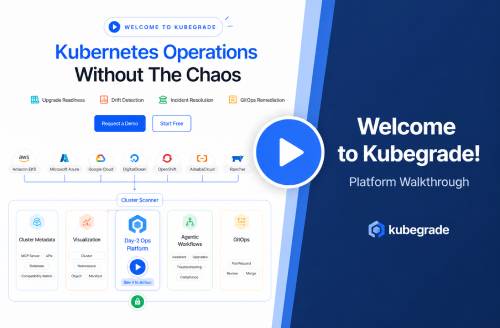


Kubernetes Multicloud: Extending Your Reach with K8s

by Tim
November 11, 2025
Kubernetes multicloud strategies are becoming important for organizations seeking agility and resilience. By distributing applications across multiple cloud environments, businesses can avoid vendor lock-in, improve uptime, and optimize costs. This approach allows teams to select the best services from different providers, tailoring their infrastructure to specific workload requirements.
However, managing Kubernetes across multiple clouds introduces difficulties. Organizations must address challenges like network configuration, security policies, and data synchronization to ensure seamless operation. With careful planning and the right tools, a multicloud Kubernetes deployment can unlock significant benefits. Platforms such as Kubegrade can help simplify these processes.
“`
Key Takeaways
- Kubernetes multicloud offers resilience, scalability, and vendor flexibility by deploying clusters across multiple cloud environments.
- Challenges include network latency, data synchronization, security concerns, and increased operational complexity.
- A consistent networking strategy, robust security measures, and effective monitoring are crucial for successful multicloud implementation.
- Kubegrade simplifies multicloud management with automated deployments, centralized monitoring, and simplified upgrades.
- Selecting the right cloud providers based on pricing, performance, and specific services is essential.
- Automation and infrastructure-as-code (IaC) are key to reducing operational overhead in multicloud environments.
- Regular upgrades and patch management are vital for maintaining security and stability in Kubernetes multicloud deployments.
Table of Contents
“`html
Introduction to Kubernetes Multicloud
Kubernetes multicloud refers to the deployment of Kubernetes clusters across multiple cloud environments. This approach is becoming increasingly important as organizations seek to avoid vendor lock-in and improve application resilience. By distributing workloads across different cloud providers, businesses can achieve greater scalability and flexibility.
Multicloud deployments offer several advantages. They improve resilience by making sure that applications remain available even if one cloud provider experiences an outage. They also provide scalability, allowing organizations to scale resources across multiple clouds to meet demand. Vendor flexibility is another key benefit, as it enables businesses to choose the best services from different providers and avoid being tied to a single vendor.
However, Kubernetes multicloud also presents challenges. Managing clusters across different environments can be complex, requiring specialized tools and expertise. Security and compliance also become more complicated, as organizations must maintain consistent policies across all clouds.
Kubegrade simplifies Kubernetes cluster management. It’s a platform for secure, , and automated K8s operations, enabling monitoring, upgrades, and optimization.
“““html
Benefits of a Kubernetes Multicloud Architecture
Adopting a Kubernetes multicloud strategy offers several key advantages. These benefits address common challenges in managing containerized applications, providing organizations with resilience, scalability, and flexibility.
One of the most significant benefits is improved resilience. By distributing workloads across multiple cloud providers, businesses can make sure that their applications remain available even if one provider experiences an outage. This redundancy minimizes downtime and helps maintain business continuity. For example, Capital One uses both AWS and GCP to improve its resilience, making sure that its services remain available even if one provider has an issue.
Kubernetes multicloud also provides scalability. Organizations can scale resources across multiple clouds to handle varying workloads, optimizing resource utilization and cost. For instance, a gaming company can deploy clusters across multiple providers to handle millions of concurrent users during a new game launch, distributing traffic intelligently while minimizing lag. Scaleway Kubernetes Kosmos offers node pools that can bufferize unexpected workload.
Vendor flexibility is another critical advantage. A multicloud strategy helps avoid vendor lock-in, giving businesses the freedom to choose the best services from different providers. This flexibility enables organizations to optimize costs and innovation by leveraging the unique strengths of each cloud provider. For example, Netflix uses AWS for delivery and Google Cloud for analytics, taking advantage of each platform’s specific capabilities.
These benefits address several pain points in managing containerized applications. Single cloud environments can lead to vendor lock-in, limiting flexibility and potentially increasing costs. A lack of redundancy can result in downtime and data loss in the event of an outage. Kubernetes multicloud provides a solution to these challenges, offering a more resilient, , and flexible approach to managing containerized applications.
“““html
Enhanced Resilience and High Availability
Kubernetes multicloud architecture significantly improves resilience and high availability by distributing workloads across multiple cloud providers. This approach minimizes the impact of outages or failures in a single cloud environment, making sure that applications remain accessible and operational.
When workloads are spread across different clouds, a failure in one cloud provider does not necessarily lead to downtime. The other cloud environments can continue to run the applications, maintaining business continuity. This redundancy is crucial for organizations that require near-100% uptime.
Automated failover and recovery strategies are important in a multicloud setup. These strategies involve automatically detecting failures and shifting workloads to healthy cloud environments. Kubernetes facilitates this through features like health probes, replication controllers, and service discovery, which can be configured to monitor application health and redirect traffic as needed.
For instance, if a critical service running on AWS becomes unavailable, Kubernetes can automatically failover to a replica of that service running on Google Cloud or Azure. This process can be automated using tools like Kubegrade, which provides features for monitoring and managing Kubernetes clusters across multiple clouds.
In real-world scenarios, multicloud resilience has proven beneficial in preventing downtime during cloud provider outages. Organizations that have adopted a multicloud strategy have been able to maintain operations and minimize disruptions, demonstrating the value of this approach in making sure high availability.
“““html
Scalability and Resource Optimization
Kubernetes multicloud allows for improved scalability and resource optimization, enabling organizations to adjust their application resources across multiple cloud environments. This flexibility is crucial for handling fluctuating workloads and traffic demands efficiently.
With a multicloud setup, organizations can scale their applications based on real-time needs. During peak traffic periods, resources can be added from different cloud providers to handle the increased load. Conversely, during off-peak times, resources can be reduced to save costs. This scaling ensures that applications always have the resources they need without over-provisioning.
Different cloud providers offer unique strengths in terms of computing , storage capabilities, and specialized services. A multicloud strategy allows organizations to use these strengths by using different clouds for specific resource needs. For example, a business might use one cloud provider for compute-intensive tasks like video encoding and another for cost-effective data storage.
By optimizing resource allocation across multiple clouds, organizations can reduce costs and improve performance. Workloads can be placed in the most suitable environment based on factors such as pricing, availability, and performance characteristics. This approach leads to better resource utilization and lower overall costs.
Kubegrade helps optimize resource allocation across multiple clouds by providing a centralized platform for managing and monitoring Kubernetes clusters. It allows organizations to track resource usage, identify bottlenecks, and make informed decisions about where to deploy and scale their applications. By providing visibility and control over multicloud environments, Kubegrade enables organizations to achieve optimal scalability and resource efficiency.
“““html
Vendor Flexibility and Cost Management
Kubernetes multicloud provides vendor flexibility and helps organizations manage costs effectively. By distributing applications across multiple cloud providers, businesses can avoid vendor lock-in and gain greater control over their cloud spending.
Vendor lock-in can limit an organization’s ability to innovate and optimize costs. With a multicloud strategy, businesses are not tied to a single provider and can move workloads between clouds as needed. This flexibility allows them to choose the best cloud provider for specific needs, whether it’s based on price, performance, or specialized services.
Being able to select the most suitable cloud provider for each workload also improves bargaining . Organizations can negotiate pricing with different providers and take advantage of competitive offers. This competition can lead to significant cost savings over time.
For example, a company might run its development and testing environments on a less expensive cloud provider and reserve its primary cloud for production workloads. This approach allows them to reduce costs without compromising performance or reliability.
Kubegrade helps manage costs by providing visibility into resource usage across multiple clouds. It allows organizations to track spending, identify cost drivers, and optimize resource allocation. By providing a centralized view of cloud costs, Kubegrade enables businesses to make informed decisions and reduce their overall cloud spending.
“““html
Challenges and Considerations for Kubernetes Multicloud

Implementing a Kubernetes multicloud environment introduces potential pitfalls that organizations must address. While the benefits of resilience, scalability, and vendor flexibility are significant, careful planning and execution are crucial for success.
One of the primary challenges is network latency. When applications span multiple cloud providers, communication between services can be slower compared to a single-cloud environment. This latency can impact application performance and user experience. Strategies for mitigating this include optimizing network configurations, using content delivery networks (CDNs), and deploying applications closer to their users.
Data synchronization is another significant consideration. Making sure data consistency across multiple clouds can be , especially for stateful applications. Organizations must implement data replication and synchronization mechanisms to avoid data loss or inconsistencies. This might involve using distributed databases or specialized data management tools.
Security concerns are also heightened in a multicloud environment. Organizations must maintain consistent security policies and controls across all cloud providers. This includes managing access control, encryption, and compliance requirements. Implementing a centralized identity and access management (IAM) system is crucial for securing multicloud deployments.
The increased operational overhead is another challenge. Managing Kubernetes clusters across multiple clouds requires specialized expertise and tools. Organizations must invest in training and automation to streamline operations and reduce the risk of errors. This includes automating deployment, monitoring, and scaling processes.
Proper planning and tooling are for mitigating these challenges. Organizations should conduct a thorough assessment of their application requirements, cloud provider capabilities, and security considerations. They should also invest in tools that simplify multicloud management, such as Kubegrade, which provides a centralized platform for monitoring, managing, and securing Kubernetes clusters across multiple clouds.
“““html
Network Latency and Data Synchronization
Network latency and data synchronization pose significant challenges in a Kubernetes multicloud environment. The distance between different cloud providers can result in increased latency, which can negatively impact application performance. Data synchronization across multiple clouds requires careful planning and implementation to maintain consistency and avoid data loss.
Latency between cloud providers can affect the responsiveness of applications, especially those that require frequent communication between services. To minimize latency, organizations can use a service mesh like Istio or Linkerd. A service mesh provides intelligent routing and traffic management, allowing organizations to optimize communication paths and reduce latency. Other strategies include optimizing data transfer protocols and using caching mechanisms to reduce the need for frequent data transfers.
Data consistency and synchronization are crucial for maintaining data integrity in a multicloud setup. Organizations must implement mechanisms to make sure that data is consistent across all cloud environments. This can be achieved through various tools and techniques, such as using distributed databases like CockroachDB or Cassandra, which are designed to replicate data across multiple locations. Another approach is to use data synchronization tools like rsync or cloud-specific data replication services.
For example, if an application writes data to a database in one cloud, that data must be synchronized to the database in other clouds to make sure consistency. This synchronization can be performed synchronously or asynchronously, depending on the application’s requirements. Synchronous replication provides stronger consistency but can introduce latency, while asynchronous replication offers lower latency but may result in eventual consistency.
Managing network latency and data synchronization requires careful planning and the use of appropriate tools and techniques. Organizations must assess their application requirements and choose the strategies that best meet their needs. By addressing these challenges effectively, businesses can build and performant Kubernetes multicloud environments.
“““html
Security Concerns and Compliance
Security concerns and compliance requirements present significant challenges in Kubernetes multicloud deployments. Managing security across multiple cloud environments can be complex due to the varying security features and compliance standards of each provider. Implementing consistent security policies and access controls is crucial for protecting data and applications in a multicloud setup.
One of the key challenges is maintaining consistent security policies across different cloud providers. Each provider has its own set of security tools and services, which can make it difficult to enforce uniform security standards. Organizations must implement a centralized security management system to make sure that all cloud environments are protected according to the same policies.
Access control is another critical aspect of multicloud security. Organizations must implement strict access controls to limit who can access sensitive data and resources. This includes using role-based access control (RBAC) in Kubernetes and implementing multi-factor authentication (MFA) for all users. It’s also important to regularly review and update access controls to make sure they remain effective.
Securing data in transit and at rest is also . Data should be encrypted using strong encryption algorithms, both when it is being transmitted between cloud environments and when it is stored. Organizations should also implement data loss prevention (DLP) measures to prevent sensitive data from being exposed.
Compliance requirements such as GDPR and HIPAA add another layer of complexity to multicloud security. These regulations impose strict requirements on how personal data is processed and stored. Organizations must make sure that their multicloud deployments comply with all applicable regulations. This includes implementing data residency controls to make sure that data is stored in the appropriate geographic location and implementing audit logging to track data access and modifications.
Several security tools and best practices can help organizations secure their Kubernetes multicloud environments. These include using vulnerability scanners to identify and remediate security vulnerabilities, implementing intrusion detection systems (IDS) to detect and respond to security incidents, and using security information and event management (SIEM) systems to collect and analyze security logs. By implementing these tools and practices, organizations can mitigate the security risks associated with Kubernetes multicloud and maintain compliance with relevant regulations.
“““html
Operational Overhead and Management Complexity
Kubernetes multicloud environments introduce increased operational overhead and management complexity. Managing multiple Kubernetes clusters across different cloud providers can be challenging due to the lack of a unified management plane and the varying features and capabilities of each cloud platform.
One of the key challenges is the need to manage each Kubernetes cluster independently. This includes tasks such as deploying applications, monitoring performance, and troubleshooting issues. Without a centralized management system, these tasks can become time-consuming and error-prone.
Strategies for simplifying management include using centralized monitoring and logging tools. These tools provide a unified view of all Kubernetes clusters, allowing organizations to quickly identify and resolve issues. Examples of such tools include Prometheus, Grafana, and Elasticsearch.
Automation and infrastructure-as-code (IaC) are also crucial for reducing operational overhead. By automating deployment, scaling, and configuration tasks, organizations can reduce the risk of errors and improve efficiency. IaC tools like Terraform and Ansible allow organizations to define their infrastructure as code, making it easier to manage and replicate across multiple cloud environments.
Kubegrade helps reduce operational overhead by providing a unified management platform for Kubernetes multicloud deployments. It allows organizations to manage all of their Kubernetes clusters from a single interface, simplifying tasks such as deployment, monitoring, and scaling. By providing a centralized view of multicloud environments, Kubegrade enables organizations to reduce operational costs and improve efficiency.
“““html
Implementing Kubernetes Multicloud: Key Strategies
Successfully implementing a Kubernetes multicloud deployment requires careful planning and the adoption of key strategies. These strategies encompass choosing the right cloud providers, designing a consistent networking strategy, implementing security measures, and establishing effective monitoring and logging practices. By following these guidelines, organizations can maximize the benefits of multicloud while minimizing the associated challenges.
Choosing the right cloud providers is a crucial first step. Organizations should assess their application requirements and select cloud providers that offer the best combination of price, performance, and services. Factors include the provider’s geographic reach, compliance certifications, and support for specific technologies.
Designing a consistent networking strategy is also . Organizations must make sure that their applications can communicate seamlessly across different cloud environments. This can be achieved through various networking technologies, such as virtual private networks (VPNs), direct connections, and service meshes. It’s important to choose a networking strategy that provides low latency, high bandwidth, and secure communication.
Implementing security measures is critical for protecting data and applications in a multicloud environment. Organizations must implement consistent security policies and access controls across all cloud providers. This includes using encryption, multi-factor authentication, and intrusion detection systems. It’s also important to regularly audit security controls to make sure they remain effective.
Establishing effective monitoring and logging practices is crucial for identifying and resolving issues in a multicloud environment. Organizations should implement centralized monitoring and logging tools to collect and analyze data from all cloud providers. This allows them to quickly identify performance bottlenecks, security incidents, and other issues.
Kubegrade assists in simplifying these implementations through automation and centralized management. It provides a unified platform for managing Kubernetes clusters across multiple clouds, automating tasks such as deployment, scaling, and monitoring. By providing a centralized view of multicloud environments, Kubegrade enables organizations to reduce operational costs and improve efficiency.
“““html
Selecting the Right Cloud Providers
Selecting the right cloud providers is a critical step in implementing a Kubernetes multicloud deployment. Organizations must carefully evaluate various factors to ensure that their chosen providers align with their business requirements and application needs. These factors include pricing, performance, geographic location, and specific services offered.
Pricing is a significant consideration. Different cloud providers offer different pricing models and rates for their services. Organizations should compare pricing across providers and choose the ones that offer the best value for their specific workloads. It’s important the cost of compute resources but also the cost of storage, networking, and other services.
Performance is another important factor. The performance of cloud resources can vary significantly between providers. Organizations should evaluate the performance of different cloud providers by running benchmarks and testing their applications in each environment. This will help them identify the providers that offer the best performance for their specific workloads.
Geographic location is also a key consideration. Organizations should choose cloud providers that have data centers in the geographic regions where their users are located. This will help reduce latency and improve application performance. It’s also important consider data residency requirements and choose providers that comply with relevant regulations.
Specific services offered by cloud providers can also influence the selection process. Some providers offer specialized services, such as machine learning or data analytics, that may be beneficial for certain applications. Organizations should evaluate the services offered by different cloud providers and choose the ones that best meet their needs.
In the context of Kubernetes multicloud, it’s important the pros and cons of different cloud providers. For example, some providers may offer better integration with Kubernetes than others. Some providers may have more mature Kubernetes services or offer more advanced features. Organizations should carefully evaluate these factors and choose the providers that best support their Kubernetes multicloud strategy.
“““html
Establishing a Consistent Networking Strategy
A consistent networking strategy is crucial for the success of a Kubernetes multicloud deployment. It makes sure that applications can communicate seamlessly across different cloud environments, regardless of their underlying infrastructure. This involves using a service mesh to manage traffic, mitigating network latency, and maintaining consistent network policies and security.
A service mesh provides intelligent routing and traffic management, enabling organizations to control how traffic flows between services in a multicloud environment. It abstracts away the of the underlying network infrastructure, allowing developers to focus on building and deploying applications without worrying about connectivity issues. Popular service meshes include Istio, Linkerd, and Consul Connect.
Network latency can be a significant challenge in multicloud environments due to the distance between cloud providers. To mitigate latency, organizations can use various techniques, such as optimizing data transfer protocols, caching data closer to users, and using content delivery networks (CDNs). It’s also important to choose cloud providers that have data centers in close proximity to each other.
Several networking solutions work well in multicloud environments. These include virtual private clouds (VPCs), which provide isolated network environments in each cloud provider, and virtual private networks (VPNs), which create secure connections between VPCs. It’s also possible to use direct connections, such as AWS Direct Connect or Azure ExpressRoute, to establish dedicated connections between on-premises networks and cloud providers.
that network policies and security across all cloud providers is for protecting data and applications. Organizations should implement a centralized network policy management system to define and enforce network policies across all cloud environments. This includes defining rules for traffic filtering, access control, and security monitoring. It’s also important to use encryption to protect data in transit and at rest.
“““html
Implementing Security Measures
Implementing security measures is paramount in a Kubernetes multicloud environment to protect sensitive data and applications. This involves using role-based access control (RBAC) and network policies to secure Kubernetes clusters, implementing encryption in transit and at rest, and maintaining consistent security policies across multiple cloud providers.
Role-based access control (RBAC) is a critical security mechanism in Kubernetes. It allows organizations to define granular permissions for users and service accounts, limiting their access to only the resources they need. By implementing RBAC, organizations can minimize the risk of unauthorized access and data breaches.
Network policies provide another layer of security by controlling the communication between pods in a Kubernetes cluster. They allow organizations to define rules that specify which pods can communicate with each other, preventing unauthorized network traffic. Network policies can be used to isolate sensitive applications and prevent them from being accessed by unauthorized users or services.
Encryption in transit and at rest is for protecting data from being intercepted or stolen. Data should be encrypted using strong encryption algorithms, both when it is being transmitted between cloud environments and when it is stored. This includes encrypting data at the application level, as well as using encryption provided by cloud providers.
Maintaining consistent security policies across multiple cloud providers can be challenging due to the varying security features and capabilities of each provider. Organizations should implement a centralized security management system to make sure that all cloud environments are protected according to the same policies. This includes using a common identity and access management (IAM) system, as well as implementing consistent security monitoring and logging practices.
Security tools can help organizations monitor and protect their Kubernetes multicloud deployments. These tools include vulnerability scanners, intrusion detection systems (IDS), and security information and event management (SIEM) systems. By using these tools, organizations can quickly identify and respond to security threats, minimizing the impact of security incidents.
“““html
Setting Up Effective Monitoring and Logging
Setting up effective monitoring and logging practices is crucial for managing Kubernetes multicloud deployments. It involves collecting and analyzing logs from all Kubernetes clusters and cloud providers to gain visibility into the health and performance of applications. Centralized monitoring tools provide a unified view of multicloud environments, enabling organizations to quickly identify and resolve issues.
Collecting logs from all Kubernetes clusters and cloud providers is for what is happening in the environment. Logs provide valuable information about application behavior, system events, and security incidents. Organizations should implement a centralized logging system to collect and store logs from all sources in a consistent format.
Analyzing logs can help organizations identify and troubleshoot issues. By searching for error messages, exceptions, and other anomalies in the logs, organizations can quickly pinpoint the root cause of problems. Log analysis tools can automate this process, making it easier to identify and resolve issues.
Centralized monitoring tools provide a unified view of the health and performance of applications in a multicloud environment. These tools collect metrics from all Kubernetes clusters and cloud providers, allowing organizations to track key performance indicators (KPIs) such as CPU usage, memory usage, and network latency. By monitoring these KPIs, organizations can identify performance bottlenecks and optimize resource allocation.
Several monitoring and logging solutions work well in multicloud environments. These include Prometheus, Grafana, Elasticsearch, and Kibana. Prometheus is a popular monitoring tool that collects metrics from Kubernetes clusters and cloud providers. Grafana is a visualization tool that allows organizations to create dashboards and charts to visualize monitoring data. Elasticsearch and Kibana are logging tools that allow organizations to collect, store, and analyze logs from all sources.
Monitoring and logging data can be used to troubleshoot issues and resource usage. By analyzing monitoring data, organizations can identify performance bottlenecks and optimize resource allocation. By analyzing logging data, organizations can identify and resolve issues before they impact users. This approach to monitoring and logging can improve application performance and reduce downtime.
“““html
Kubegrade: Simplifying Kubernetes Multicloud Management
Kubegrade simplifies Kubernetes multicloud management. It addresses the challenges discussed earlier in this article, such as network latency, data synchronization, security concerns, and operational overhead, by providing a unified platform for managing Kubernetes clusters across multiple cloud environments.
Kubegrade’s features, such as automated deployments, centralized monitoring, and simplified upgrades, streamline K8s operations and reduce the risk of errors. Automated deployments enable organizations to quickly and easily deploy applications to multiple clouds, while centralized monitoring provides a unified view of the health and performance of all Kubernetes clusters. Simplified upgrades make it easier to keep Kubernetes clusters up-to-date with the latest security patches and features.
Kubegrade enables secure, , and optimized K8s operations across multiple cloud environments. Its security features help organizations implement consistent security policies and access controls, while its scalability features allow them to scale their applications based on real-time needs. Its optimization features help organizations optimize resource allocation and reduce costs.
To learn more about how Kubegrade can simplify your Kubernetes multicloud management, visit our website or request a demo today.
“““html
Automated Deployments and Configuration
Kubegrade automates the deployment and configuration of Kubernetes clusters across multiple cloud environments, simplifying the process of setting up and managing K8s infrastructure. This automation reduces the manual effort required to create and maintain clusters, saving organizations time and resources.
With Kubegrade, organizations can define their K8s infrastructure as code (IaC) using declarative configuration files. This allows them to version control their infrastructure, track changes, and easily replicate deployments across multiple clouds. IaC makes sure that infrastructure is consistent and repeatable, reducing the risk of errors and configuration drift.
Kubegrade automates tasks such as cluster creation, scaling, and updates. It can automatically provision K8s clusters in different cloud providers, configure networking and security settings, and deploy applications. It can also automatically scale clusters up or down based on demand, making sure that applications always have the resources they need. Kubegrade simplifies the process of updating K8s clusters with the latest security patches and features, minimizing downtime and improving security.
By automating these tasks, Kubegrade saves organizations significant time and resources. It reduces the manual effort required to manage K8s infrastructure, freeing up engineers to focus on more strategic initiatives. It also minimizes the risk of errors, improving the reliability and stability of applications. The time and resource savings achieved through automation can translate into significant cost savings for organizations.
“““html
Centralized Monitoring and Logging
Kubegrade offers centralized monitoring and logging capabilities for Kubernetes multicloud deployments, providing a unified view of the health and performance of all K8s clusters, regardless of the cloud provider. This centralized approach simplifies the process of monitoring and troubleshooting applications in a multicloud environment.
With Kubegrade, organizations can access centralized dashboards that display key performance indicators (KPIs) for all of their K8s clusters. These dashboards provide a real-time view of cluster health, resource utilization, and application performance. Kubegrade also offers customizable alerts that notify organizations when critical issues arise, such as high CPU usage or low memory availability.
Centralized dashboards and alerts enable organizations to quickly identify and resolve issues. By providing a unified view of all K8s clusters, Kubegrade makes it easier to pinpoint the root cause of problems, even when they span multiple cloud environments. For example, if an application is experiencing performance issues, Kubegrade can help identify whether the problem is related to a specific cluster, a specific cloud provider, or a specific application component.
monitoring is crucial for maintaining application uptime and performance. By continuously monitoring K8s clusters and applications, organizations can identify and resolve issues before they impact users. Kubegrade’s centralized monitoring and logging capabilities enable organizations to implement monitoring practices, improving the reliability and stability of their applications.
“““html
Simplified Upgrades and Patch Management
Kubegrade simplifies the process of upgrading and patching Kubernetes clusters in a multicloud environment. It automates the upgrade process, reducing the risk of errors and downtime, and provides a centralized platform for managing patch deployments across multiple clusters.
With Kubegrade, organizations can automate the process of upgrading K8s clusters to the latest version. This includes automatically backing up cluster data, performing pre-upgrade checks, and deploying the new version of Kubernetes. By automating these tasks, Kubegrade reduces the manual effort required to upgrade clusters and minimizes the risk of errors.
Kubegrade also simplifies the process of managing patch deployments across multiple clusters. It allows organizations to deploy patches to all of their K8s clusters with a single click, making sure that all clusters are running the latest security patches. Kubegrade can also automatically roll back patches if issues arise, minimizing the impact of patch deployments on application uptime.
Regular upgrades are for maintaining security and stability. New versions of Kubernetes often include security patches that address critical vulnerabilities. By upgrading clusters regularly, organizations can protect their applications from being exploited by attackers. Regular upgrades also improve the stability of Kubernetes clusters, reducing the risk of crashes and other issues.
“““html
Conclusion
Kubernetes multicloud deployments offer significant benefits, including improved resilience, improved scalability, and vendor flexibility. However, they also present challenges such as network latency, data synchronization, security concerns, and operational overhead. A well-planned strategy and the right tooling are crucial for successfully implementing and managing a Kubernetes multicloud environment.
Kubegrade simplifies Kubernetes multicloud management, enabling organizations to fully the benefits of this architecture. Its automated deployments, centralized monitoring, and simplified upgrades address the challenges discussed in this article, reducing the complexity and effort required to manage K8s clusters across multiple cloud environments.
As Kubernetes continues to evolve and become more widely adopted, its role in multicloud environments will become even more important. Organizations that embrace Kubernetes multicloud and invest in the right tooling will be well-positioned to innovate, scale, and compete in the cloud era.
“`

