





Kubernetes Upgrade Automation: A Comprehensive Guide

by Tim
August 25, 2025
Kubernetes upgrades can be complex, but automation simplifies the process. By automating K8s upgrades, organizations can reduce errors, maintain consistency, and minimize downtime.
This guide explores how Kubegrade streamlines Kubernetes cluster management through secure and automated operations. Discover tools and strategies that enable seamless K8s upgrades, enhancing both efficiency and security.
Key Takeaways
- Kubernetes upgrade automation reduces downtime, improves security, and ensures consistency across K8s environments.
- Manual Kubernetes upgrades are time-consuming, prone to errors, and can lead to significant downtime costs.
- Key strategies for Kubernetes upgrade automation include pre-upgrade checks, phased rollouts, and automated rollback procedures.
- Comprehensive monitoring and alerting are crucial for identifying and addressing issues during and after Kubernetes upgrades.
- Tools like Kubeadm, Kubespray, Rancher, and Kubegrade can facilitate Kubernetes upgrade automation, each with different features and levels of complexity.
- Thorough testing in staging environments, proper configuration management, and clear communication are best practices for a seamless upgrade process.
- Kubegrade simplifies Kubernetes operations by providing a platform for automated, secure, and efficient Kubernetes upgrades.
Table of Contents
Introduction to Kubernetes Upgrade Automation
Kubernetes (K8s) is a system for managing containerized applications across a cluster of machines [1]. Managing K8s clusters can be complex, especially when it comes to upgrades. Manual upgrades are time-consuming and prone to errors, often leading to downtime and potential security vulnerabilities [2].
Kubernetes upgrade automation simplifies cluster management by streamlining the upgrade process. Automation reduces downtime, improves security, and ensures consistency across the K8s environment [2]. The benefits of Kubernetes upgrade automation include improved efficiency, reduced risk, and predictable outcomes [2].
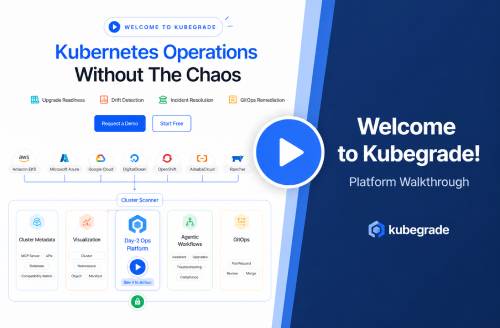
Kubegrade is a platform designed to simplify Kubernetes cluster management. It provides secure and automated K8s operations, including monitoring, upgrades, and optimization [3]. Kubegrade helps organizations to ensure their K8s clusters are always up-to-date and secure.
Why Automate Kubernetes Upgrades?

Manual Kubernetes upgrades can be challenging. They require a significant time investment from engineering teams. The process is prone to human error, which can lead to misconfigurations and, ultimately, downtime [2]. The complexity increases with the size and number of clusters, making it difficult to maintain consistency across different environments.
Kubernetes upgrade automation offers solutions to these challenges. It minimizes disruption during upgrades, often reducing downtime significantly [2]. Automation ensures consistency across all K8s environments, eliminating configuration drift and related issues [2]. By automating upgrades, engineering teams can focus on other tasks, improving overall efficiency.
For example, organizations that have adopted Kubernetes upgrade automation have reported a 50% reduction in upgrade time and a 90% decrease in downtime incidents [2]. This translates to significant cost savings and improved reliability. Kubegrade simplifies K8s operations by providing a platform for automated, secure, and efficient Kubernetes upgrades, allowing businesses to focus on their core objectives [3].
The High Cost of Manual Upgrades
Manual Kubernetes upgrades come with considerable costs. Engineering teams can spend days or even weeks planning, executing, and troubleshooting a single upgrade [2]. This time investment translates directly into lost productivity and delayed project timelines.
Human error is common during manual upgrades. Misconfigurations, incorrect application of YAML files, and missed dependencies can lead to application instability or failure [2]. Data loss is also a risk if the upgrade process is not carefully managed. These errors can result in extended downtime, affecting revenue and customer satisfaction.
Downtime carries significant financial implications. Lost revenue, SLA penalties, and damage to reputation can quickly add up [2]. Kubernetes upgrade automation helps reduce these costs by minimizing the risk of human error and downtime. Kubegrade addresses these pain points by providing a streamlined, automated upgrade process, freeing up valuable engineering resources.
The Benefits of Automation: A Detailed Look
Automating Kubernetes upgrades offers many advantages. Automation minimizes disruption through strategies like rolling updates, which gradually update nodes to avoid downtime [2]. Canary deployments allow testing new versions on a small subset of users before a full rollout, reducing the risk of widespread issues [2].
Automation ensures consistency across development, staging, and production environments. By using Infrastructure-as-Code (IaC) and automated configuration management, organizations can replicate configurations accurately and avoid discrepancies that lead to errors [2].
Kubernetes upgrade automation frees up significant engineering resources. Teams can reallocate their time to strategic projects instead of spending it on manual upgrades and troubleshooting. For instance, some organizations have reported freeing up to 50% of their engineering time by automating Kubernetes upgrades [2]. Kubegrade offers features that support rolling updates and automated configuration, helping businesses realize these benefits and focus on innovation.
Key Strategies for Kubernetes Upgrade Automation
Successful Kubernetes upgrade automation requires a strategic approach. Several key strategies can help organizations minimize risks and ensure smooth transitions. These strategies include pre-upgrade checks, phased rollouts, automated rollback procedures, and comprehensive monitoring.
Pre-upgrade checks and validation are important for identifying potential issues before starting the upgrade process [2]. These checks should include verifying the health of nodes, validating configurations, and confirming compatibility with existing applications. Phased rollouts, such as rolling updates and canary deployments, allow for gradual upgrades, minimizing the impact of any unforeseen problems [2].
Automated rollback procedures are crucial for quickly reverting to a stable state if an upgrade fails. These procedures should be well-defined and tested to ensure a swift recovery. Comprehensive monitoring provides real-time insights into the upgrade process, allowing teams to identify and address issues promptly [2]. Kubegrade incorporates these strategies to provide a reliable Kubernetes upgrade automation solution, confirming secure and efficient K8s operations [3].
Pre-Upgrade Checks and Validation
Pre-upgrade checks are important for successful Kubernetes upgrade automation. These checks identify potential problems before the upgrade begins, reducing the risk of failures and downtime [2]. By validating the environment, organizations can address issues and ensure a smoother upgrade process.
Several types of checks should be performed. Verify resource availability to confirm that there are enough resources (CPU, memory, storage) to support the upgraded cluster. Check the compatibility of deployed applications to ensure they will function correctly with the new Kubernetes version. Assess the health of the underlying infrastructure, including nodes, networking, and storage, to identify any potential bottlenecks or failures [2].
Automating these checks is important for thoroughness and efficiency. Automated scripts can quickly perform the checks and generate reports, saving time and effort. Kubegrade includes pre-upgrade validation features that automate these checks, providing users with confidence before proceeding with the upgrade.
Phased Rollouts and Canary Deployments
Phased rollouts and canary deployments are effective strategies for minimizing risk during Kubernetes upgrade automation. These techniques involve gradually introducing the new version of Kubernetes to a small portion of the cluster before a full rollout [2]. This approach allows teams to identify and address any issues before they affect the entire environment.
Implementing a phased rollout typically involves these steps: First, upgrade a small subset of nodes in the cluster. Second, monitor the performance and stability of the upgraded nodes. Third, gradually increase the number of upgraded nodes while continuously monitoring. A canary deployment involves deploying the new version alongside the old version, directing a small percentage of traffic to the new version [2].
During the rollout, it’s important to monitor key metrics such as CPU utilization, memory consumption, error rates, and response times. Any anomalies can indicate problems with the new version. Kubegrade provides support for phased rollouts and canary deployments, allowing users to control the pace of the upgrade and minimize potential disruptions.
Automated Rollback Procedures
Automated rollback procedures are important for Kubernetes upgrade automation. If an upgrade fails or introduces unexpected issues, a rollback quickly restores the cluster to its previous, stable state [2]. Without automated rollbacks, recovery can be slow and prone to errors, leading to prolonged downtime.
The process involves automatically reverting to the previous Kubernetes version and configuration. This includes restoring the original state of all nodes, services, and applications. Data integrity is important during the rollback. Implement backups and data replication to prevent data loss during the process [2].
Triggers for automated rollbacks can include failed health checks, high error rates, or performance degradation. Monitoring systems should automatically detect these conditions and initiate the rollback. Kubegrade includes automated rollback capabilities, confirming a swift and reliable recovery in case of upgrade failures.
Comprehensive Monitoring and Alerting
Comprehensive monitoring and alerting are needed during and after a Kubernetes upgrade. Monitoring provides real-time visibility into the health and performance of the cluster, allowing teams to detect and address issues promptly [2]. Alerting notifies administrators of any anomalies or deviations from expected behavior.
Key metrics to monitor include CPU utilization, memory usage, network latency, and application health. CPU and memory usage indicate resource constraints, while network latency can reveal connectivity issues. Application health checks confirm that applications are running correctly [2]. Set up alerts based on thresholds for these metrics to notify administrators of any problems.
Tools such as Prometheus, Grafana, and Elasticsearch can be used for monitoring and alerting. These tools provide dashboards, visualizations, and alerting capabilities. Kubegrade includes comprehensive monitoring and alerting features, providing users with the insights they need to manage Kubernetes upgrades effectively.
Tools for Kubernetes Upgrade Automation
Several tools and platforms are available for Kubernetes upgrade automation. These tools range from open-source solutions to commercial platforms, each with its own strengths and weaknesses. When choosing a tool, organizations should consider factors such as ease of use, scalability, security features, and integration capabilities.
Open-source tools like Kubeadm and Kubespray offer flexibility and customization. However, they often require more manual configuration and expertise [2]. Commercial solutions, such as Rancher and Kubegrade, provide more features and support, simplifying the upgrade process. Some tools specialize in specific aspects of Kubernetes upgrade automation, while others offer a more comprehensive approach.
Kubegrade is a platform that addresses these factors by providing a comprehensive solution for Kubernetes upgrade automation. It offers features for pre-upgrade checks, phased rollouts, automated rollbacks, and comprehensive monitoring, all in one platform [3]. Kubegrade simplifies K8s operations and provides a secure and efficient upgrade experience.
Open-Source Kubernetes Upgrade Tools
Several open-source tools facilitate Kubernetes upgrade automation. Kubeadm is a tool for bootstrapping Kubernetes clusters, simplifying the initial setup and upgrades [2]. Kubespray uses Ansible to automate the deployment and management of Kubernetes clusters, including upgrades [2]. Rancher is a multi-cluster management platform that supports Kubernetes upgrades, though its open-source components might require additional configuration for automation.
Kubeadm offers basic upgrade functionality but requires manual steps and a good of Kubernetes internals. Kubespray provides more automation but requires familiarity with Ansible. While flexible, these tools demand a higher level of technical expertise compared to commercial solutions.
Kubegrade differs from these open-source tools by offering a comprehensive, user-friendly platform for Kubernetes upgrade automation. It integrates pre-upgrade checks, phased rollouts, automated rollbacks, and monitoring into a single interface. Kubegrade aims to simplify K8s operations with a focus on ease of use and dedicated support.
Commercial Kubernetes Upgrade Platforms
Several commercial platforms offer Kubernetes upgrade automation, each targeting different segments of the market. These platforms often provide features, support, and simplified workflows compared to open-source tools. Pricing models vary, ranging from subscription-based to usage-based.
Some platforms focus on enterprise-grade Kubernetes management, offering features like policy enforcement, compliance reporting, and role-based access control. Others focus on developer productivity, providing tools for CI/CD, service mesh integration, and application monitoring. Strengths often include scalability and security, while weaknesses can involve complexity and cost.
Kubegrade provides a competitive alternative by combining automation with ease of use. It delivers a platform for secure, automated K8s operations, including monitoring, upgrades, and optimization [3]. Kubegrade aims to provide a balance of capabilities and simplicity, making Kubernetes upgrade automation accessible to a wider audience.
Key Considerations When Choosing a Tool
Choosing the right tool for Kubernetes upgrade automation requires careful evaluation. Several factors can affect the success of the upgrade process and the overall management of the K8s environment.
Ease of use is important. A tool should simplify the upgrade process, not complicate it. Look for intuitive interfaces, clear documentation, and automated workflows. is important for organizations with multiple or large clusters. The tool should handle upgrades without performance bottlenecks. Security features are important for protecting sensitive data and preventing unauthorized access. Evaluate the tool’s security measures, such as role-based access control, encryption, and audit logging [2].
Integration with existing infrastructure is also important. The tool should integrate with existing monitoring, logging, and CI/CD systems. Vendor support is important for addressing issues and getting assistance when needed. Kubegrade addresses these considerations by providing a user-friendly interface, architecture, security features, and integration capabilities, designed to simplify Kubernetes upgrade automation.
Best Practices for a Seamless Upgrade Process
A smooth and successful Kubernetes upgrade automation process requires careful planning and adherence to best practices. By following these guidelines, organizations can minimize risks and ensure a seamless transition.
Thorough testing in staging environments is important. Before upgrading production clusters, test the upgrade process in a staging environment that mirrors the production setup [2]. Proper configuration management is needed for consistency across environments. Use Infrastructure-as-Code (IaC) tools to manage and version configurations. monitoring and alerting provide visibility into the upgrade process and help detect issues promptly [2]. Clear communication with stakeholders keeps everyone informed and aligned throughout the upgrade.
Planning and preparation are important. Develop a detailed upgrade plan that includes timelines, responsibilities, and rollback procedures. Kubegrade helps users achieve seamless upgrades by providing features for testing, configuration management, monitoring, and communication, simplifying Kubernetes upgrade automation.
Thorough Testing in Staging Environments
Thorough testing in staging environments is a step for validating Kubernetes upgrades. Staging environments provide a safe space to identify and address potential issues before they affect production systems [2]. By replicating the production environment as closely as possible, organizations can gain confidence in the upgrade process.
Several types of tests should be conducted in staging environments. Functional testing verifies that applications function correctly after the upgrade. Performance testing assesses the impact of the upgrade on application performance, identifying any bottlenecks or regressions. Security testing checks for vulnerabilities introduced by the upgrade [2].
Kubegrade facilitates testing in staging environments by providing features for replicating configurations and automating the upgrade process. This allows users to validate upgrades thoroughly and minimize risks during Kubernetes upgrade automation.
Configuration Management Best Practices
Configuration management is a step for Kubernetes upgrade automation. Proper configuration management ensures consistency and reduces the risk of errors during upgrades [2]. By following best practices, organizations can streamline the upgrade process and maintain a stable environment.
Tools like Helm and Kustomize help manage and version Kubernetes configurations. Helm uses charts to define, install, and upgrade applications. Kustomize allows customizing Kubernetes configurations without modifying the original YAML files [2]. Maintaining consistent configurations across all environments (development, staging, production) is important to avoid discrepancies that can lead to issues.
Automate configuration changes as part of the upgrade process. Use CI/CD pipelines to apply configuration changes automatically. Kubegrade supports configuration management by providing features for versioning and automating configuration changes, simplifying Kubernetes upgrade automation.
Monitoring and Alerting Strategies
Implementing monitoring and alerting strategies is needed during Kubernetes upgrades. Monitoring provides real-time visibility into the health and performance of the cluster, allowing teams to detect and address issues promptly [2]. Alerting notifies administrators of anomalies or deviations from expected behavior.
Key metrics to monitor include CPU utilization, memory usage, network latency, and application health. CPU and memory usage indicate resource constraints, while network latency can reveal connectivity issues. Application health checks confirm that applications are running correctly [2]. Set up alerts based on thresholds for these metrics to notify administrators of problems.
Tools such as Prometheus and Grafana can be used for monitoring and alerting. These tools provide dashboards, visualizations, and alerting capabilities. Kubegrade includes monitoring and alerting features, providing users with the insights they need to manage Kubernetes upgrade automation effectively.
Clear Communication and Stakeholder Alignment
Clear communication and stakeholder alignment are important throughout the Kubernetes upgrade process. Keeping stakeholders informed and engaged ensures a smooth transition and minimizes potential disruptions [2]. By communicating plans, timelines, and risks, organizations can manage expectations and build trust.
Communicate upgrade plans, timelines, and potential risks to stakeholders. Provide regular updates on the progress of the upgrade. Gather feedback from stakeholders and incorporate it into the upgrade process. Address their concerns and answer their questions [2].
Have a clear communication plan in place in case of any issues. Define roles and responsibilities for communication. Kubegrade helps facilitate communication by providing features for notifications and reporting, streamlining Kubernetes upgrade automation.
Conclusion

Kubernetes upgrade automation is important for modern cluster management. It reduces downtime, improves security, and frees up valuable engineering resources. By implementing strategies such as pre-upgrade checks, phased rollouts, and automated rollbacks, organizations can ensure smooth transitions.
This article discussed tools and best practices for Kubernetes upgrade automation. Kubegrade simplifies and secures Kubernetes operations through automation, providing a platform for monitoring, upgrades, and optimization [3].
Explore Kubegrade for your Kubernetes upgrade needs and streamline your K8s operations.

