





Top Kubernetes Training Courses to Master K8s

by Tim
August 29, 2025
Kubernetes, often abbreviated as K8s, has become a cornerstone of modern cloud-native application development. As its use expands, the demand for professionals skilled in Kubernetes is also growing. For those looking to gain expertise in this area, numerous Kubernetes training courses are available, designed to equip individuals with the knowledge and practical skills needed to manage and deploy containerized applications effectively.
These courses range from introductory overviews to advanced specializations, catering to various skill levels and career goals. Whether someone is a beginner aiming to grasp the fundamentals or an experienced professional seeking to improve their abilities, there’s a Kubernetes training course to meet their needs. This article explores some of the top Kubernetes training options to help individuals boost their K8s skills and advance their careers.
Key Takeaways
- Kubernetes is a vital open-source platform for automating deployment, scaling, and management of containerized applications, making it essential for modern IT infrastructure.
- Key skills covered in Kubernetes training include understanding Kubernetes architecture, containerization with Docker, deployment strategies, networking, security, and monitoring.
- Online Kubernetes training offers flexibility, cost-effectiveness, and self-paced learning, while in-person training provides direct interaction, structured learning, and networking opportunities.
- Choosing the right training format depends on individual learning styles, with visual, auditory, kinesthetic, and reading/writing learners benefiting from different approaches.
- Several top Kubernetes training courses are available, including those offered by the Linux Foundation (CKA, CKAD), KodeKloud, and Google Cloud Skills Boost, each with varying levels of curriculum depth and hands-on labs.
- Selecting the appropriate Kubernetes training course can significantly enhance career prospects by providing the necessary skills to manage and deploy containerized applications effectively.
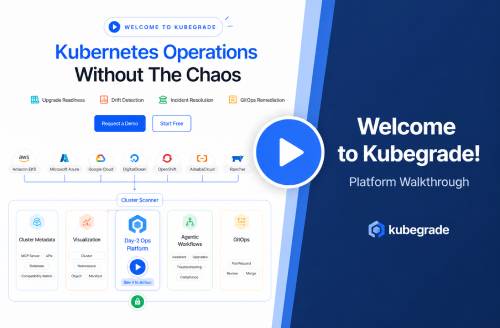
- Kubegrade simplifies Kubernetes cluster management with secure, automated operations, including monitoring, upgrades, and optimization.
Table of Contents
- Introduction to Kubernetes Training
- Key Skills Covered in Kubernetes Training Courses
- Online vs. In-Person Kubernetes Training: Which Is Right for You?
- Top Kubernetes Training Courses: A Detailed Comparison
- Conclusion: Choosing the Right Kubernetes Training for Your Career
- Frequently Asked Questions
Introduction to Kubernetes Training

Welcome! Kubernetes has become increasingly vital in today’s IT infrastructure. It is an open-source platform designed to automate deploying, and managing containerized applications. Professionals should learn Kubernetes to manage modern application architectures that use microservices, improving resilience.
This article guides readers in selecting the best Kubernetes training courses to improve their skills and career prospects. With the right training, individuals can gain the expertise needed to navigate container orchestration.
Kubernetes simplifies cluster management. It offers a platform for secure, and automated K8s operations, including monitoring, upgrades, and optimization.
The demand for Kubernetes skills is high, with over 91,000 Kubernetes-related job listings worldwide in 2024.
Key Skills Covered in Kubernetes Training Courses
Comprehensive Kubernetes training courses should cover core skills vital for managing Kubernetes clusters effectively. These skills enable professionals to deploy, manage, and monitor applications in DevOps and cloud-native environments.
Kubernetes Architecture
Knowing Kubernetes architecture is crucial. This includes knowledge of the control plane, worker nodes, pods, services, and the relationships between these components. Knowing how these parts interact helps in designing and troubleshooting applications effectively.
Real-world Example: In a microservices architecture, knowing Kubernetes architecture allows DevOps engineers to manage the deployment and scaling of individual microservices, each component operates efficiently.
Containerization with Docker
Containerization with Docker is a foundational skill. Kubernetes manages containerized applications, so proficiency in Docker is important for creating and managing containers. This includes building, pushing, and managing container images.
Real-world Example: DevOps teams use Docker to containerize applications, making them portable across different environments, and then use Kubernetes to orchestrate these containers in production.
Deployment Strategies
Knowing deployment strategies is important for updating applications without downtime. Common strategies include rolling updates, blue/green deployments, and canary releases. Each strategy has its use cases, depending on the application’s requirements.
Real-world Example: A company uses a rolling update strategy to deploy a new version of its e-commerce application, gradually replacing old pods with new ones to ensure continuous availability for customers.
Networking
Kubernetes networking involves knowing how pods communicate with each other and with external services. Key concepts include services, ingress controllers, and network policies. Properly configured networking is crucial for application functionality and security.
Real-world Example: In a cloud-native environment, network policies are used to restrict traffic between different microservices, enhancing security and preventing unauthorized access.
Security
Kubernetes security is vital for protecting applications and data. This includes knowing RBAC (Role-Based Access Control), pod security policies, and network segmentation. Security skills are important for preventing unauthorized access and data breaches.
Real-world Example: Implementing RBAC in a Kubernetes cluster that only authorized users and services can access sensitive resources, reducing the risk of security incidents.
Monitoring
Effective monitoring is crucial for maintaining the health and performance of Kubernetes clusters. This involves collecting and analyzing metrics, logs, and events to identify issues and optimize resource utilization. Tools like Prometheus and Grafana are commonly used for monitoring Kubernetes environments.
Real-world Example: A monitoring system alerts the operations team when CPU usage exceeds a threshold, allowing them to scale up resources before performance is affected.
Job Opportunities and Salaries
Improving these skills can lead to better job opportunities and higher salaries. Roles such as DevOps Engineer, Cloud Architect, and Site Reliability Engineer (SRE) require Kubernetes expertise. The average salary for Kubernetes engineers ranges from $140,000 to $160,000 per year, with senior roles earning even more. Continuous learning and certifications can further boost career prospects.
Kubernetes Architecture and Core Concepts
Kubernetes architecture follows a distributed model, comprising multiple components working together to ensure the execution of containerized applications [11]. A Kubernetes cluster consists of two main parts: the control plane and the worker nodes [1, 2, 3, 13]. The control plane manages the cluster, and the worker nodes run the applications [1, 13].
Control Plane
The control plane is the brain of the Kubernetes cluster [1, 3, 5]. It manages the state of the cluster and makes decisions about how to run applications [3, 4, 5, 8, 13]. Key components of the control plane include [1, 3, 4, 5]:
- kube-apiserver: The front end for the Kubernetes control plane. It exposes the Kubernetes API, allowing users and other components to interact with the cluster [1, 3, 4, 6, 8].
- etcd: A distributed key-value store that stores the cluster’s configuration data and state. It serves as the cluster’s brain, and can only be accessed via the kube-api server [1, 4, 6, 8, 14].
- kube-scheduler: Responsible for assigning pods to nodes based on resource availability and other constraints [1, 4, 6, 8].
- kube-controller-manager: Manages various controllers that regulate the state of the cluster. Controllers include the node controller, replication controller, and endpoint controller [1, 2, 4, 6, 8, 9].
- cloud-controller-manager: Manages cloud-specific resources, such as load balancers and storage [1, 4, 8].
Worker Nodes
Worker nodes are the machines that run containerized applications [1, 5, 7, 9, 13]. Each worker node includes the following components [1, 5, 7, 9]:
- kubelet: An agent that runs on each node and communicates with the control plane. It receives commands from the kube-apiserver and manages the containers running on the node [1, 5, 7, 12, 13].
- kube-proxy: A network proxy that runs on each node and manages network traffic to the pods [1, 5, 7, 12, 13].
- Container runtime: The software responsible for running containers. Common container runtimes include Docker and containerd [1, 5, 7, 12].
Interaction
The control plane and worker nodes work together to manage containerized applications [3, 8, 13]. The user defines the desired state of the application through the Kubernetes API [2, 9]. The control plane then that the actual state matches the desired state [2, 4, 9]. The kube-scheduler assigns pods to nodes, and the kubelet that the containers are running as expected [1, 4, 6, 8, 12, 13]. The kube-proxy manages network traffic to the pods, enabling communication within and outside the cluster [1, 5, 7, 12, 13].
This knowledge of Kubernetes architecture and core concepts is the foundation for effective cluster management. Kubernetes training courses should provide a solid of these components and their interactions [1, 2, 3, 7, 11, 14].
Containerization with Docker: The Foundation of Kubernetes
Docker plays a crucial role in containerizing applications for Kubernetes. Containerization packages an application with all its dependencies into a single, portable image [1]. This that the application runs consistently across different environments, from development to production [2].
Creating Docker Images and Managing Containers
To create Docker images, one uses a Dockerfile, a text document that contains all the commands needed to assemble an image [3, 4]. The Dockerfile specifies the base image, adds application code, sets environment variables, and defines the startup command [3, 4, 5].
# Example DockerfileFROM ubuntu:latestMAINTAINER Your Name "your.email@example.com"RUN apt-get update && apt-get install -y nginxCOPY . /var/www/htmlEXPOSE 80CMD ["nginx", "-g", "daemon off;"]This Dockerfile starts from a base Ubuntu image, installs Nginx, copies the application files, exposes port 80, and starts the Nginx server [3, 4, 5].
Once the Dockerfile is created, the docker build command is used to build the image [3, 6]:
docker build -t my-nginx-app .After building the image, it can be run using the docker run command [3, 6]:
docker run -d -p 80:80 my-nginx-appImportance of Containerization
Containerization offers several benefits [2, 7]:
- Portability: Docker containers can run on any platform that supports Docker, applications can be moved easily [2, 7].
- Scalability: Containers allow applications to be scaled quickly by creating multiple instances [2, 7].
- Resource Efficiency: Containers share the host OS kernel, making them lightweight and resource-efficient [2, 7].
Deploying Docker Containers in Kubernetes
In Kubernetes, Docker containers are deployed as pods [8, 9]. A pod is the smallest deployable unit in Kubernetes and can contain one or more containers [8, 9]. The following YAML file defines a simple Kubernetes deployment that runs the my-nginx-app Docker image:
apiVersion: apps/v1kind: Deploymentmetadata: name: my-nginx-deploymentspec: replicas: 3 selector: matchLabels: app: nginx template: metadata: labels: app: nginx spec: containers: - name: nginx image: my-nginx-app ports: - containerPort: 80This deployment creates three replicas of the my-nginx-app, that the application is highly available [8, 9].
Kubernetes training courses often integrate Docker skills, teaching participants how to build, manage, and deploy containerized applications in Kubernetes [10].
Deployment Strategies and Configuration Management
Kubernetes offers multiple deployment strategies to applications [1]. These strategies allow for updating applications with minimal downtime and risk [2]. Key deployment strategies include rolling updates, blue/green deployments, and canary deployments [1, 2].
Rolling Updates
Rolling updates replace old versions of an application with new ones gradually [1]. This strategy ensures continuous availability and allows for easy rollback if issues arise [1, 3].
Example Kubernetes manifest for a rolling update:
apiVersion: apps/v1kind: Deploymentmetadata: name: my-app-deploymentspec: replicas: 3 strategy: type: RollingUpdate rollingUpdate: maxSurge: 1 maxUnavailable: 0 selector: matchLabels: app: my-app template: metadata: labels: app: my-app spec: containers: - name: my-app image: my-app:v1In this example, maxSurge specifies the maximum number of pods that can be created above the desired number of replicas, and maxUnavailable specifies the maximum number of pods that can be unavailable during the update [3].
Blue/Green Deployments
Blue/green deployments involve running two identical environments: blue (the current version) and green (the new version) [2, 4]. Traffic is switched from blue to green once the new version is tested and verified [2, 4].
Steps for a blue/green deployment:
- Deploy the green environment with the new version of the application [4].
- Test the green environment to that it is working correctly [4].
- Switch traffic from the blue environment to the green environment [4].
Canary Deployments
Canary deployments involve routing a small percentage of traffic to the new version of the application [2, 5]. This allows for monitoring the new version in a production environment with minimal impact [2, 5].
Steps for a canary deployment:
- Deploy the canary version of the application [5].
- Route a small percentage of traffic to the canary [5].
- Monitor the canary version for errors or performance issues [5].
- If no issues are found, gradually increase the traffic to the canary [5].
Configuration Management with ConfigMaps and Secrets
ConfigMaps and Secrets are used to manage configuration data in Kubernetes [6, 7]. ConfigMaps store non-confidential data, while Secrets store sensitive information such as passwords and API keys [6, 7].
Example ConfigMap:
apiVersion: v1kind: ConfigMapmetadata: name: my-app-configdata: app.name: "My Application" app.version: "1.0"Example Secret:
apiVersion: v1kind: Secretmetadata: name: my-app-secrettype: Opaquedata: database.password: "Base64 encoded password"These ConfigMaps and Secrets can be mounted as volumes or environment variables in pods [6, 7].
Kubernetes training courses provide learners with the skills to automate application deployments using these strategies and configuration management techniques [8].
Networking and Service Discovery in Kubernetes
Kubernetes networking is vital for enabling communication between pods and external access to applications [1]. Key networking concepts include services, ingress, and network policies [2, 3].
Services
Services provide a stable IP address and DNS name for accessing pods [1, 4]. They act as a load balancer, distributing traffic across multiple pods [1, 4]. There are different types of services:
- ClusterIP: Exposes the service on a cluster-internal IP address. Only accessible from within the cluster [4, 5].
- NodePort: Exposes the service on each node’s IP address at a static port. Accessible from outside the cluster [4, 5].
- LoadBalancer: Exposes the service externally using a cloud provider’s load balancer. Traffic is routed to the service [4, 5].
- ExternalName: Maps the service to an external DNS name [4, 5].
Example Service:
apiVersion: v1kind: Servicemetadata: name: my-app-servicespec: selector: app: my-app ports: - protocol: TCP port: 80 targetPort: 8080 type: ClusterIPThis service directs traffic on port 80 to pods with the label app: my-app on port 8080 [4, 5].
Ingress
Ingress manages external access to services in a cluster [2, 6]. It acts as an HTTP load balancer, routing traffic to different services based on the hostname or path [2, 6]. Ingress requires an ingress controller, such as Nginx or Traefik [2, 6].
Example Ingress:
apiVersion: networking.k8s.io/v1kind: Ingressmetadata: name: my-app-ingressspec: rules: - host: myapp.example.com http: paths: - path: / pathType: Prefix backend: service: name: my-app-service port: number: 80This ingress routes traffic to myapp.example.com to the my-app-service on port 80 [2, 6].
Network Policies
Network policies control traffic flow between pods [3, 7]. They provide security by isolating applications and preventing unauthorized access [3, 7]. Network policies use labels to select pods and define rules for allowing or denying traffic [3, 7].
Example Network Policy:
apiVersion: networking.k8s.io/v1kind: NetworkPolicymetadata: name: my-app-policyspec: podSelector: matchLabels: app: my-app policyTypes: - Ingress ingress: - from: - podSelector: matchLabels: app: allowed-appThis network policy allows traffic to pods with the label app: my-app only from pods with the label app: allowed-app [3, 7].
Kubernetes training courses cover these networking skills, providing participants with the knowledge to configure and manage Kubernetes networks effectively [8].
Online vs. In-Person Kubernetes Training: Which Is Right for You?
When choosing Kubernetes training courses, individuals often face the decision of whether to opt for online or in-person formats. Both options offer distinct advantages and disadvantages, depending on individual learning styles, preferences, and circumstances.
Online Kubernetes Training
Online Kubernetes training courses provide flexibility and convenience. Learners can access course materials and participate in training sessions from anywhere with an internet connection. This format is often more affordable than in-person training, as it eliminates costs associated with travel and accommodation.
Pros:
- Flexibility: Study at your own pace and on your own schedule.
- Cost-Effective: Lower tuition fees and no travel expenses.
- Accessibility: Access course materials from anywhere in the world.
- Self-Paced Learning: Review content as needed.
Cons:
- Lack of Face-to-Face Interaction: Limited direct interaction with instructors and peers.
- Requires Self-Discipline: Requires self-motivation to stay on track.
- Potential for Distractions: Home or office environments may have distractions.
In-Person Kubernetes Training
In-person Kubernetes training courses offer a structured learning environment with direct interaction with instructors and fellow students. This format provides immediate feedback and opportunities for hands-on learning through labs and group projects.
Pros:
- Direct Interaction: Face-to-face interaction with instructors and peers.
- Structured Learning: Scheduled classes and a set curriculum.
- Networking Opportunities: Opportunities to network with other professionals.
- Hands-On Experience: Access to in-person labs and equipment.
Cons:
- Higher Cost: Higher tuition fees and travel expenses.
- Less Flexibility: Fixed schedules and locations.
- Time Commitment: Requires a significant time commitment.
Key Differences
| Feature | Online Training | In-Person Training |
|---|---|---|
| Cost | Lower | Higher |
| Flexibility | High | Low |
| Interaction | Limited | Direct |
| Pace | Self-Paced | Structured |
| Location | Anywhere | Fixed |
Assessing Learning Preferences
To choose the best format, assess individual learning preferences. If one values flexibility and self-paced learning, online training may be the better option. If one prefers direct interaction and a structured environment, in-person training may be more suitable.
For those practicing Kubernetes skills, Kubegrade simplifies Kubernetes cluster management. It’s a platform for secure, , and automated K8s operations, enabling monitoring, upgrades, and optimization.
The Benefits of Online Kubernetes Training
Online Kubernetes training courses offer numerous advantages, making them a popular choice for many professionals [1]. These benefits cater to individuals seeking flexibility, affordability, and a wide range of learning options [2].
Flexibility and Convenience
One of the primary benefits of online training is the flexibility it offers in scheduling [1, 3]. Learners can access course materials and attend virtual sessions at times that best fit their schedules. This is particularly beneficial for individuals with work or family commitments [3]. The ability to pause, rewind, and review content at any time allows for a personalized learning experience [3].
Self-Paced Learning
Online courses enable learners to progress at their own pace [2, 4]. This self-paced learning approach is ideal for those who prefer to spend more time on challenging topics and less time on familiar ones [4]. Learners can revisit modules as needed, a thorough of the material [4].
Cost-Effectiveness
Online Kubernetes training is often more affordable than in-person training [2, 5]. The absence of travel, accommodation, and other associated costs makes online courses a budget-friendly option [5]. many online platforms offer payment plans or discounts, further reducing the financial burden [5].
Accessibility and Wider Range of Options
Online platforms provide access to a wider range of Kubernetes training courses from various providers around the world [1, 2]. This allows learners to choose courses that best align with their specific needs and career goals [1, 2]. Online resources, such as video lectures, tutorials, and documentation, are readily available [1, 2].
Successful Online Learning Platforms
Several online learning platforms offer Kubernetes training courses [6, 7]:
- Coursera: Provides courses from top universities and institutions [6].
- Udemy: Offers a wide variety of courses taught by industry experts [6].
- A Cloud Guru: Specializes in cloud computing courses, including Kubernetes [7].
- Linux Foundation Training: Offers official Kubernetes certifications and training programs [7].
These platforms often include features such as interactive quizzes, hands-on labs, and discussion forums to the learning experience [6, 7].
Staying Motivated in an Online Learning Environment
A common concern with online learning is the need for self-discipline [3, 4]. Here are some tips for staying motivated:
- Set Clear Goals: Define specific learning objectives and track progress [3].
- Create a Schedule: Establish a consistent study schedule and stick to it [3].
- Find a Study Space: Designate a quiet and distraction-free area for studying [3].
- Join a Community: Participate in online forums or study groups to connect with other learners [3].
- Reward Yourself: Celebrate milestones to stay motivated [3].
The Advantages of In-Person Kubernetes Training
In-person Kubernetes training courses offer a unique learning experience with benefits that online formats cannot fully replicate [1]. These advantages stem from direct interaction, structured learning, and community engagement [2].
Direct Interaction with Instructors and Peers
Face-to-face interaction with instructors allows for immediate clarification of doubts and personalized guidance [1, 3]. Instructors can adapt their teaching style to suit the needs of the class, that all learners grasp the concepts [3]. Interaction with peers a collaborative learning environment where individuals can share knowledge and learn from each other’s experiences [3].
Immediate Feedback
In-person training provides immediate feedback on assignments and exercises [2, 4]. This allows learners to identify and correct mistakes quickly, reinforcing their [4]. Instructors can provide constructive criticism and suggestions for improvement, helping learners to refine their skills [4].
Hands-On Labs and Collaborative Projects
In-person courses often include hands-on labs and collaborative projects that provide practical experience in working with Kubernetes [1, 2]. These activities allow learners to apply their knowledge in real-world scenarios, solidifying their and building confidence [1, 2]. Collaborative projects also promote teamwork and communication skills, which are valuable in a professional setting [2].
Stronger Sense of Community and Networking Opportunities
In-person training a stronger sense of community among learners [2, 5]. Regular interaction and shared experiences create bonds that can extend beyond the classroom [5]. In-person courses also provide valuable networking opportunities, allowing learners to connect with industry professionals and potential employers [5].
Immersive and Structured Learning Experience
In-person training offers a more immersive and structured learning experience compared to online formats [1, 3]. Scheduled classes, a set curriculum, and a dedicated learning environment help learners to stay focused and engaged [3]. The structured approach that all topics are covered in a systematic manner [3].
While in-person Kubernetes training may have a higher cost and less flexible scheduling, the benefits of direct interaction, immediate feedback, hands-on experience, and networking opportunities make it a worthwhile investment for many learners [1, 2].
Matching Your Learning Style to the Right Format
Selecting the right Kubernetes training courses format depends significantly on individual learning preferences [1]. Knowing your learning style can help you make an informed decision that maximizes your learning potential [2].
Different Learning Styles
There are several recognized learning styles [3]:
- Visual Learners: Learn best through visual aids such as diagrams, charts, and videos [3, 4].
- Auditory Learners: Prefer listening to lectures, discussions, and audio recordings [3, 4].
- Kinesthetic Learners: Learn through hands-on activities, experiments, and practical application [3, 4].
- Reading/Writing Learners: Prefer learning through written words, such as textbooks, articles, and notes [3, 4].
Learning Styles and Training Formats
Different learning styles align better with specific training formats [2, 3]:
- Visual Learners: Online courses with video lectures and visual aids or in-person courses with presentations and demonstrations [3, 4].
- Auditory Learners: Online courses with live lectures and discussion forums or in-person courses with interactive discussions [3, 4].
- Kinesthetic Learners: In-person courses with hands-on labs and group projects [3, 4].
- Reading/Writing Learners: Online courses with comprehensive documentation and written assignments or in-person courses with detailed notes and readings [3, 4].
Quiz: Identify Your Learning Style
Answer the following questions to identify your learning style:
- When learning something new, do you prefer:
- Seeing diagrams and charts?
- Listening to someone explain it?
- Doing it yourself?
- Reading about it?
- Do you remember information best when you:
- See it written down?
- Hear it spoken?
- Practice it?
- Take detailed notes?
- Do you prefer instructions that are:
- Visual and illustrated?
- Verbal and explained?
- Hands-on and demonstrated?
- Written and detailed?
Mostly A’s: Visual Learner
Mostly B’s: Auditory Learner
Mostly C’s: Kinesthetic Learner
Mostly D’s: Reading/Writing Learner
Recommendations Based on Learning Styles
- Visual Learners: Look for online Kubernetes training with high-quality video content and clear diagrams. In-person courses should include presentations and visual aids [3, 4].
- Auditory Learners: Opt for online courses with live lectures and interactive Q&A sessions. In-person courses should encourage active participation and discussions [3, 4].
- Kinesthetic Learners: Choose in-person Kubernetes training with extensive hands-on labs and real-world projects. Online courses should offer virtual labs and simulations [3, 4].
- Reading/Writing Learners: Select online courses with comprehensive documentation, written assignments, and detailed notes. In-person courses should provide handouts and reading materials [3, 4].
Consider Personal Circumstances
When choosing a training format, consider your personal circumstances [1, 2]:
- Work Schedule: Online courses offer flexibility for those with busy schedules [1, 2].
- Budget: Online courses are often more affordable than in-person training [1, 2].
- Access to Technology: that you have a reliable internet connection and the necessary hardware and software for online courses [1, 2].
By assessing your learning style and considering your personal circumstances, you can choose the Kubernetes training format that best suits your needs and maximizes your learning potential [1, 2].
Top Kubernetes Training Courses: A Detailed Comparison
Choosing the right Kubernetes training courses can significantly impact your ability to master Kubernetes and advance your career [1]. This section presents a curated list of top Kubernetes training courses, comparing their features and benefits to help you make an informed decision [2].
Online Kubernetes Training Courses
-
Certified Kubernetes Administrator (CKA) by Linux Foundation
- Provider: Linux Foundation
- Price: $395 (Exam Fee)
- Duration: Self-Paced (Approximately 40 hours)
- Skill Level: Intermediate
- Key Topics Covered: Core Concepts, Networking, Security, Storage, Troubleshooting [3]
- Description: This certification validates the skills, knowledge, and competency to perform the responsibilities of a Kubernetes administrator [3].
- Reviews: “The CKA certification is highly respected in the industry and demonstrates a solid of Kubernetes administration.” [3]
-
Kubernetes Certified Application Developer (CKAD) by Linux Foundation
- Provider: Linux Foundation
- Price: $395 (Exam Fee)
- Duration: Self-Paced (Approximately 30 hours)
- Skill Level: Intermediate
- Key Topics Covered: Application Design, Build & Deploy, Configuration, Security, Services & Networking [4]
- Description: This certification demonstrates competency in designing, building, and deploying cloud-native applications on Kubernetes [4].
- Reviews: “The CKAD certification is ideal for developers who want to demonstrate their Kubernetes skills.” [4]
-
Kubernetes for Developers by KodeKloud
- Provider: KodeKloud
- Price: Subscription-Based (Starting at $29/month)
- Duration: Self-Paced (Approximately 25 hours)
- Skill Level: Beginner to Intermediate
- Key Topics Covered: Pods, Deployments, Services, Networking, Configuration Management [5]
- Description: This course provides a hands-on introduction to Kubernetes for developers, covering concepts and practical skills [5].
- Reviews: “KodeKloud’s Kubernetes course is excellent for learning Kubernetes through hands-on exercises.” [5]
-
Learn Kubernetes Basics by Google Cloud Skills Boost
- Provider: Google Cloud Skills Boost
- Price: Subscription-Based (Starting at $29/month)
- Duration: Self-Paced (Approximately 10 hours)
- Skill Level: Beginner
- Key Topics Covered: Kubernetes Concepts, Deploying Applications, Managing Workloads, Scaling Applications [6]
- Description: This quest provides a hands-on introduction to Kubernetes, covering concepts and practical skills [6].
- Reviews: “Google Cloud Skills Boost provides a solid starting point for learning Kubernetes.” [6]
In-Person Kubernetes Training Courses
-
Kubernetes Administration Training by Global Knowledge
- Provider: Global Knowledge
- Price: Varies by Location (Approximately $3,000)
- Duration: 5 Days
- Skill Level: Intermediate to Advanced
- Key Topics Covered: Cluster Setup, Networking, Security, Storage, Monitoring, Troubleshooting [7]
- Description: This course provides in-depth training on Kubernetes administration, covering advanced topics and best practices [7].
- Reviews: “Global Knowledge’s Kubernetes course is comprehensive and provides valuable hands-on experience.” [7]
-
Certified Kubernetes Administrator (CKA) Training by Kube Campus
- Provider: Kube Campus
- Price: Varies (Check with provider)
- Duration: Varies (Check with provider)
- Skill Level: Intermediate
- Key Topics Covered: CKA Exam Domains
- Description: Get CKA certified with the assistance of Kubernetes experts.
- Reviews: N/A
Course Comparison
| Course | Curriculum Depth | Hands-On Labs | Instructor Expertise | Community Support |
|---|---|---|---|---|
| CKA (Linux Foundation) | High | Moderate | High | High |
| CKAD (Linux Foundation) | High | Moderate | High | High |
| Kubernetes for Developers (KodeKloud) | Moderate | High | Moderate | Moderate |
| Learn Kubernetes Basics (Google Cloud Skills Boost) | Low | Low | Moderate | Low |
| Kubernetes Administration (Global Knowledge) | High | High | High | Moderate |
| CKA Training (Kube Campus) | Moderate | Moderate | High | High |
Explore these Kubernetes training courses further to find the one that best fits your learning style and career goals [1, 2].
Conclusion: Choosing the Right Kubernetes Training for Your Career
Throughout this article, we’ve explored the significance of Kubernetes training courses in today’s IT . [1]. Kubernetes skills are highly valued in the job market, opening doors to numerous career opportunities and higher salaries [2].
When selecting a Kubernetes training course, consider your learning style, budget, and career goals [3]. Determine whether an online or in-person format best suits your needs, and choose a course that with your skill level and interests [3].
Taking the next step in your Kubernetes by enrolling in a training course can significantly your career prospects [1, 2]. The knowledge and skills you gain will enable you to manage and deploy containerized applications effectively [1].
After completing your training, remember that Kubegrade can help you manage and optimize your Kubernetes deployments. It simplifies Kubernetes cluster management with secure, , and automated K8s operations, including monitoring, upgrades, and optimization.

