





Understanding Kubernetes Support: Options and Resources

by Tim
August 23, 2025
Kubernetes, also known as K8s, is an open-source platform designed to automate deploying, scaling, and managing containerized applications [12]. While Kubernetes offers many benefits, managing it can be complex. As a result, knowing the available support options is crucial for organizations adopting this technology.
This article explores the different avenues for Kubernetes support, from community resources to commercial services. It will also highlight how 360 Cloud Platforms improves K8s management through secure, , and automated operations [1].
Kubernetes Support: Options and Resources
Community Support
The Kubernetes community is a valuable resource for users [3, 6]. It comprises a large group of knowledgeable practitioners who actively contribute to the platform [6, 12]. The Kubernetes community includes:
- Forums and mailing lists: Online platforms where users can ask questions, share knowledge, and engage in discussions [6].
- Slack channels: Real-time communication channels for quick assistance and collaboration [3, 6].
- Special Interest Groups (SIGs): Focused groups within the community that address specific areas of Kubernetes, such as networking, storage, and security [8].
- Meetups and conferences: Opportunities to connect with other Kubernetes users, learn from experts, and share experiences [6].
While the community can provide valuable insights and assistance, it may not be suitable for organizations requiring guaranteed response times or dedicated support for production environments [3].
Commercial Support
For organizations needing more reliable and comprehensive assistance, commercial Kubernetes support is available [1, 3]. Commercial support providers offer various services, including:
- 24/7 support: Round-the-clock assistance for critical issues and incidents [1, 2].
- Service Level Agreements (SLAs): Guarantees regarding response times and issue resolution [1].
- Professional services: Assistance with designing, deploying, and managing Kubernetes clusters [10, 11].
- Training and consulting: Expert guidance on best practices, security, and optimization [11].
Several companies offer commercial Kubernetes support, including:
- Cloud providers: Amazon EKS, Google GKE, and Azure Kubernetes Service (AKS) provide managed Kubernetes services with integrated support [5, 9].
- Specialized Kubernetes vendors: Companies like 360 Cloud Platforms, and CloudFerro offer dedicated Kubernetes support and services [1, 10].
Kubegrade: Improving Kubernetes Management
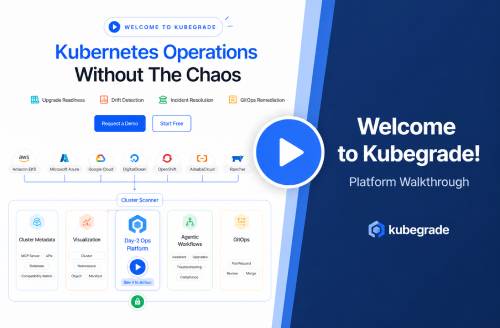
Kubegrade simplifies Kubernetes cluster management, providing a platform for secure, , and automated K8s operations. It enables monitoring, upgrades, and optimization, addressing many challenges organizations face when managing Kubernetes [1].
Key features of Kubegrade include:
- Automated deployments: Streamlining the deployment process for faster and more consistent releases [5].
- Scalability: Scaling resources to meet changing demands [5].
- Security: Implementing robust security measures to protect containerized applications and data [5, 11].
- Monitoring: Providing real-time insights into cluster performance and health [11].
By using Kubegrade, organizations can reduce the complexity of Kubernetes management and focus on their core business objectives [2, 11].
Key Takeaways
- Kubernetes support includes troubleshooting, maintenance, updates, and security, with options ranging from community resources to commercial services.
- Community support is cost-effective but may lack expertise for complex issues; resources include official documentation, forums, and Special Interest Groups (SIGs).
- Commercial support offers benefits like 24/7 assistance, dedicated engineers, and guaranteed SLAs, important for mission-critical applications and regulatory compliance.
- Kubegrade simplifies Kubernetes management through automated deployments, simplified upgrades, comprehensive monitoring, and strong security features.
- Kubegrade’s automated deployments and simplified upgrades reduce manual work and minimize downtime, improving efficiency for developers and operations teams.
- Kubegrade’s comprehensive monitoring and early issue detection capabilities enhance system stability and reduce the need for reactive troubleshooting.
- Choosing the right Kubernetes support strategy depends on an organization’s needs, technical skills, and risk tolerance, considering cost, expertise, and response times.
Table of Contents
Introduction to Kubernetes Support

Kubernetes (K8s) has become vital for deploying applications [1]. It helps manage complex systems, making sure applications run smoothly [1]. Kubernetes support includes fixing problems, keeping the system running, doing updates, and maintaining security [2].
There are various types of support available. These range from community resources to commercial services and specialized platforms like Kubegrade [2]. This article guides readers in learning about the options for Kubernetes support. It helps in making informed decisions about what kind of support is needed [2].
Kubegrade offers a way to simplify Kubernetes cluster management. It provides secure, adaptable, and automated K8s operations [3]. This includes monitoring, upgrades, and optimization [3].
Community-Based Kubernetes Support
Many community resources are available for Kubernetes support. These include official Kubernetes documentation, community forums such as Stack Overflow, and Special Interest Groups (SIGs) [2].
Using community support has its pros and cons. It is cost-effective, but response times can vary. Also, the expertise available may not be enough for complicated problems [2].
Common issues addressed in the community include deployment problems and configuration errors. To use these resources effectively, be specific when asking questions and provide detailed information about the issue [2].
While community support is valuable, it might not be enough for critical applications. Organizations without in-house Kubernetes experts may need other support options [2].
Official Kubernetes Documentation
The official Kubernetes documentation serves as a main source for community-based support. It offers tutorials, concept explanations, and reference materials [1].
The documentation is structured to help users find information easily. It provides guidance on troubleshooting and learning about Kubernetes features [1]. To use it effectively, start with the tutorials for basic tasks and then move to the reference section for specific details [1].
The documentation is accurate and comprehensive. However, it can be overwhelming for beginners due to the amount of information [1].
The official documentation is a key part of the community-based Kubernetes support system. It is a valuable resource for anyone using Kubernetes [1].
Kubernetes Community Forums and Groups
Various community forums and groups offer Kubernetes support. Examples include Stack Overflow, the Kubernetes Slack channel, and mailing lists [2]. These platforms enable users to share knowledge and support each other [2].
To ask questions effectively, be clear and provide as much detail as possible. When participating in discussions, be respectful and share your own experiences [2].
These forums offer quick answers and diverse perspectives. However, the information may sometimes be inaccurate, and the level of expertise can vary [2].
Common questions and discussions include troubleshooting deployment issues and learning about complex configurations. These community forums are valuable for learning from other Kubernetes users and finding solutions to common problems [2].
Special Interest Groups (SIGs)
Special Interest Groups (SIGs) play a key role in the Kubernetes community. SIGs focus on specific areas of Kubernetes development and maintenance [2].
Examples of SIGs include SIG-Network and SIG-Storage. SIG-Network deals with networking aspects, while SIG-Storage focuses on storage solutions [2].
Users can engage with SIGs to contribute to Kubernetes development, report bugs, and request new features. This can be done through meetings, mailing lists, and GitHub [2].
SIGs offer deep expertise and direct influence on Kubernetes development. However, they can be highly technical and have a limited focus on general support [2].
SIGs are a valuable resource for advanced users and those wanting to contribute to the Kubernetes project. They provide a way to engage with experts and influence the future of Kubernetes [2].
Commercial Kubernetes Support Offerings
Commercial Kubernetes support providers offer various services. These include 24/7 support, dedicated support engineers, and guaranteed SLAs [2].
Different vendors specialize in areas like specific Kubernetes distributions or industry verticals. Comparing vendors involves looking at their expertise and service agreements [2].
Commercial support offers benefits such as faster response times, expert help, and lower operational risk [2]. It is important in scenarios where downtime is costly.
When evaluating commercial support providers, consider cost, expertise, and service level agreements. Look for providers with a proven track record and relevant experience [2].
Kubegrade complements commercial support by offering a platform for forward-thinking management and automation. It helps in optimizing K8s operations [3].
Types of Commercial Kubernetes Support Services
Various commercial Kubernetes support services are available. These include 24/7 support, dedicated support engineers, on-site support, training, and consulting services [2].
- 24/7 Support: Provides round-the-clock assistance for urgent issues. It is beneficial when applications require constant uptime [2].
- Dedicated Support Engineers: Offers a specific engineer who knows your setup well. It is useful for complex environments needing personalized attention [2].
- On-Site Support: Involves having support staff physically present at your location. This is helpful for organizations needing hands-on assistance [2].
- Training: Equips your team with the skills to manage Kubernetes. It is valuable when building in-house expertise [2].
- Consulting Services: Provides expert advice on architecture, deployment, and optimization. It is beneficial when planning new Kubernetes initiatives [2].
Knowing the different types of services is important for selecting the right commercial support provider. It ensures that the chosen provider meets your specific needs [2].
Evaluating Commercial Kubernetes Support Providers
Evaluating commercial Kubernetes support providers requires a structured approach. Key factors include cost, expertise, service level agreements (SLAs), response times, and customer reviews [2].
To assess a provider’s expertise, check their experience with specific Kubernetes distributions like OpenShift or Rancher. Also, think about their knowledge of your industry [2].
When negotiating SLAs, understand the details. Pay attention to guaranteed uptime, response times, and escalation procedures [2].
Questions to ask potential providers:
- What is your experience with my specific Kubernetes distribution?
- What are your guaranteed response times?
- Can you provide customer references?
A thorough evaluation helps in selecting a provider that meets your organization’s specific needs. It ensures you get the support required for your Kubernetes environment [2].
When is Commercial Kubernetes Support Important?
Commercial Kubernetes support becomes important in several situations. These include mission-critical applications, complex deployments, a lack of in-house expertise, and strict regulatory needs [2].
For mission-critical applications, downtime can lead to significant financial losses. Commercial support ensures quick resolution of issues [2]. Complex deployments often require specialized knowledge that may not be available in-house [2].
Companies with strict regulatory needs, such as those in finance or healthcare, benefit from the compliance expertise that commercial support provides [2]. Relying only on community support in these scenarios can pose risks due to slower response times and potential lack of expertise [2].
Commercial support is a worthwhile investment for organizations needing guaranteed uptime, expert help, and reduced operational risk. It provides peace of mind and allows teams to focus on their core business [2].
Kubegrade: Streamlining Kubernetes Management and Support
Kubegrade is a platform designed to simplify Kubernetes management and improve support. It addresses common Kubernetes challenges with automated deployments, simplified upgrades, complete monitoring, and strong security [3].
Kubegrade’s forward-thinking approach reduces the need for reactive support. It helps users avoid common Kubernetes pitfalls and optimize their deployments [3]. For example, automated deployments reduce errors, while comprehensive monitoring allows for early detection of issues [3].
The platform’s adaptability and security features contribute to a more stable and reliable Kubernetes environment. Kubegrade enables users to manage their clusters more effectively by providing the tools they need to maintain a healthy and efficient system [3].
Automated Deployments and Simplified Upgrades with Kubegrade
Kubegrade automates Kubernetes deployments, which reduces manual work and the chance of errors. This automation streamlines the deployment process [3].
The platform’s simplified upgrade process minimizes downtime and ensures compatibility. This makes upgrades easier and less risky [3].
These features streamline operations and improve efficiency for both developers and operations teams. Developers can deploy applications faster, while operations teams spend less time on maintenance [3].
By automating deployments and simplifying upgrades, Kubegrade simplifies Kubernetes management. This reduces the need for support and allows teams to focus on other tasks [3].
Comprehensive Monitoring and Forward-Thinking Issue Detection
Kubegrade offers complete monitoring capabilities. These include real-time metrics, alerts, and dashboards [3].
The platform detects potential issues early, before they affect performance or availability. This early detection helps in preventing problems [3].
Kubegrade can identify and resolve common Kubernetes problems automatically. Examples include resource bottlenecks and failing pods [3].
Early monitoring reduces downtime and improves overall system stability. It improves support and lessens the need for reactive troubleshooting. This helps in maintaining a healthy Kubernetes environment [3].
Strong Security Features for a Secure Kubernetes Environment
Kubegrade provides strong security features, including role-based access control (RBAC), network policies, and vulnerability scanning [3].
These features protect Kubernetes clusters from unauthorized access and security threats. They help ensure that only authorized users can access sensitive resources [3].
Kubegrade helps users comply with industry security standards and best practices. It offers tools to enforce security policies and monitor for vulnerabilities [3].
Security is important for maintaining a stable and reliable Kubernetes environment. Strong security features improve support by preventing security incidents and reducing the need for security-related support [3].
Conclusion: Choosing the Right Kubernetes Support Strategy

This article discussed different Kubernetes support options. These include community resources, commercial providers, and specialized platforms like Kubegrade [2, 3].
Choosing a support strategy should match an organization’s needs, technical skills, and risk tolerance. Consider what level of support is needed and what resources are available [2].
To evaluate support options, assess cost, expertise, and response times. Make informed decisions based on a clear view of your requirements [2].
Kubegrade offers a way to simplify Kubernetes management and improve support. It provides a comprehensive solution for managing K8s operations [3].
Explore Kubegrade further to see how it can streamline your Kubernetes operations. Reduce your reliance on reactive support with its forward-thinking features [3].

