





Kubernetes Scalability Solutions: Optimizing Your Cluster for Scale

by Tim
August 6, 2025
Kubernetes has become a cornerstone for modern, cloud-native applications, automating application deployment, scaling, and management. As application demands grow, Kubernetes scalability becomes critical for guaranteeing high availability, optimal performance, and seamless expansion. Effective scalability makes sure applications have the resources to handle increased traffic while maintaining responsiveness and a seamless user experience.
This article explores Kubernetes scalability solutions to optimize cluster performance. It discusses strategies such as Horizontal Pod Autoscaling (HPA) and Cluster Autoscaling for efficient resource management. By grasping and implementing these strategies, businesses can make sure their applications remain resilient, flexible, and ready to meet evolving demands.
Key Takeaways
- Kubernetes capacity refers to a cluster’s ability to efficiently handle increased workloads by adjusting resource allocation to applications based on their needs.
- Horizontal Pod Autoscaling (HPA) automatically adjusts the number of pod replicas based on CPU utilization, memory consumption, or custom metrics to maintain application availability.
- Cluster Autoscaling automatically adjusts the size of the Kubernetes cluster by adding or removing nodes based on workload demands, ensuring sufficient capacity.
- Vertical Pod Autoscaling (VPA) automatically adjusts the CPU and memory resources allocated to individual pods, optimizing resource utilization.
- Effective Kubernetes capacity management involves monitoring resource utilization, setting appropriate resource requests and limits, and regularly reviewing autoscaling configurations.
- Optimizing application code and infrastructure, such as implementing caching and connection pooling, can significantly improve capacity and responsiveness.
- Tools like Kubegrade can simplify Kubernetes cluster management by providing monitoring, optimization, and automation features to achieve optimal capacity and performance.
Table of Contents
Introduction to Kubernetes Capacity
Kubernetes has become a cornerstone of modern application deployment, offering a platform to automate the deployment, adjusting, and management of containerized applications [1]. Its ability to orchestrate containers across a cluster of machines makes it ideal for applications that need to handle varying levels of traffic and demand.
In the context of Kubernetes, capacity refers to the ability of a cluster to efficiently handle increased workloads [1]. This means being able to automatically adjust the resources allocated to an application based on its current needs. Capacity is crucial for maintaining application performance and reliability. Without it, applications may become slow or unresponsive during peak times, leading to a poor user experience.
Several Kubernetes capacity solutions are available to address these challenges. These include Horizontal Pod Autoscaling (HPA), which automatically adjusts the number of pod replicas based on CPU utilization or other metrics, and Cluster Autoscaling, which automatically adjusts the size of the Kubernetes cluster itself by adding or removing nodes as needed [1]. This article will explore these and other strategies for efficient resource management in Kubernetes.
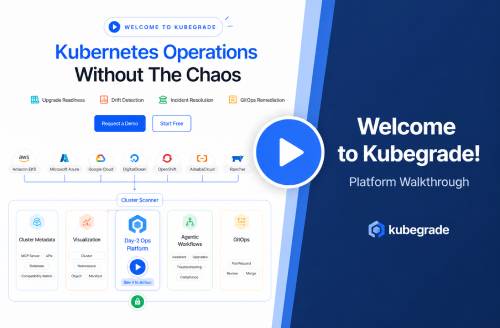
Kubegrade simplifies Kubernetes cluster management by providing a platform for secure, adjusting, and automated K8s operations. Kubegrade helps ensure adjusting and optimized deployments, allowing businesses to focus on their applications rather than the underlying infrastructure.
Horizontal Pod Autoscaling (HPA)
Horizontal Pod Autoscaling (HPA) is a feature in Kubernetes that automatically adjusts the number of pod replicas in a deployment or replication controller based on observed CPU utilization, memory consumption, or custom metrics [1]. It allows applications to automatically scale out (increase the number of pods) when demand increases and scale in (decrease the number of pods) when demand decreases, guaranteeing that applications have enough resources to handle the current workload [1].
Here?s how HPA works: The HPA controller periodically queries resource utilization metrics from the Kubernetes metrics server. Based on these metrics, it calculates the desired number of pod replicas needed to meet the target utilization. If the current number of replicas doesn’t match the desired number, HPA automatically adjusts the deployment or replication controller to create or remove pods [1].
Configuring HPA: A Step-by-Step Example
To configure HPA, you’ll need to define a target CPU utilization and the minimum and maximum number of replicas. Here?s an example:
- Define a Deployment: First, ensure you have a deployment for your application.
- Create an HPA Object: Use the
kubectl autoscalecommand to create an HPA object. For example:kubectl autoscale deployment my-app --cpu-percent=50 --min=1 --max=10This command creates an HPA object named “my-app” that targets the “my-app” deployment. It sets the target CPU utilization to 50%, the minimum number of replicas to 1, and the maximum number of replicas to 10.
- Verify HPA Status: Use the
kubectl get hpacommand to check the status of the HPA object.kubectl get hpa my-appThis command displays information about the HPA, including the current CPU utilization and the desired number of replicas.
The benefits of HPA are significant. By automatically adjusting the number of pod replicas, HPA helps maintain application availability during peak traffic. It guarantees that applications can handle increased workloads without manual intervention, providing a more responsive and reliable user experience.
HPA is one of the important Kubernetes scalability solutions. Kubegrade simplifies HPA configuration and management by providing a user-friendly interface and automated workflows. This allows users to easily define HPA policies and monitor their effectiveness, guaranteeing that applications are always properly adjusted to meet demand.
HPA Metrics and Configuration Details
HPA relies on metrics to trigger scaling events. While CPU utilization is common, memory consumption and custom metrics also play a role [1]. CPU utilization measures the percentage of CPU resources used by a pod, while memory consumption tracks the amount of memory a pod is using. Custom metrics allow you to scale based on application-specific indicators, such as the number of requests per second or the queue length [1].
To define target values for these metrics, you specify the desired average utilization or value in the HPA configuration. For CPU and memory, this is typically a percentage of the requested resources. For custom metrics, it’s a target value that reflects the desired performance level. These target values directly influence scaling behavior. Lower target values trigger scaling events sooner, while higher values delay scaling until resources are more constrained [1].
Setting appropriate resource requests and limits for pods is crucial for accurate metric reporting. Resource requests define the minimum amount of resources a pod requires, while resource limits define the maximum amount of resources a pod can use. If resource requests are not properly set, the HPA may not accurately reflect the actual resource usage of the pods, leading to incorrect scaling decisions [1].
Here are a couple of examples of different HPA configurations:
- CPU-Bound Application: For an application that is primarily CPU-bound, you might configure HPA to scale based on CPU utilization, with a target utilization of 70%.
- Memory-Intensive Application: For an application that consumes a lot of memory, you might configure HPA to scale based on memory consumption, with a target utilization of 80%.
- Request-Driven Application: For an application that handles incoming requests, you might configure HPA to scale based on a custom metric that tracks the number of requests per second, with a target value of 1000 requests per second.
Proper metric configuration is crucial for effective autoscaling, making it a key component of Kubernetes scalability solutions. Without accurate metrics and appropriate target values, HPA may not be able to properly scale applications to meet demand, leading to performance issues or wasted resources.
Step-by-Step HPA Configuration Example
This example demonstrates how to configure HPA for a sample application. We will deploy a simple application, create an HPA object, and verify that autoscaling is functioning correctly.
- Deploy the Sample Application: First, deploy a sample application to your Kubernetes cluster. Here?s an example deployment YAML file:
apiVersion: apps/v1kind: Deploymentmetadata: name: sample-appspec: replicas: 1 selector: matchLabels: app: sample-app template: metadata: labels: app: sample-app spec: containers: - name: sample-app image: nginx resources: requests: cpu: 200m limits: cpu: 500mApply this deployment using
kubectl apply -f deployment.yaml. - Create an HPA Object: Next, create an HPA object to automatically scale the sample application based on CPU utilization. Here?s an example HPA YAML file:
apiVersion: autoscaling/v2beta2kind: HorizontalPodAutoscalermetadata: name: sample-app-hpaspec: scaleTargetRef: apiVersion: apps/v1 kind: Deployment name: sample-app minReplicas: 1 maxReplicas: 5 metrics: - type: Resource resource: name: cpu target: type: Utilization averageUtilization: 50This HPA configuration targets the “sample-app” deployment, sets the minimum number of replicas to 1, the maximum number of replicas to 5, and the target CPU utilization to 50%. Apply this HPA configuration using
kubectl apply -f hpa.yaml. - Verify Autoscaling: To verify that autoscaling is working correctly, generate some load on the sample application. You can use a tool like
heyorloadtestto simulate traffic. Monitor the HPA status usingkubectl get hpa sample-app-hpa. You should see the number of replicas increase as the CPU utilization rises above the target value.
This step-by-step example illustrates how to configure HPA for a sample application. By defining the target CPU utilization, minimum replicas, and maximum replicas, you can automatically scale your application based on demand.
This configuration contributes to Kubernetes scalability solutions by automating the process of scaling applications. Kubegrade simplifies this process with its intuitive interface and automated configuration options, allowing users to easily define HPA policies and monitor their effectiveness.
Benefits and Limitations of HPA
HPA offers several key benefits for managing application capacity in Kubernetes. One significant advantage is improved application availability. By automatically scaling the number of pod replicas based on demand, HPA helps ensure that applications remain responsive even during peak traffic [1]. This reduces the risk of downtime and improves the user experience.
Another benefit is reduced resource costs. HPA allows applications to scale down when demand is low, freeing up resources that can be used by other applications [1]. This optimizes resource utilization and lowers infrastructure costs.
HPA also simplifies management. It automates the process of scaling applications, reducing the need for manual intervention. This frees up operations teams to focus on other tasks.
However, HPA also has some limitations. One limitation is its inability to scale based on custom metrics without additional configuration. By default, HPA only supports scaling based on CPU utilization and memory consumption [1]. To scale based on custom metrics, you need to install and configure a metrics server and define the custom metrics in the HPA configuration.
Another limitation is its potential to cause scaling oscillations. If the target utilization is set too aggressively, the HPA may rapidly scale up and down, leading to instability [1]. To mitigate this, you can use scaling stabilization techniques, such as setting a longer stabilization window or using a more conservative target utilization.
To mitigate these limitations:
- Custom Metrics: Implement a metrics server to expose custom metrics for scaling.
- Scaling Stabilization: Adjust the stabilization window to prevent rapid oscillations.
- Resource Requests and Limits: Properly define resource requests and limits to provide accurate metrics.
Kubernetes scalability solutions require a grasp of these trade-offs. Choosing the right scaling strategy involves weighing the benefits and limitations of HPA and considering other factors, such as the specific needs of the application and the characteristics of the workload. By carefully evaluating these factors, you can choose a scaling strategy that optimizes performance, resource utilization, and cost.
Cluster Autoscaling
Cluster Autoscaling is a Kubernetes feature that automatically adjusts the size of the cluster itself, unlike Horizontal Pod Autoscaling (HPA), which adjusts the number of pod replicas within the existing nodes [1]. Cluster Autoscaler adds or removes nodes based on the resource demands of the workloads running in the cluster. This ensures that the cluster has enough capacity to schedule all pods, even during peak traffic or unexpected spikes [1].
The Cluster Autoscaler works by monitoring the Kubernetes scheduler for pods that cannot be scheduled due to insufficient resources. When it detects such pods, it automatically provisions new nodes to the cluster. Conversely, when nodes are underutilized, Cluster Autoscaler removes them to optimize resource utilization and reduce costs [1].
Before using Cluster Autoscaler, certain prerequisites must be met. One key requirement is properly configured cloud provider integration. Cluster Autoscaler relies on the cloud provider’s APIs to provision and deprovision nodes. You also need to configure the minimum and maximum number of nodes for the cluster [1].
Cluster Autoscaling is particularly beneficial in scenarios where traffic patterns are unpredictable or when applications experience sudden spikes in demand. For example, during a flash sale or a major marketing campaign, an application might experience a surge in traffic that exceeds the capacity of the existing cluster. Cluster Autoscaler can automatically add nodes to handle the increased load, preventing performance degradation or downtime [1].
Cluster Autoscaling complements other scaling methods and is one of the Kubernetes scalability solutions. HPA adjusts the number of pods within a node, while Cluster Autoscaler adjusts the number of nodes in the cluster. Kubegrade can help monitor and manage cluster resources to optimize autoscaling decisions. By providing insights into resource utilization, Kubegrade enables users to fine-tune Cluster Autoscaler settings and ensure that the cluster is always properly sized to meet demand.
How Cluster Autoscaler Works
Cluster Autoscaler operates through a continuous monitoring and adjustment cycle. It watches for pods that are in a “pending” state because they cannot be scheduled onto existing nodes due to resource constraints [1]. Simultaneously, it monitors the utilization of existing nodes to identify underutilized nodes that could potentially be removed [1].
When unschedulable pods are detected, Cluster Autoscaler evaluates whether adding a new node would allow these pods to be scheduled. If it determines that adding a node would resolve the scheduling issue, it communicates with the cloud provider to provision a new node [1].
To determine when to scale down, Cluster Autoscaler identifies nodes that are underutilized for a sustained period. A node is considered underutilized if its CPU and memory utilization are below a certain threshold and if all pods running on the node can be safely moved to other nodes in the cluster [1].
Scaling policies influence the autoscaling behavior. These policies define the criteria for scaling up and down, such as the minimum and maximum number of nodes, the utilization thresholds, and the time intervals for monitoring node utilization. Different cloud providers may offer slightly different scaling policies, but the core principles remain the same [1].
Cloud provider integration is vital for Cluster Autoscaler to function. Cluster Autoscaler relies on the cloud provider’s APIs to provision and deprovision nodes. It uses these APIs to create new virtual machines, configure networking, and integrate the new nodes into the Kubernetes cluster [1].
Cluster Autoscaler contributes to overall cluster elasticity, and is one of the Kubernetes scalability solutions. By automatically adjusting the size of the cluster based on demand, it enables the cluster to adapt to changing workloads and optimize resource utilization.
Configuring Cluster Autoscaler
This example demonstrates how to configure Cluster Autoscaler on Google Kubernetes Engine (GKE). The process is similar for other cloud providers, but specific details may vary.
- Create a GKE Cluster: Create a GKE cluster with autoscaling enabled. When creating the cluster, specify the minimum and maximum number of nodes for the cluster.
- Set Up IAM Roles: Ensure that the Google Cloud service account used by the Cluster Autoscaler has the necessary IAM roles to manage instances in your project. The service account needs the
compute.instanceAdmin.v1role. - Deploy Cluster Autoscaler: Deploy the Cluster Autoscaler to your GKE cluster. Here?s an example deployment YAML file:
apiVersion: apps/v1kind: Deploymentmetadata: name: cluster-autoscaler namespace: kube-system labels: app: cluster-autoscalerspec: replicas: 1 selector: matchLabels: app: cluster-autoscaler template: metadata: labels: app: cluster-autoscaler spec: serviceAccountName: cluster-autoscaler containers: - image: k8s.gcr.io/autoscaling/cluster-autoscaler:v1.20.0 name: cluster-autoscaler resources: requests: cpu: 100m memory: 300Mi limits: cpu: 500m memory: 600Mi command: - ./cluster-autoscaler - --v=4 - --stderrthreshold=info - --cloud-provider=gce - --cluster-name=<YOUR_CLUSTER_NAME> volumeMounts: - name: ssl-certs mountPath: /etc/ssl/certs/ca-certificates.crt readOnly: true env: - name: GOOGLE_APPLICATION_CREDENTIALS value: /etc/gcp/gke-cluster-autoscaler.json volumes: - name: ssl-certs hostPath: path: "/etc/ssl/certs/ca-certificates.crt"Replace
<YOUR_CLUSTER_NAME>with the name of your GKE cluster. Apply this deployment usingkubectl apply -f cluster-autoscaler.yaml. - Verify Cluster Autoscaler: Check the logs of the Cluster Autoscaler pod to verify that it is running correctly. You should see messages indicating that it is monitoring the cluster and adjusting the size of the node pool as needed.
Proper configuration is crucial for effective Kubernetes scalability solutions. Kubegrade simplifies this process with its automated configuration and integration features, allowing users to easily set up and manage Cluster Autoscaler on various cloud providers.
Use Cases and Best Practices for Cluster Autoscaling
Cluster Autoscaler is particularly beneficial in several use cases. One common scenario is handling unpredictable traffic spikes. Applications that experience sudden surges in demand can use Cluster Autoscaler to automatically add nodes and maintain performance [1]. This is especially useful for e-commerce sites during flash sales or media streaming services during popular events.
Cluster Autoscaler is also well-suited for supporting batch processing workloads. Batch jobs often require significant resources for a limited time. Cluster Autoscaler can provision nodes to run these jobs and then remove them when the jobs are complete, optimizing resource utilization [1].
In multi-tenant environments, Cluster Autoscaler can help optimize resource utilization by allocating nodes to different tenants based on their individual needs. This ensures that each tenant has access to the resources they need without over-provisioning the cluster [1].
Here are some best practices for using Cluster Autoscaler:
- Set Appropriate Resource Requests and Limits: Properly define resource requests and limits for all pods. This allows Cluster Autoscaler to accurately assess the resource needs of the cluster and make informed scaling decisions [1].
- Monitor Cluster Health: Monitor the health of the cluster and the performance of the applications running in it. This helps identify potential issues and fine-tune Cluster Autoscaler settings [1].
- Avoid Over-Provisioning: Configure Cluster Autoscaler to avoid over-provisioning the cluster. This can be achieved by setting appropriate scaling policies and utilization thresholds [1].
- Use Pod Disruption Budgets (PDBs): Use PDBs to ensure that critical applications remain available during scale-down events. PDBs prevent Cluster Autoscaler from removing nodes that are running important pods [1].
These practices contribute to efficient and cost-effective adjusting, and are key to Kubernetes scalability solutions. By following these guidelines, you can maximize the benefits of Cluster Autoscaler and ensure that your Kubernetes cluster is always properly sized to meet demand.
Vertical Pod Autoscaling (VPA)
Vertical Pod Autoscaling (VPA) is a Kubernetes feature that automatically adjusts the CPU and memory resources allocated to individual pods [1]. Unlike Horizontal Pod Autoscaling (HPA), which scales applications by increasing or decreasing the number of pod replicas, VPA scales applications by modifying the resource requests and limits of the existing pods [1].
VPA offers several benefits. It can improve resource utilization by right-sizing pods, guaranteeing that they have enough resources to operate efficiently without wasting resources. VPA can also simplify resource management by automating the process of setting resource requests and limits [1].
However, VPA also has some drawbacks. One drawback is that it requires pods to be restarted when their resource requests and limits are changed. This can cause temporary disruptions to application availability. Another drawback is that VPA is more complex to configure and manage than HPA [1].
VPA is most effective in scenarios where applications have unpredictable resource requirements. For example, an application that processes variable-sized data or experiences fluctuating workloads might benefit from VPA. VPA can automatically adjust the resource allocations of the pods to match the current workload, guaranteeing that the application always has enough resources to operate efficiently [1].
To configure VPA, you need to create a VPA object that specifies the target pods and the desired autoscaling behavior. VPA offers different modes, such as “Auto,” “Recreate,” and “Off.” In “Auto” mode, VPA automatically adjusts the resource requests and limits of the pods and restarts them when necessary. In “Recreate” mode, VPA only restarts pods when it determines that a significant change in resource allocation is needed. In “Off” mode, VPA only provides recommendations for resource requests and limits but does not automatically adjust the pods [1].
VPA contributes to overall resource optimization, and is one of the Kubernetes scalability solutions. Kubegrade can provide insights into resource utilization to inform VPA configurations. By analyzing historical resource usage data, Kubegrade can help users determine the optimal resource requests and limits for their pods, improving the effectiveness of VPA.
VPA Operation Modes Details
VPA offers several operation modes that control how it adjusts pod resources. The primary modes are Auto, Initial, Recreate, and Off, each with distinct implications for pod lifecycle and resource allocation [1].
- Auto Mode: In Auto mode, VPA automatically updates the CPU and memory requests of a pod and, if necessary, evicts the pod to apply the new resource settings. This mode provides the most hands-off approach, continuously optimizing resources based on observed usage. It’s suitable for applications that can tolerate occasional restarts [1].
- Initial Mode: In Initial mode, VPA only sets the resource requests of a pod when it is first created. After the initial assignment, VPA does not make further adjustments. This mode is useful for applications where you want VPA to provide an initial resource allocation but prefer to manage subsequent changes manually [1].
- Recreate Mode: In Recreate mode, VPA only updates the resource requests of a pod if significant changes are recommended. When a change is required, VPA evicts the pod to apply the new settings. This mode is a middle ground between Auto and Initial, providing automatic adjustments while minimizing disruptions [1].
- Off Mode: In Off mode, VPA does not automatically adjust pod resources. Instead, it provides recommendations for CPU and memory requests, which you can then apply manually. This mode is useful for monitoring resource usage and making informed decisions about resource allocation without automated changes [1].
The choice of VPA operation mode depends on the characteristics of the application and operational requirements. Auto mode is suitable for applications that can tolerate restarts and benefit from continuous resource optimization. Initial mode is appropriate for applications where you want VPA to provide an initial resource allocation but prefer to manage subsequent changes manually. Recreate mode is a good compromise between automation and control, while Off mode is useful for monitoring and manual adjustments.
A grasp of these modes is crucial for effectively utilizing VPA as part of Kubernetes scalability solutions. By selecting the appropriate mode, you can balance the benefits of automated resource optimization with the need for application stability and control.
Configuring VPA and Interpreting Recommendations
This example demonstrates how to configure VPA for a sample application. We will deploy the VPA recommender and updater components, interpret VPA’s resource recommendations, and apply them to pod specifications.
- Deploy the Sample Application: First, deploy a sample application to your Kubernetes cluster. Here?s an example deployment YAML file:
apiVersion: apps/v1kind: Deploymentmetadata: name: sample-appspec: replicas: 1 selector: matchLabels: app: sample-app template: metadata: labels: app: sample-app spec: containers: - name: sample-app image: nginx resources: requests: cpu: 200m memory: 256MiApply this deployment using
kubectl apply -f deployment.yaml. - Deploy the VPA Components: Deploy the VPA recommender and updater components to your cluster. Follow the instructions in the official VPA documentation to install these components.
- Create a VPA Object: Next, create a VPA object to enable VPA for the sample application. Here?s an example VPA YAML file:
apiVersion: autoscaling.k8s.io/v1kind: VerticalPodAutoscalermetadata: name: sample-app-vpaspec: targetRef: apiVersion: apps/v1 kind: Deployment name: sample-app updatePolicy: updateMode: AutoThis VPA configuration targets the “sample-app” deployment and sets the update mode to “Auto.” Apply this VPA configuration using
kubectl apply -f vpa.yaml. - Interpret VPA Recommendations: After a few minutes, VPA will generate resource recommendations for the sample application. You can view these recommendations using the
kubectl describe vpa sample-app-vpacommand. The output will include recommended CPU and memory requests and limits. - Apply Recommendations: Update the deployment YAML file with the recommended resource requests and limits. Apply the updated deployment using
kubectl apply -f deployment.yaml.
This configuration contributes to Kubernetes scalability solutions by automating the process of right-sizing pods. Kubegrade can provide insights into resource utilization to inform VPA configurations and simplify the management process, allowing users to easily monitor VPA’s performance and adjust its configuration as needed.
VPA vs. HPA: Choosing the Right Autoscaling Strategy
Vertical Pod Autoscaling (VPA) and Horizontal Pod Autoscaling (HPA) are both Kubernetes autoscaling features, but they operate differently and address different needs. VPA adjusts the resource requests and limits of individual pods, while HPA adjusts the number of pod replicas [1].
HPA is well-suited for applications that can scale horizontally by adding more replicas. It’s effective when demand fluctuates and more instances are needed to handle the load. HPA responds to metrics like CPU utilization or requests per second, scaling out or in to maintain performance [1].
VPA, conversely, is better suited for applications where the resource requirements of individual pods vary. It’s useful for applications that process variable-sized data or have unpredictable memory needs. VPA ensures that each pod has the resources it needs to operate efficiently, optimizing resource use [1].
Here?s a comparison of when to use each:
- Choose HPA when:
- The application scales well horizontally.
- Demand fluctuates predictably.
- Scaling is based on CPU utilization or requests per second.
- Choose VPA when:
- The application’s resource needs vary significantly.
- Horizontal scaling is not the most efficient approach.
- You want to optimize resource use for individual pods.
In some cases, combining VPA and HPA can provide optimal resource use and application performance. For example, you can use VPA to right-size the pods and then use HPA to scale the number of pods based on demand. This approach ensures that each pod is efficiently using resources and that the application can handle fluctuating workloads [1].
Choosing the right autoscaling strategy is vital for achieving desired outcomes, and is a key component of Kubernetes scalability solutions. By carefully considering the characteristics of the application and the nature of the workload, you can select the autoscaling strategy that best meets your needs.
Best Practices for Kubernetes Capacity

Implementing effective Kubernetes capacity solutions requires a combination of careful planning, forward-thinking monitoring, and continuous optimization. By following best practices, organizations can ensure that their applications remain performant and reliable, even under demanding workloads.
Monitoring resource utilization is crucial. Regularly monitor CPU, memory, and network usage to identify bottlenecks and areas for improvement. Tools like Prometheus and Grafana can provide valuable insights into cluster performance [1].
Setting appropriate resource requests and limits is also key. Properly configured resource requests and limits help Kubernetes schedule pods efficiently and prevent resource contention. It’s important to fine-tune these settings based on the actual resource needs of the applications [1].
Regularly review autoscaling configurations to ensure that they are aligned with the current workload patterns. Adjust HPA and VPA settings as needed to optimize resource utilization and application performance [1].
Optimizing application code and infrastructure can also significantly improve capacity. Efficient code reduces resource consumption, while a well-designed infrastructure can handle increased workloads more effectively. Consider techniques such as caching, load balancing, and database optimization [1].
Tips for optimizing application code and infrastructure:
- Code Optimization: Profile and optimize code to reduce CPU and memory usage.
- Caching: Implement caching mechanisms to reduce database load.
- Load Balancing: Distribute traffic evenly across multiple instances.
- Database Optimization: Optimize database queries and schema design.
Kubegrade can assist in implementing these best practices through its monitoring, optimization, and automation features. By providing real-time insights into resource utilization, Kubegrade enables users to identify bottlenecks and optimize their deployments. Kubegrade also offers automated recommendations for resource requests and limits, helping users to fine-tune their autoscaling configurations.
Kubernetes scalability solutions are vital for maintaining application performance and reliability. By implementing these best practices and using tools like Kubegrade, organizations can ensure that their Kubernetes clusters are always properly sized and optimized to meet the demands of their applications.
Monitoring and Observability for Capacity
Monitoring and observability play a critical role in maintaining a capacity Kubernetes environment. By tracking key metrics and setting up alerts, organizations can identify and address capacity issues before they impact application performance [1].
Key metrics to track include:
- CPU Utilization: The percentage of CPU resources being used by pods and nodes.
- Memory Consumption: The amount of memory being used by pods and nodes.
- Network Latency: The time it takes for network requests to be processed.
- Request Throughput: The number of requests being processed per second.
- Disk I/O: The rate at which data is being read from and written to disk.
Several tools are available for monitoring and logging Kubernetes clusters. Prometheus is a popular open-source monitoring solution that collects and stores metrics as time-series data. Grafana is a data visualization tool that can be used to create dashboards and visualize Prometheus metrics. Elasticsearch is a search and analytics engine that can be used to collect and analyze logs [1].
To identify and address capacity issues, set up alerts and dashboards to monitor key metrics. Alerts can be configured to trigger when metrics exceed certain thresholds, notifying operations teams of potential problems. Dashboards can be used to visualize metrics and identify trends over time [1].
Kubegrade’s monitoring features provide real-time insights into cluster performance and resource utilization. By providing a centralized view of key metrics, Kubegrade enables users to quickly identify bottlenecks and capacity issues. This contributes to effective Kubernetes scalability solutions by enabling organizations to manage their Kubernetes environments and ensure that their applications remain performant and reliable.
Resource Management: Requests, Limits, and QoS
Properly configuring resource requests and limits for pods is important for guaranteeing capacity and stability in Kubernetes. Resource requests define the minimum amount of resources a pod requires, while resource limits define the maximum amount of resources a pod can use [1].
Kubernetes uses resource requests and limits to schedule pods onto nodes and to manage resource contention. When scheduling pods, Kubernetes attempts to allocate enough resources to satisfy the resource requests of all pods on a node. If a node does not have enough resources to satisfy the resource requests of a pod, the pod will not be scheduled onto that node [1].
Kubernetes also uses resource requests and limits to manage resource contention. If a pod exceeds its resource limits, Kubernetes may throttle the pod or even evict it from the node. This helps to prevent a single pod from consuming all of the resources on a node and affecting the performance of other pods [1].
Kubernetes defines different Quality of Service (QoS) classes that affect pod scheduling and eviction:
- Guaranteed: Pods with both resource requests and limits set to the same value for CPU and memory. These pods have the highest priority and are least likely to be evicted.
- Burstable: Pods with resource requests and limits set, but the limits are higher than the requests. These pods have a medium priority and may be evicted if resources are scarce.
- BestEffort: Pods with no resource requests or limits set. These pods have the lowest priority and are most likely to be evicted.
Overcommitting resources can negatively affect capacity and stability. Overcommitting occurs when the sum of the resource requests of all pods on a node exceeds the total resources available on the node. This can lead to resource contention and performance degradation [1].
Kubegrade can help optimize resource allocation and prevent resource contention, guaranteeing efficient Kubernetes scalability solutions. By providing insights into resource utilization and QoS classes, Kubegrade enables users to fine-tune resource requests and limits and prevent overcommitting resources.
Optimizing Application Code and Infrastructure
Optimizing application code and infrastructure can significantly improve capacity and responsiveness. By reducing resource consumption and improving performance, these optimizations can boost the effectiveness of Kubernetes scalability solutions.
Here are some tips for optimizing application code:
- Caching: Implement caching mechanisms to store frequently accessed data in memory. This reduces the need to retrieve data from slower sources, such as databases or external APIs [1].
- Connection Pooling: Use connection pooling to reuse database connections. This reduces the overhead of creating new connections for each request [1].
- Asynchronous Processing: Use asynchronous processing to offload long-running tasks to background workers. This prevents these tasks from blocking the main application thread and improves responsiveness [1].
- Lightweight Container Images: Use lightweight container images to reduce the size of the application deployment. This improves deployment speed and reduces resource consumption [1].
- Minimize Dependencies: Minimize the number of dependencies in the application. This reduces the size of the application and improves performance [1].
Here are some tips for optimizing infrastructure:
- Optimize Database Queries: Optimize database queries to reduce the amount of data being retrieved. Use indexes to speed up queries [1].
- Optimize Data Storage: Optimize data storage to reduce the amount of disk space being used. Use compression to reduce the size of data files [1].
- Use a Content Delivery Network (CDN): Use a content delivery network (CDN) to cache static assets, such as images, CSS files, and JavaScript files. This reduces the load on the application servers and improves performance for users around the world [1].
These optimizations reduce resource consumption and improve application responsiveness. By implementing these techniques, organizations can improve the capacity of their Kubernetes clusters and ensure that their applications remain performant and reliable.
Conclusion
This article has explored several key Kubernetes capacity solutions, including Horizontal Pod Autoscaling (HPA), Cluster Autoscaling, and Vertical Pod Autoscaling (VPA). Each of these solutions offers unique benefits and addresses different capacity challenges. HPA automatically adjusts the number of pod replicas based on demand, Cluster Autoscaling automatically adjusts the size of the Kubernetes cluster, and VPA automatically adjusts the resource requests and limits of individual pods [1].
Choosing the right adjusting strategy is crucial for achieving optimal resource utilization and application performance. The best approach depends on the specific requirements of the application, the characteristics of the workload, and the available resources [1].
Kubegrade simplifies Kubernetes cluster management and helps businesses achieve optimal capacity and performance. With its monitoring, optimization, and automation features, Kubegrade makes it easier to implement and manage Kubernetes capacity solutions. Kubegrade assists in guaranteeing that applications are always properly sized and configured to meet demand.
Explore Kubegrade’s features today to simplify your Kubernetes deployments and achieve optimal capacity. By leveraging these Kubernetes scalability solutions, you can ensure application reliability and user satisfaction, even under the most demanding workloads.

