





Kubernetes Platform Comparison: Choosing the Right K8s Solution

by Tim
January 13, 2026
Selecting the right Kubernetes (K8s) platform can be challenging. Businesses need a K8s solution that fits their specific requirements, whether it’s for improved security, streamlined operations, or cost-effectiveness. With numerous options available, knowing the strengths and weaknesses of each platform is key to making an informed decision.
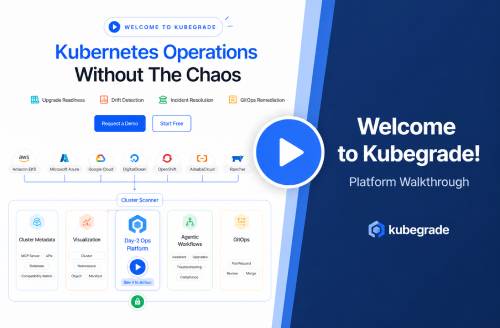
This article offers a comparison of popular Kubernetes platforms, examining their features, pricing, and ideal use cases. The goal is to help you find the K8s solution that fits with your business objectives. Kubegrade simplifies Kubernetes cluster management through secure, automated K8s operations, enabling monitoring, upgrades, and optimization.
“`
Key Takeaways
- Kubernetes is essential for modern application deployment, offering benefits like resource optimization and automated management.
- Key criteria for selecting a Kubernetes platform include ease of use, scalability, security, monitoring, cost, support, and integration with existing infrastructure.
- Amazon EKS excels in AWS integration and scaling, while Google GKE offers ease of use and GCP service integration.
- Azure AKS provides cost-effectiveness and hybrid cloud capabilities, and Red Hat OpenShift is developer-friendly with strong enterprise support.
- GKE and AKS are recommended for deploying microservices, while GKE and EKS are suitable for running machine learning workloads.
- AKS and Red Hat OpenShift are well-suited for managing hybrid cloud environments.
- Kubegrade simplifies Kubernetes management by streamlining deployments, scaling, and monitoring.
Table of Contents
Introduction

Kubernetes has become key for deploying applications in today’s tech environment. It is a system that automates the deployment, scaling, and management of containerized applications. Kubernetes offers benefits like improved resource utilization, automated rollouts and rollbacks, and self-healing capabilities.
This article compares popular Kubernetes platforms. It aims to help readers select the right solution based on their specific requirements. This comparison includes features, pricing, and common use cases.
Kubegrade simplifies Kubernetes cluster management. It is a platform designed for secure, scaling, and automated K8s operations, enabling monitoring, upgrades, and optimization.
The platforms compared in this article include:
- Vanilla Kubernetes
- Amazon Elastic Kubernetes Service (EKS)
- Google Kubernetes Engine (GKE)
- Azure Kubernetes Service (AKS)
- Red Hat OpenShift
“`
Key Criteria for Evaluating Kubernetes Platforms
When choosing a Kubernetes platform, several factors should be considered. These factors can significantly impact the success of your Kubernetes deployment.
- Ease of Use: A platform should be easy to set up and manage. This includes intuitive interfaces, straightforward deployment processes, and simple management tools. Ease of use is important for smaller teams or those new to Kubernetes, as it reduces the learning curve and allows them to deploy applications more quickly.
- Scaling: The platform must handle increased workloads without performance degradation. Auto-scaling features are very important. Scaling is particularly critical for businesses experiencing rapid growth or those with fluctuating demands.
- Security Features: Security is a key concern. The platform should offer strong security features, such as role-based access control (RBAC), network policies, and security scanning. These features help protect sensitive data and prevent unauthorized access. Enterprises and organizations dealing with sensitive data need strong security features.
- Monitoring and Logging: Effective monitoring and logging are key for maintaining the health and performance of applications. The platform should provide tools for tracking resource utilization, identifying issues, and analyzing logs. These capabilities are vital for troubleshooting and assuring uptime, especially in complex deployments.
- Cost: The total cost of ownership (TCO) should be considered, including infrastructure costs, management overhead, and potential vendor lock-in. Cost is a significant factor for startups and small businesses with limited budgets.
- Support: Reliable support is important, especially when encountering issues or needing assistance with complex configurations. Consider the availability of documentation, community support, and vendor support. Enterprises often require premium support options with SLAs.
- Integration with Existing Infrastructure: The platform should integrate with your current infrastructure, including networking, storage, and identity management systems. Integration capabilities ensure compatibility and avoid the need for significant rework.
For example, a startup might prioritize ease of use and cost-effectiveness, while a large enterprise might focus on security, scaling, and support. Kubegrade balances these key criteria, offering an easy-to-use platform with scaling capabilities, strong security features, and comprehensive monitoring, all while integrating with existing infrastructure.
“`
Ease of Use and Management
Ease of use and management are critical when selecting a Kubernetes platform. A platform that is easy to use can significantly improve developer productivity and operational efficiency.
Several aspects contribute to a platform’s ease of use:
- UI Intuitiveness: An intuitive user interface (UI) makes it easier for users to navigate and manage the platform. A well-designed UI can reduce the learning curve and improve the overall user experience.
- CLI Tools: Command-line interface (CLI) tools provide a way to automate tasks and manage the platform from the command line. CLI tools are useful for advanced users who prefer to work with scripts and automation.
- Automation Capabilities: Automation capabilities, such as automated deployments and scaling, can simplify management and reduce the risk of errors. Automation can save time and resources by automating repetitive tasks.
A platform’s ease of use can have a direct impact on developer productivity. If developers can easily deploy and manage applications, they can focus on writing code and delivering value. Operational efficiency also improves when the platform is easy to manage, as it reduces the need for manual intervention and troubleshooting.
Examples of features that contribute to ease of use include:
- Automated deployments
- Simplified scaling
- User-friendly dashboards
This criterion is especially important for smaller teams or those new to Kubernetes. A platform that is easy to use can help these teams get up to speed quickly and start deploying applications without a lot of overhead.
Kubegrade simplifies K8s management by providing an intuitive platform that streamlines deployments, scaling, and monitoring.
“`
Scalability and Performance
Scalability and performance are key when evaluating Kubernetes platforms. The platform must efficiently handle increased workloads and maintain optimal performance under varying conditions.
Different platforms handle scaling, resource allocation, and workload distribution in different ways:
- Horizontal Scaling: This involves adding more nodes to the cluster to distribute the workload. Platforms should support horizontal scaling to handle increased traffic and demand.
- Vertical Scaling: This involves increasing the resources (CPU, memory) of existing nodes. Vertical scaling can be useful for applications that require more resources on a single node.
- Auto-Scaling Policies: Auto-scaling policies allow the platform to automatically scale resources based on predefined metrics, such as CPU utilization or memory usage. Auto-scaling ensures that the platform can handle fluctuating workloads without manual intervention.
- Resource Optimization: Efficient resource optimization is important for maximizing resource utilization and minimizing costs. Platforms should provide tools for monitoring resource usage and identifying opportunities for optimization.
Scalability requirements vary depending on the application and the expected traffic. For example, a high-traffic e-commerce website requires a platform that can scale horizontally to handle peak loads. A data-intensive application requires a platform that can efficiently allocate resources to ensure optimal performance.
Kubegrade ensures optimal resource utilization and performance through intelligent workload distribution, auto-scaling policies, and resource monitoring capabilities.
“`
Security and Compliance
Security and compliance are critical considerations when selecting a Kubernetes platform. The platform must provide features and capabilities to protect sensitive data and meet regulatory requirements.
Key security features include:
- Role-Based Access Control (RBAC): RBAC allows you to control who has access to your Kubernetes resources. By assigning roles to users and groups, you can limit access to only those resources that are needed.
- Network Policies: Network policies allow you to control network traffic between pods. By defining network policies, you can isolate applications and prevent unauthorized access.
- Vulnerability Scanning: Vulnerability scanning helps identify security vulnerabilities in your container images and deployments. By scanning for vulnerabilities, you can actively address security risks before they are exploited.
- Compliance Certifications: Compliance certifications, such as SOC 2 and HIPAA, demonstrate that the platform meets industry standards for security and data protection. If your organization is subject to regulatory requirements, you should choose a platform that is certified to meet those requirements.
Different platforms address security concerns in different ways. Some platforms offer built-in security features, while others rely on third-party tools and integrations. It is important to evaluate the security capabilities of each platform and choose one that meets your specific needs.
Security best practices for Kubernetes deployments include:
- Regularly updating your Kubernetes version
- Using strong passwords and multi-factor authentication
- Implementing network segmentation
- Monitoring your Kubernetes environment for security threats
Kubegrade offers security features such as RBAC, network policies, and vulnerability scanning, along with support for compliance certifications.
“`
Cost and Support
Cost and support are key factors when choosing a Kubernetes platform. The total cost of ownership (TCO) can vary significantly depending on the platform and the chosen support plan.
Cost factors include:
- Infrastructure Costs: These are the costs associated with running the Kubernetes cluster, such as compute, storage, and networking. Infrastructure costs can vary depending on the cloud provider and the size of the cluster.
- Licensing Fees: Some Kubernetes platforms charge licensing fees for using the platform. Licensing fees can be based on the number of nodes, the number of users, or the amount of resources consumed.
- Support Plans: Support plans provide access to technical support, documentation, and other resources. Support plans can vary in price depending on the level of support offered.
Different platforms have different pricing models. Some platforms offer pay-as-you-go pricing, while others offer subscription-based pricing. The pricing model can impact the TCO, so it is important to compare the pricing models of different platforms and choose one that fits your budget.
Reliable support and documentation are very important. When encountering issues or needing assistance with complex configurations, it is important to have access to timely and effective support. Note the following aspects:
- Response times
- Support channels (e.g., email, phone, chat)
- Availability of professional services
Tips for optimizing Kubernetes costs:
- Right-size your nodes
- Use auto-scaling to scale resources up or down based on demand
- Delete unused resources
- Use cost monitoring tools to track your Kubernetes costs
Kubegrade offers cost-effective solutions and support services designed to help you optimize your Kubernetes costs.
“`
In-Depth Comparison of Kubernetes Platforms
This section provides a detailed Kubernetes platform comparison of popular Kubernetes platforms. Each platform’s strengths and weaknesses are discussed in relation to the key criteria outlined earlier. Specific details about features, pricing models, and ideal use cases are included to aid in selecting the best Kubernetes platform.
Amazon Elastic Kubernetes Service (EKS)
Amazon EKS is a managed Kubernetes service that makes it easy to run Kubernetes on AWS. It integrates with other AWS services, providing a comprehensive solution for deploying and managing containerized applications.
- Strengths:
- Integration with AWS ecosystem
- Scaling
- Security features
- Weaknesses:
- Can be complex to configure
- Cost can be high depending on usage
- Pricing Model: Pay-as-you-go
- Ideal Use Cases: Organizations already invested in the AWS ecosystem
Google Kubernetes Engine (GKE)
Google Kubernetes Engine (GKE) is a managed Kubernetes service offered by Google Cloud. It provides a managed environment for deploying, managing, and scaling containerized applications using Google infrastructure.
- Strengths:
- Ease of use
- Scaling
- Integration with Google Cloud services
- Weaknesses:
- Vendor lock-in
- Pricing Model: Pay-as-you-go
- Ideal Use Cases: Organizations using Google Cloud services and those that require scaling capabilities
Azure Kubernetes Service (AKS)
Azure Kubernetes Service (AKS) is a managed Kubernetes service offered by Microsoft Azure. It simplifies the deployment, management, and scaling of containerized applications using Azure infrastructure.
- Strengths:
- Integration with Azure services
- Cost-effective for Windows-based applications
- Weaknesses:
- Can be complex to configure
- Pricing Model: Pay-as-you-go
- Ideal Use Cases: Organizations using Azure services, especially Windows-based applications
Red Hat OpenShift
Red Hat OpenShift is a Kubernetes platform designed for enterprise application development and deployment. It offers a developer-centric experience with built-in tools and features for building, deploying, and managing applications.
- Strengths:
- Developer-friendly
- Security features
- Enterprise support
- Weaknesses:
- Can be more expensive than other options
- Complexity
- Pricing Model: Subscription-based
- Ideal Use Cases: Enterprises with complex application development and deployment requirements
Here is a Kubernetes platform comparison table summarizing the key features of each platform:
| Platform | Ease of Use | Scaling | Security | Cost | Support |
|---|---|---|---|---|---|
| Amazon EKS | Medium | High | High | Medium to High | AWS Support |
| Google GKE | High | High | Medium | Medium | Google Cloud Support |
| Azure AKS | Medium | High | Medium | Medium | Azure Support |
| Red Hat OpenShift | Medium | High | High | High | Red Hat Support |
“`
Amazon EKS
Amazon Elastic Kubernetes Service (EKS) is a managed Kubernetes service that simplifies running Kubernetes on AWS. EKS integrates with the AWS ecosystem, offering a suite of tools for deploying and managing containerized applications.
Strengths:
- AWS Integration: EKS integrates with AWS services like VPC, IAM, and CloudWatch. This integration simplifies networking, security, and monitoring.
- Scaling: EKS offers scaling capabilities, allowing users to scale their Kubernetes clusters to handle increased workloads.
- Managed Control Plane: Amazon manages the Kubernetes control plane, reducing the operational burden on users.
Weaknesses:
- Cost Complexity: EKS pricing can be complex, with costs for the EKS control plane and the underlying EC2 instances.
- Vendor Lock-In: While Kubernetes is open source, heavy integration with AWS services can create vendor lock-in.
Features:
- Managed Kubernetes control plane
- Integration with AWS IAM for authentication
- Support for multiple networking options
Pricing Model:
- Pay-as-you-go: Users pay for the EKS control plane and the underlying AWS resources.
Ideal Use Cases:
- Organizations already heavily invested in the AWS ecosystem
- Applications requiring scaling and integration with AWS services
Performance against Key Criteria:
- Ease of Use: Medium ? While EKS simplifies Kubernetes management, configuring and managing AWS resources can add complexity.
- Scaling: High ? EKS offers scaling capabilities through integration with AWS Auto Scaling.
- Security: High ? EKS integrates with AWS IAM and VPC, providing security features.
- Monitoring: High ? EKS integrates with Amazon CloudWatch for monitoring and logging.
- Cost: Medium to High ? EKS pricing can be complex, with costs for the control plane and the underlying resources.
- Support: AWS Support ? Users can access AWS support for EKS.
- Integration: High ? EKS integrates with other AWS services.
Real-World Examples:
- Many companies use EKS to deploy microservices-based applications, leveraging AWS’s scaling and integration capabilities.
“`
Google Kubernetes Engine (GKE)
Google Kubernetes Engine (GKE) is a managed Kubernetes service offered on the Google Cloud Platform (GCP). It provides a managed environment to deploy, manage, and scale containerized applications using Google’s infrastructure. GKE benefits from Google’s early involvement in Kubernetes’ development.
Strengths:
- GCP Integration: GKE integrates with other GCP services, like Google Cloud Storage, Cloud SQL, and BigQuery.
- Pioneering Role: Google created Kubernetes, giving GKE an advantage in terms of updates, features, and integration.
- Autopilot Mode: GKE’s Autopilot mode simplifies cluster management by automating node provisioning and scaling.
Weaknesses:
- Cost: GKE’s cost can be high, especially for larger clusters or complex configurations.
- GCP Learning Curve: Users unfamiliar with GCP may face a learning curve when adopting GKE.
Features:
- Managed Kubernetes control plane
- Autopilot mode for simplified cluster management
- Integration with Google Cloud’s operations suite for monitoring and logging
Pricing Model:
- Standard: Users manage nodes and pay for resources used.
- Autopilot: Google manages nodes, and users pay for pod resources.
Ideal Use Cases:
- Data-intensive applications requiring integration with BigQuery and other GCP data services
- Organizations leveraging Google’s AI/ML services, such as TensorFlow and Vertex AI
- Ease of Use: High ? GKE’s Autopilot mode simplifies cluster management.
- Scaling: High ? GKE offers scaling capabilities through integration with Google Compute Engine.
- Security: Medium ? GKE provides security features, but users are responsible for securing their applications.
- Monitoring: High ? GKE integrates with Google Cloud’s operations suite for monitoring and logging.
- Cost: Medium ? GKE’s cost can be high, but Autopilot mode can help reduce costs.
- Support: Google Cloud Support ? Users can access Google Cloud support for GKE.
- Integration: High ? GKE integrates with other GCP services.
- Many companies use GKE to deploy and manage microservices-based applications, leveraging Google’s infrastructure and AI/ML services.
“`
Azure Kubernetes Service (AKS)
Azure Kubernetes Service (AKS) is a managed Kubernetes service provided by Microsoft Azure. AKS simplifies deploying, managing, and scaling containerized applications using Azure’s infrastructure. AKS is designed to be cost-effective, especially for Windows-based workloads.
Strengths:
- Azure Integration: AKS integrates with Azure services like Azure Active Directory, Azure Monitor, and Azure DevOps.
- Cost-Effectiveness: AKS can be cost-effective, especially for organizations already using Azure services.
- Hybrid Cloud Capabilities: AKS supports hybrid cloud deployments, allowing users to run Kubernetes clusters on-premises and in the cloud.
Weaknesses:
- Configuration Complexity: Some AKS configurations can be complex.
Features:
- Managed Kubernetes control plane
- Integration with Azure Active Directory for authentication
- Support for Windows Server containers
Pricing Model:
- Pay-as-you-go: Users pay for the agent nodes and the resources they consume. The control plane is free.
Ideal Use Cases:
- Organizations already heavily invested in the Azure ecosystem
- Hybrid cloud deployments requiring integration with on-premises resources
- Windows-based workloads
- Ease of Use: Medium ? While AKS simplifies Kubernetes management, configuring Azure resources can add complexity.
- Scaling: High ? AKS offers scaling capabilities through integration with Azure Virtual Machine Scale Sets.
- Security: Medium ? AKS integrates with Azure Active Directory and Azure Security Center, providing security features.
- Monitoring: High ? AKS integrates with Azure Monitor for monitoring and logging.
- Cost: Medium ? AKS can be cost-effective, especially for organizations already using Azure services, because the control plane is free.
- Support: Azure Support ? Users can access Azure support for AKS.
- Integration: High ? AKS integrates with other Azure services.
- Many companies use AKS to deploy and manage .NET applications, leveraging Azure’s integration capabilities.
“`
Use Case Scenarios and Platform Recommendations
This section outlines common use case scenarios and recommends suitable Kubernetes platforms for each. These recommendations consider cost, scalability, and security to align with the specific challenges of each scenario.
Deploying Microservices
- Scenario: Deploying and managing a microservices architecture, which involves multiple independent services that need to be scaled and updated independently.
- Recommendation:
- Google Kubernetes Engine (GKE): GKE’s ease of use and integration with Google Cloud’s service mesh (Istio) make it suitable for managing microservices. Its scaling capabilities ensure each service can be scaled independently.
- Azure Kubernetes Service (AKS): AKS integrates well with Azure DevOps and other Azure services, streamlining the deployment and management of microservices.
- Specific Examples: GKE can use Istio to manage traffic between microservices, providing features like load balancing and traffic shaping. AKS can use Azure DevOps for CI/CD pipelines, automating the deployment process.
- Considerations: Scalability and ease of management are key for microservices. Security is achieved through network policies and RBAC.
Running Machine Learning Workloads
- Scenario: Running machine learning (ML) workloads, which often require significant computational resources and specialized hardware (e.g., GPUs).
- Recommendation:
- Google Kubernetes Engine (GKE): GKE supports GPUs and integrates with Google Cloud’s AI Platform, making it suitable for ML workloads.
- Amazon EKS: EKS supports GPUs and integrates with AWS SageMaker, providing a managed environment for building, training, and deploying ML models.
- Specific Examples: GKE can use GPUs to accelerate model training, while EKS can use SageMaker for model deployment and management.
- Considerations: Scalability and access to specialized hardware are key for ML workloads. Cost is important, as GPU instances can be expensive.
Managing Hybrid Cloud Environments
- Scenario: Managing applications across both on-premises and cloud environments.
- Recommendation:
- Azure Kubernetes Service (AKS): AKS supports hybrid cloud deployments with Azure Arc, allowing you to manage Kubernetes clusters across different environments.
- Red Hat OpenShift: OpenShift is designed for hybrid cloud environments, providing a consistent platform across on-premises and cloud deployments.
- Specific Examples: AKS can use Azure Arc to manage on-premises Kubernetes clusters, while OpenShift can be deployed on-premises and in the cloud.
- Considerations: Integration with existing infrastructure and consistent management across environments are key for hybrid cloud deployments.
Kubegrade can be used to manage and optimize Kubernetes deployments across different use cases, providing visibility into resource utilization and automating tasks such as scaling and upgrades.
“`
Deploying Microservices
Deploying microservices using Kubernetes presents several challenges. These include managing communication between services, scaling services independently, and assuring fault tolerance.
Challenges:
- Inter-Service Communication: Microservices need to communicate with each other to perform tasks. Managing this communication can be complex, especially as the number of services grows.
- Scaling: Each microservice needs to be scaled independently based on its specific demands. Scaling all services together can lead to inefficient resource utilization.
- Fault Tolerance: Microservices should be designed to handle failures gracefully. If one service fails, it should not bring down the entire application.
Recommended Platforms:
- Google Kubernetes Engine (GKE): GKE’s integration with Istio, a service mesh, simplifies managing inter-service communication. Istio provides features like traffic management, security, and observability. GKE’s scaling capabilities ensure each service can be scaled independently.
- Azure Kubernetes Service (AKS): AKS integrates with Azure Service Fabric Mesh, providing a platform for building and managing microservices. AKS also offers scaling capabilities and supports health probes for assuring fault tolerance.
Specific Examples:
- GKE: Istio can be used to implement circuit breakers, which prevent cascading failures by stopping traffic to unhealthy services.
- AKS: Azure Service Fabric Mesh can be used to deploy microservices as serverless containers, reducing operational overhead.
Kubegrade can simplify the management and monitoring of microservices deployments on Kubernetes by providing a centralized dashboard for visualizing service dependencies, monitoring performance metrics, and managing scaling policies.
“`
Running Machine Learning Workloads
Running machine learning (ML) workloads on Kubernetes introduces unique challenges related to resource management, data handling, and scaling.
Challenges:
- GPU Resources: Machine learning workloads often require GPUs for accelerated computation. Managing and allocating these GPU resources efficiently is critical.
- Large Datasets: Training machine learning models involves processing large datasets. Handling these datasets and providing them to the training jobs can be challenging.
- Scaling Training Jobs: Training machine learning models can take a long time. Scaling training jobs across multiple nodes can reduce the training time.
- Google Kubernetes Engine (GKE): GKE offers excellent support for GPUs and integrates with Google Cloud’s AI Platform and Kubeflow. This integration simplifies managing machine learning workloads.
- Amazon EKS: EKS supports GPUs and integrates with AWS SageMaker, providing a managed environment for building, training, and deploying ML models.
Specific Examples:
- GKE: Kubeflow can be used to manage the entire machine learning workflow, from data preparation to model deployment.
- EKS: AWS SageMaker can be used to train machine learning models and deploy them as endpoints.
Kubegrade can help optimize resource utilization and manage machine learning deployments on Kubernetes by providing tools for monitoring GPU usage, scheduling jobs based on resource availability, and automating scaling policies.
“`
Managing Hybrid Cloud Environments
Managing hybrid cloud environments with Kubernetes presents unique challenges. These challenges revolve around consistency, connectivity, and data management across diverse infrastructures.
Challenges:
- Consistency Across Environments: Maintaining consistent configurations, policies, and deployments across different environments (on-premises, public cloud) is complex.
- Network Connectivity: Establishing secure and reliable network connectivity between on-premises and cloud environments can be difficult.
- Data Migration: Moving data between environments needs careful planning to minimize downtime and ensure data integrity.
- Azure Kubernetes Service (AKS): AKS, with Azure Arc, enables management of Kubernetes clusters across on-premises, multi-cloud and edge environments from a single control plane.
- Red Hat OpenShift: OpenShift is designed for hybrid cloud deployments, offering a consistent platform experience across different infrastructures.
Specific Examples:
- AKS: Azure Arc allows enforcement of consistent policies and configurations across all Kubernetes clusters, regardless of location.
- OpenShift: Its consistent platform allows applications to be moved between on-premises and cloud environments without code changes.
Kubegrade can provide a unified management interface for Kubernetes deployments across different cloud providers and on-premises environments, simplifying operations and improving visibility.
“`
Conclusion
This article compared several Kubernetes platforms, highlighting the strengths and weaknesses of each. Key criteria such as ease of use, scalability, security, and cost were examined to provide a comprehensive Kubernetes platform comparison.
Choosing the right platform depends on specific needs and priorities. Organizations should carefully evaluate their requirements and select a platform that matches their goals.
Kubegrade simplifies Kubernetes management, offering a solution to streamline operations. A free trial or demo is available for those interested.
Readers are encouraged to explore Kubegrade and research the recommended platforms further to make an informed decision.
“`

