





Best kubernetes monitoring tools: open source options and best practices guide

by Tim
November 13, 2025
Kubernetes monitoring tools serve as the essential backbone for maintaining visibility into modern containerized environments. These sophisticated applications enable teams to track cluster health, application performance, and resource utilization across complex distributed systems.?
The primary functions encompass metrics collection for analyzing cluster-related data, alerting systems that notify administrators when thresholds breach, dashboarding capabilities displaying insights through charts and graphs, and comprehensive log analysis from pods, nodes, and controllers.?
Selecting appropriate monitoring strategies becomes crucial as organizations scale their Kubernetes deployments, requiring both open source flexibility and proven implementation practices. The evolution from basic monitoring to comprehensive observability solutions reflects the increasing complexity of cloud-native architectures, where understanding system behavior requires deeper instrumentation and correlation capabilities.

Essential open source monitoring foundations
Prometheus stands as the industry-standard metrics collection system, originally developed by SoundCloud and now a graduated CNCF project. This powerful tool features a multi-dimensional data model enabling rich querying capabilities through its PromQL language. The pull-based architecture retrieves metrics from specific endpoints, storing time-series data efficiently for analysis and alerting purposes.
Prometheus architecture and components
The Prometheus ecosystem consists of three fundamental components working in harmony. The Prometheus server handles service deployment and metric extraction processes, while AlertManager manages alert setup and notification distribution to various endpoints. Exporters function as independent containers creating and exporting metrics from different system components, enabling comprehensive visibility across infrastructure layers.
Built-in Kubernetes monitoring capabilities
Container Advisor (cAdvisor) provides real-time monitoring capabilities as Google’s built-in solution integrated into the kubelet binary. This tool auto-discovers containers and collects essential system metrics including CPU, memory, and network usage at the node level. The kube-state-metrics component generates detailed metrics on Kubernetes object states by listening to the API, producing Prometheus-compatible data about pods, services, deployments, and nodes.
| Tool | Primary Function | Data Collection Method | Integration Complexity |
| Prometheus | Metrics collection and alerting | Pull-based from endpoints | Moderate |
| cAdvisor | Container resource monitoring | Built-in kubelet integration | Minimal |
| kube-state-metrics | Kubernetes object metrics | API server listening | Low |
Visualization and dashboard solutions
Grafana serves as the primary visualization platform, transforming raw metrics into insightful dashboards for operations teams. This versatile tool supports multiple data sources including Prometheus, Graphite, and InfluxDB, offering rich visualization options through customizable graphs, charts, and real-time displays. The collaborative sharing features enable teams to maintain consistent monitoring views across different organizational levels.
Grafana integration strategies
Effective Grafana implementation requires strategic planning for data source configuration and dashboard standardization. Teams benefit from establishing template libraries and shared dashboard repositories, ensuring consistency across different environments. The alerting capabilities integrate seamlessly with notification channels, providing automated responses to threshold breaches and performance anomalies.
- Template-based dashboard creation for consistency
- Multi-tenant access control configuration
- Data source federation for unified views
- Custom panel development for specific metrics
- Alert rule management and notification routing
Native Kubernetes dashboard features
The Kubernetes Dashboard provides the native web-based interface for cluster visualization, displaying deployment information, application status, and resource utilization metrics. This reliable solution enables users to modify cluster resources and update container states directly through the interface, supporting both monitoring and management operations within the same platform.
Comprehensive logging and search platforms
The ELK Stack components traditionally dominated Kubernetes log management through Elasticsearch’s distributed search engine, Logstash’s data processing pipeline, and Kibana’s visualization interface. However, licensing changes prompted the emergence of alternative solutions, particularly OpenSearch and OpenSearch Dashboards as AWS-forked open source alternatives.
ELK Stack vs OpenSearch comparison
OpenSearch includes features that remain premium in Elasticsearch, such as ML Commons for machine learning capabilities, built-in access controls, and comprehensive security features including encryption and audit logging. This comparison reveals significant differences in licensing models and feature accessibility for organizations requiring advanced functionality.
- OpenSearch provides machine learning features without additional licensing costs
- Built-in security controls eliminate third-party authentication requirements
- Advanced anomaly detection capabilities enhance operational insights
- Cross-cluster replication supports disaster recovery scenarios
- Index management policies automate data lifecycle operations
Log aggregation with Fluentd solutions
Fluentd operates as a unified logging layer, while Fluent Bit serves as the lightweight data shipper optimized for edge environments. These complementary tools handle log aggregation and processing efficiently, supporting various output destinations and transformation capabilities for different organizational requirements.

Distributed tracing and performance analysis
Jaeger enables end-to-end request tracing across microservices environments, originally developed by Uber and now maintained as a CNCF project. This sophisticated tool provides root cause analysis capabilities for latency issues while maintaining native Kubernetes integration through operator-based deployments.
Jaeger implementation and storage options
The platform supports multiple storage backends including Cassandra, Elasticsearch, and Kafka, enabling organizations to choose optimal persistence strategies based on existing infrastructure. Storage selection impacts both performance characteristics and operational complexity, requiring careful evaluation of query patterns and retention requirements.
- Cassandra backend for high-throughput scenarios
- Elasticsearch integration for unified log and trace analysis
- Kafka streaming for real-time trace processing
- Memory storage for development and testing environments
OpenTelemetry integration strategies
OpenTelemetry provides vendor-agnostic instrumentation frameworks for generating traces, metrics, and logs compatible with various observability backends. This standardization effort eliminates vendor lock-in while enabling consistent instrumentation across different programming languages and frameworks used within Kubernetes environments.
Advanced enterprise monitoring solutions
Enterprise-grade platforms deliver sophisticated capabilities beyond basic open source tools. New Relic’s cloud-based platform offers real-time performance monitoring with automatic cluster discovery and advanced analytics for capacity planning purposes. Datadog provides comprehensive monitoring through real-time visualization, anomaly detection, and seamless CI/CD integration capabilities.
Cloud-native enterprise platforms
Dynatrace leverages AI-driven problem identification with automated discovery and capacity planning recommendations, reducing manual intervention requirements. These platforms typically integrate security monitoring alongside performance metrics, providing holistic visibility into cluster operations and application behavior patterns.
- Automated baseline establishment for performance metrics
- AI-powered root cause analysis acceleration
- Predictive scaling recommendations based on usage patterns
- Integration with incident management workflows
- Cost optimization insights through resource correlation
AI-driven monitoring capabilities
Sysdig delivers container intelligence with deep visibility into network activity and system calls, complemented by runtime security monitoring features. AppDynamics focuses on application performance monitoring through automatic dependency mapping and code-level insights, enabling precise performance bottleneck identification across complex distributed applications.
Specialized monitoring and event management
Event-driven monitoring addresses specific operational requirements beyond general metrics collection. Kubewatch monitors particular Kubernetes events, sending notifications to endpoints like Slack and PagerDuty when changes occur in daemon sets, deployments, pods, and other critical resources.
Event-driven monitoring with kubewatch
This specialized tool watches for resource changes and triggers appropriate notification workflows, enabling rapid response to infrastructure modifications. The configuration flexibility allows teams to customize monitoring scope and notification routing based on organizational requirements and escalation procedures.
- Deployment state change notifications
- Pod lifecycle event tracking
- ConfigMap and Secret modification alerts
- Service endpoint availability monitoring
- Namespace resource quota breach detection
Distributed system visibility solutions
Helios provides comprehensive monitoring specifically designed for distributed environments, offering end-to-end visibility with visualizations for complex synchronous and asynchronous flows. The platform supports multiple programming languages while identifying performance bottlenecks through workflow recreation capabilities.

Data collection methods and pipeline architecture
Kubernetes monitoring employs two distinct approaches for metrics gathering. The resource metrics pipeline utilizes metrics-server for lightweight CPU and memory data collection through the metrics.k8s.io API. The full metrics pipeline offers richer capabilities through custom adapters implementing specialized APIs for advanced features like Horizontal Pod Autoscaler.
Resource vs full metrics pipeline comparison
Implementation methods vary significantly in complexity and resource overhead. Teams can build metrics logic directly into containers using OpenTelemetry libraries, deploy sidecar containers alongside applications, utilize cluster-wide collectors for comprehensive monitoring, or leverage eBPF for highly efficient kernel-space data collection.
- Sidecar container deployment for application-specific metrics
- DaemonSet collectors for node-level visibility
- eBPF instrumentation for minimal performance impact
- Custom resource definitions for specialized metrics
- Service mesh integration for network-level observability
Collection method implementation strategies
The trade-offs between collection methods involve balancing resource consumption against data richness requirements. eBPF represents the most efficient approach for kernel-space collection, while sidecar containers provide application-specific insights at higher resource costs.
Cloud provider integration and managed services
Managed Kubernetes services provide integrated monitoring capabilities through native cloud provider tools. Amazon EKS integrates seamlessly with AWS CloudWatch for metrics collection and CloudWatch Logs for comprehensive logging, while supporting Prometheus and Grafana deployment for customized monitoring solutions.
AWS EKS monitoring integration
EKS environments benefit from automatic integration with CloudWatch Container Insights, providing cluster-level visibility without additional configuration requirements. The platform supports both native AWS monitoring tools and third-party solutions, enabling hybrid approaches based on organizational preferences.
- CloudWatch Container Insights for automatic metrics collection
- X-Ray integration for distributed tracing capabilities
- EventBridge for event-driven monitoring workflows
- Cost allocation tags for granular expense tracking
Google GKE operations suite
Google Kubernetes Engine leverages the Google Cloud operations suite with automatic performance data collection, Cloud Logging for container logs, and Cloud Trace for application performance insights. These integrated capabilities reduce operational overhead while maintaining compatibility with open source monitoring tools.
Cost monitoring and resource optimization
Modern Kubernetes environments require cost intelligence capabilities tracking spending across clusters, pods, namespaces, customers, features, projects, and teams. Kubecost provides real-time cost monitoring integrated with resource usage data, enabling organizations to optimize both financial and performance metrics simultaneously.
Cost attribution and tracking methods
Granular cost tracking enables precise allocation of infrastructure expenses to business units and projects. These capabilities support chargeback mechanisms and budget management through detailed resource consumption analysis and trend identification.
- Pod-level cost attribution for precise billing
- Namespace-based departmental cost allocation
- Application-specific resource consumption tracking
- Right-sizing recommendations based on usage patterns
- Waste identification through idle resource detection
Resource optimization strategies
Optimization approaches combine cost monitoring with performance metrics to identify overprovisioned resources and scaling opportunities. Integration with horizontal and vertical pod autoscalers enables automated resource adjustments based on actual utilization patterns and cost constraints.
Implementation best practices and strategic approaches
Effective monitoring requires clear objectives aligned with business goals, implementing continuous monitoring strategies, and leveraging service meshes for granular visibility. Key metrics include request rates, response times, resource usage patterns, storage utilization, and overall system uptime measurements.
Strategic monitoring objectives and KPIs
Monitoring challenges encompass high data volumes requiring intelligent filtering, distributed system complexity demanding correlation capabilities, and resource overhead from monitoring tools themselves. Modern solutions address these through automated correlation engines and efficient collection methods.
- Service level objective definition and tracking
- Error budget management for reliability targets
- Capacity planning through trend analysis
- Performance baseline establishment for anomaly detection
- Integration with incident response workflows
Overcoming common implementation challenges
Standardization across teams requires establishing consistent metric formats and monitoring patterns. Organizations benefit from implementing monitoring-as-code practices, using operators for deployment automation, and creating shared libraries for instrumentation consistency across different application teams and environments.
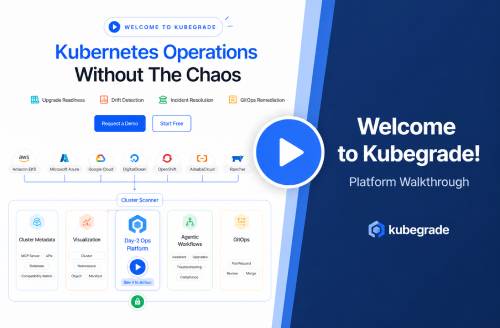
Kubegrade helps DevOps teams maintain trust, transparency, and control across every Kubernetes cluster.
Enhance your Kubernetes visibility with Kubegrade ? monitor cluster performance, detect issues early, and keep your cloud-native systems running seamlessly.

