



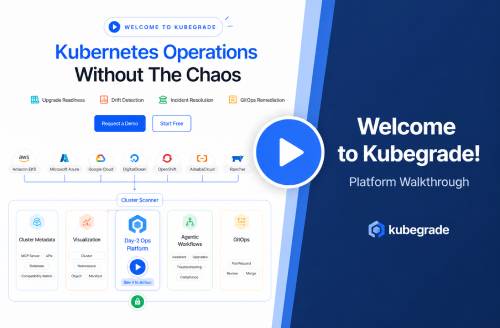


Kubernetes for the Enterprise: A Comprehensive Guide

by Tim
September 7, 2025
Kubernetes has become a cornerstone for organizations aiming to orchestrate and manage containers in various environments. As the standard for container orchestration, Kubernetes is a critical platform for businesses to understand. 2025 finds enterprise Kubernetes central to cloud-native strategies, enabling organizations to deploy, scale, and govern applications effectively.
This guide explores the benefits, challenges, and best practices for adopting and managing Kubernetes in a large-scale setting. 2025 sees enterprise Kubernetes as a crucial platform for businesses pursuing agility, scalability, and operational efficiency. This guide provides insights for those starting their Kubernetes experience or scaling across global teams.
Key Takeaways
- Kubernetes is essential for managing large-scale applications in enterprise environments, offering improved resource efficiency and agility.
- Key benefits of Kubernetes include scalability, resource optimization, faster deployment cycles, and enhanced resilience through self-healing capabilities.
- Enterprises face challenges in Kubernetes adoption, including complexity, security risks, skill gaps, and integration with existing infrastructure.
- Strategies to overcome these challenges include simplifying Kubernetes management, implementing strong security practices, and investing in training.
- Best practices for managing Kubernetes at scale involve Infrastructure-as-Code (IaC), automated deployments, robust monitoring and logging, and strong security policies.
- Implementing Role-Based Access Control (RBAC) and having a disaster recovery plan are crucial for securing Kubernetes environments and ensuring business continuity.
- Kubegrade simplifies Kubernetes management, automates security, and optimizes resources, helping enterprises achieve their business goals by fully leveraging Kubernetes capabilities.
Table of Contents
Introduction to Kubernetes in the Enterprise
Kubernetes is becoming increasingly vital for enterprise-level organizations. It offers solutions to manage complex, large-scale applications [1]. Kubernetes, often shortened to K8s, is an open-source container orchestration platform that automates the deployment, scaling, and management of applications [1, 2]. Its core benefits include improved resource efficiency and increased agility, enabling businesses to respond quickly to market changes [2].
However, adopting Kubernetes in the enterprise isn’t without its challenges. Organizations often face difficulties related to security, governance, and operational overhead [3]. These challenges can hinder the successful implementation and management of Kubernetes clusters, especially in large-scale environments.
Kubegrade simplifies Kubernetes cluster management. It’s a platform designed for secure, adaptable, and automated K8s operations. Kubegrade offers capabilities such as monitoring, upgrades, and optimization, making Kubernetes enterprise adoption more manageable.
Key Benefits of Kubernetes for Enterprises
Kubernetes provides several key advantages for large organizations. These benefits range from better resource management to faster application deployment.
Scalability
Kubernetes allows enterprises to scale applications quickly and efficiently based on demand. This scaling makes sure applications can handle increased workloads without performance degradation. For example, a large e-commerce company might use Kubernetes to automatically scale its services during peak shopping seasons, making sure a smooth customer experience.
Resource Optimization
Kubernetes optimizes resource utilization by efficiently allocating resources to containers. This leads to significant cost savings by reducing the need for over-provisioning. By using only the resources needed, enterprises can minimize waste and lower infrastructure expenses. Kubectl top command helps monitor resource usage.
Faster Deployment Cycles
With Kubernetes, enterprises can automate and accelerate application deployment cycles. Automated rollouts and rollbacks reduce the risk associated with new deployments, allowing for more frequent releases and faster time-to-market. Continuous integration and continuous delivery (CI/CD) pipelines can be integrated with Kubernetes to automate the entire software delivery process.
Improved Resilience
Kubernetes improves application resilience through self-healing capabilities. If a container fails, Kubernetes automatically restarts or replaces it, minimizing downtime and high availability. This resilience is critical for enterprises that require always-on services. For instance, a financial institution can rely on Kubernetes to keep its trading platform running smoothly, even in the event of infrastructure failures.
Kubernetes enterprise solutions can lead to considerable cost savings and increased efficiency by optimizing resource use, automating deployments, and improving application resilience. Kubegrade simplifies K8s operations, allowing enterprises to realize these benefits more easily. By providing a platform for secure, adaptable, and automated K8s management, Kubegrade helps organizations streamline their Kubernetes deployments and focus on innovation.
Scalability and Resource Optimization
Kubernetes enables enterprises to scale their applications and infrastructure in response to changing demands. It provides mechanisms for both horizontal and vertical scaling, allowing for efficient resource utilization.
Horizontal scaling involves adding more instances of an application to handle increased load. Kubernetes can automatically provision new pods (the smallest deployable units in Kubernetes) to distribute traffic and maintain performance. Vertical scaling, involves increasing the resources (CPU, memory) allocated to individual pods. Kubernetes allows setting resource limits and requests to ensure that pods have enough resources to operate without consuming excessive amounts.
Auto-scaling is a key feature of Kubernetes that automatically adjusts the number of pods based on real-time resource utilization or custom metrics. This makes sure that applications can handle fluctuating workloads without manual intervention. For example, during peak hours, Kubernetes can automatically scale up the number of pods to handle increased traffic, and then scale down during off-peak hours to conserve resources.
Kubernetes enterprise deployments can effectively manage fluctuating workloads while optimizing resource utilization through these scaling mechanisms. By adjusting resource allocation based on demand, enterprises can minimize waste and reduce infrastructure costs.
Accelerated Deployment Cycles
Kubernetes streamlines the software development and deployment process, enabling enterprises to release new features and applications more quickly. It achieves this through automation and standardization, making the entire deployment pipeline more efficient.
Continuous integration and continuous delivery (CI/CD) pipelines are central to accelerated deployment cycles in Kubernetes. These pipelines automate the process of building, testing, and deploying applications. When code changes are merged, the CI/CD pipeline automatically builds a new container image, runs tests, and deploys the updated application to the Kubernetes cluster.
Kubernetes simplifies deployments with automated rollouts and rollbacks. Rollouts gradually introduce new versions of an application, minimizing the risk of disruption. If an issue arises during a rollout, Kubernetes can automatically roll back to the previous version, making sure application stability. This reduces deployment times, allowing enterprises to deliver new features and updates to users faster.
Kubernetes enterprise solutions accelerate time-to-market for new features and applications by automating and streamlining the deployment process. With faster deployment cycles, enterprises can respond more quickly to market demands and gain a competitive advantage.
Enhanced Resilience and High Availability
Kubernetes improves application resilience and high availability, which are crucial for enterprises that require continuous operation. It offers several features that minimize downtime and make sure business continuity.
Self-healing capabilities are a core aspect of Kubernetes resilience. Kubernetes continuously monitors the health of pods and automatically restarts or replaces them if they fail. This makes sure that applications remain available even in the event of underlying infrastructure issues.
Automated failover is another key feature. If a node (a physical or virtual machine) in the Kubernetes cluster fails, Kubernetes automatically reschedules the pods running on that node to other healthy nodes. This failover process is automated, minimizing the impact on application availability.
Rolling updates allow enterprises to update applications without downtime. Kubernetes gradually replaces old pods with new ones, making sure that there is always a running version of the application available to users. This eliminates the need for scheduled maintenance windows and reduces the risk associated with deployments.
Kubernetes enterprise deployments minimize downtime and maintain business continuity through these resilience features. By automatically addressing failures and managing updates, Kubernetes makes sure that applications remain available and responsive, even in challenging conditions.
Overcoming the Challenges of Enterprise Kubernetes Adoption
Enterprises often face several hurdles when adopting Kubernetes. These challenges can range from technical difficulties to organizational issues.
One of the main challenges is the inherent difficulty of Kubernetes. Managing a Kubernetes cluster involves dealing with numerous components, configurations, and APIs. This difficulty can be overwhelming, especially for organizations that are new to container orchestration.
Security is another significant concern. Kubernetes clusters can be vulnerable to various security threats if not properly configured and managed. Enterprises need to implement strong security measures to protect their applications and data.
The need for specialized expertise is also a major hurdle. Kubernetes requires a deep knowledge of containerization, networking, and security. Organizations may need to hire or train staff to acquire the necessary skills.
Integrating Kubernetes with existing infrastructure can also be challenging. Enterprises often have legacy systems and processes that need to be integrated with the new Kubernetes environment.
To mitigate these challenges, enterprises can adopt several strategies. Simplifying Kubernetes management, implementing strong security practices, investing in training and expertise, and planning for integration with existing infrastructure are some of the options. Kubegrade helps overcome these challenges by providing a platform for secure, adaptable, and automated Kubernetes enterprise management. It simplifies cluster operations, automates security tasks, and offers tools for easy integration with existing systems.
Addressing Complexity and Skill Gaps
Kubernetes has a reputation for being complex, and this complexity presents challenges for enterprises. Managing Kubernetes clusters requires a detailed knowledge of various components, configurations, and best practices. This complexity is compounded by the difficulty enterprises face in finding and retaining skilled Kubernetes professionals.
The demand for Kubernetes expertise far exceeds the supply, making it challenging for organizations to build and maintain internal Kubernetes teams. This skill gap can slow down adoption and hinder the successful implementation of Kubernetes projects.
To address these challenges, enterprises can adopt several strategies. Training programs can help upskill existing staff and build internal expertise. Managed Kubernetes services can provide access to experienced Kubernetes professionals who can manage the cluster on behalf of the organization. Automation tools can simplify many of the tasks associated with Kubernetes management, reducing the need for manual intervention.
Kubegrade simplifies Kubernetes enterprise management, reducing the need for specialized expertise. By providing a user-friendly interface and automating many common tasks, Kubegrade makes it easier for organizations to manage their Kubernetes clusters, even without a team of dedicated Kubernetes experts.
Mitigating Security Risks
Security is a primary concern for enterprises adopting Kubernetes. Kubernetes deployments can be vulnerable to various security risks, including container vulnerabilities, network security issues, and inadequate access control.
Container vulnerabilities can allow attackers to compromise the applications running in the cluster. Network security issues can enable attackers to gain unauthorized access to the cluster and its resources. Inadequate access control can allow unauthorized users to perform sensitive operations.
To mitigate these security risks, enterprises should implement several best practices. Role-Based Access Control (RBAC) should be implemented to restrict access to Kubernetes resources based on user roles. Network policies should be used to control network traffic between pods and services. Regular vulnerability scanning should be conducted to identify and address potential security flaws.
Kubegrade provides a secure platform for Kubernetes enterprise operations. It incorporates security best practices and offers features that help enterprises secure their Kubernetes clusters. By providing a secure environment for running applications, Kubegrade helps organizations minimize their security risks and protect their data.
Integrating with Existing Infrastructure
Integrating Kubernetes with existing infrastructure can be a complex task for enterprises. Many organizations have legacy applications, databases, and networking components that need to work with the new Kubernetes environment.
One of the main challenges is making sure compatibility between the different systems. Legacy applications may not be designed to run in containers, and databases may not be easily accessible from within the Kubernetes cluster. Networking components may need to be reconfigured to support the Kubernetes networking model.
To achieve smooth integration, enterprises can use several strategies. APIs can be used to connect legacy applications with Kubernetes services. Service meshes can provide a layer of abstraction that simplifies communication between different applications. Hybrid cloud solutions can allow enterprises to run some applications in Kubernetes and others in traditional infrastructure.
Kubegrade facilitates integration with existing systems, enabling a smooth transition to Kubernetes enterprise. It offers tools and features that simplify the process of connecting Kubernetes with legacy applications, databases, and networking components. By making integration easier, Kubegrade helps organizations adopt Kubernetes without disrupting their existing operations.
Best Practices for Managing Kubernetes at Scale
Managing Kubernetes at scale requires a well-defined strategy and adherence to best practices. These practices help make sure that the Kubernetes environment is reliable, secure, and efficient.
Infrastructure-as-code (IaC) is a fundamental practice for managing Kubernetes at scale. IaC involves defining and managing infrastructure using code, rather than manual processes. This allows for automation, version control, and repeatability, making it easier to manage large and complex Kubernetes environments.
Automated deployments are also crucial. Automating the deployment process reduces the risk of errors and speeds up the release cycle. CI/CD pipelines should be used to automate the building, testing, and deployment of applications to Kubernetes.
Monitoring and logging are key for gaining visibility into the Kubernetes environment. Monitoring tools should be used to track the health and performance of the cluster and its applications. Logging tools should be used to collect and analyze logs, which can help identify and troubleshoot issues.
Security policies should be implemented to protect the Kubernetes environment from unauthorized access and security threats. RBAC should be used to control access to Kubernetes resources. Network policies should be used to control network traffic between pods and services.
Disaster recovery planning is also important. A disaster recovery plan should be in place to make sure that the Kubernetes environment can be recovered quickly in the event of a failure. This plan should include regular backups of the Kubernetes cluster and its data.
A well-defined strategy is key for Kubernetes enterprise management. This strategy should outline the goals, policies, and procedures for managing the Kubernetes environment. Kubegrade facilitates the implementation of these best practices through its monitoring, upgrade, and optimization features. It helps organizations automate tasks, enforce security policies, and gain visibility into their Kubernetes environments.
Infrastructure as Code (IaC) for Kubernetes
Infrastructure as Code (IaC) is a critical practice for managing Kubernetes deployments at scale. It involves managing and provisioning infrastructure through code, rather than through manual processes. This approach brings numerous benefits, including increased consistency, repeatability, and version control.
Tools like Terraform and Helm are commonly used for automating infrastructure provisioning and application deployments in Kubernetes environments. Terraform allows you to define and manage the underlying infrastructure, such as virtual machines, networks, and load balancers, using code. Helm is a package manager for Kubernetes that simplifies the deployment and management of applications.
By using IaC, enterprises can ensure that their Kubernetes environments are configured consistently across different environments, such as development, testing, and production. This reduces the risk of errors and makes it easier to troubleshoot issues. IaC also enables repeatable deployments, allowing enterprises to quickly and easily recreate their Kubernetes environments as needed.
Version control is another key benefit of IaC. By storing infrastructure configurations in version control systems like Git, enterprises can track changes, revert to previous versions, and collaborate on infrastructure management. This improves the overall reliability and stability of the Kubernetes environment.
Solid Monitoring and Logging Strategies
Effective monitoring and logging are vital for managing Kubernetes clusters and applications. Collecting metrics, logs, and events provides valuable insights into the performance, health, and security of the environment.
Metrics provide a quantitative measure of resource utilization, application performance, and system health. Logs capture detailed information about application behavior and system events. Events provide a record of significant occurrences within the cluster, such as pod deployments and node failures.
Collecting and analyzing these data points is crucial for performance analysis, troubleshooting, and security auditing. Performance analysis helps identify bottlenecks and optimize resource utilization. Troubleshooting enables quick resolution of issues and minimizes downtime. Security auditing provides a record of security-related events, which can help detect and prevent security breaches.
Several tools are available for effective monitoring and logging in Kubernetes deployments. Prometheus is a popular open-source monitoring system that collects and stores metrics. Grafana is a data visualization tool that allows you to create dashboards and visualize metrics. Elasticsearch is a search and analytics engine that can be used to collect, store, and analyze logs.
Implementing Security Policies and RBAC
Implementing strong security policies and Role-Based Access Control (RBAC) is crucial for securing Kubernetes environments. These measures help protect sensitive resources and prevent unauthorized access.
Security policies define the rules and constraints that govern the behavior of applications and users within the Kubernetes cluster. These policies can cover various aspects of security, such as network access, resource utilization, and data encryption.
Role-Based Access Control (RBAC) provides a mechanism for controlling access to Kubernetes resources based on user roles. RBAC allows you to define roles with specific permissions and then assign those roles to users or groups. This makes sure that only authorized users can perform sensitive operations.
Tools like Open Policy Agent (OPA) can be used to define and enforce security policies in Kubernetes. OPA is a policy engine that allows you to write policies as code and then enforce those policies across the Kubernetes cluster. This provides a flexible and adaptable way to manage security policies.
Granular access control is key for protecting sensitive resources in Kubernetes enterprise environments. By implementing strong security policies and RBAC, enterprises can minimize the risk of unauthorized access and data breaches.
Disaster Recovery and Business Continuity
Making sure disaster recovery and business continuity is critical for enterprises running Kubernetes in production. A well-defined disaster recovery plan helps minimize downtime and data loss in the event of a failure.
Several strategies can be used to make sure disaster recovery and business continuity in Kubernetes environments. Backing up and restoring Kubernetes resources is key. This involves regularly backing up the Kubernetes etcd database, which stores the cluster’s configuration and state. Tools like Velero can be used to automate the backup and restore process.
Replicating data across multiple availability zones provides redundancy and protects against data loss in the event of a zone failure. Kubernetes supports deploying applications across multiple availability zones, making sure that applications remain available even if one zone goes down.
Automating failover procedures is also crucial. In the event of a failure, Kubernetes can automatically reschedule pods to healthy nodes in other availability zones. This failover process should be automated to minimize downtime.
Testing disaster recovery plans regularly is important. This helps identify any weaknesses in the plan and makes sure that it can be executed effectively in the event of a real disaster. Regular testing should include simulating various failure scenarios and verifying that the recovery process works as expected.
Conclusion: Embracing Kubernetes for Enterprise Success

Kubernetes offers numerous benefits for enterprises, including improved scalability, resource optimization, faster deployment cycles, and improved resilience. However, adopting Kubernetes also presents challenges, such as complexity, security concerns, and the need for specialized expertise.
A strategic approach and the right tools are key for successful Kubernetes adoption. Enterprises need to carefully plan their Kubernetes deployments, implement strong security policies, and invest in training and expertise.
Kubegrade simplifies Kubernetes enterprise management, enabling organizations to fully use the capabilities of Kubernetes. By providing a platform for secure, adaptable, and automated K8s operations, Kubegrade helps enterprises overcome the challenges of Kubernetes adoption and achieve their business goals.
Explore how Kubegrade can help you achieve your Kubernetes goals. With Kubegrade, you can simplify cluster management, automate security tasks, and optimize resource utilization, allowing you to focus on innovation and growth.

