





Automating Your Kubernetes DevOps Workflow: A Comprehensive Guide

by Tim
September 12, 2025
Kubernetes has become a cornerstone for modern application deployment, but managing it can be complex. Automating your Kubernetes DevOps workflow is critical for efficient K8s management [4]. By automating deployments, scaling, and monitoring, organizations can reduce errors, improve speed, and maintain consistency across different environments [2, 5].
This comprehensive guide explores how to streamline your Kubernetes DevOps processes through automation. It explains the key components of a Kubernetes DevOps workflow, highlighting tools and strategies to improve productivity and reliability. With Kubegrade, you can simplify Kubernetes cluster management, securing automated K8s operations [1, 3].
Key Takeaways
- Kubernetes DevOps workflow automation streamlines application lifecycle management, enhancing efficiency and reducing errors.
- Key areas for automation include deployment, scaling, monitoring, and rollbacks, each addressing specific challenges in manual processes.
- Tools like Jenkins, GitLab CI, Ansible, Terraform, Prometheus, and Grafana are essential for automating various aspects of Kubernetes workflows.
- Best practices for implementation involve Infrastructure as Code (IaC), automated testing, CI/CD pipelines, and security automation.
- Challenges in Kubernetes automation, such as complexity, security concerns, and integration issues, can be mitigated through careful planning and the right tools.
- Planning, training, and governance are crucial for successful Kubernetes automation initiatives, ensuring alignment with security and compliance requirements.
- Kubegrade simplifies Kubernetes management and automation, offering a centralized platform to streamline operations and improve overall efficiency.
Table of Contents
- Introduction to Kubernetes DevOps Workflow Automation
- Key Areas for Kubernetes DevOps Workflow Automation
- Tools and Technologies for Kubernetes Workflow Automation
- Implementing Kubernetes DevOps Workflow Automation: Best Practices
- Overcoming Challenges in Kubernetes Automation
- Conclusion: The Future of Kubernetes DevOps Workflow Automation
- Frequently Asked Questions
Introduction to Kubernetes DevOps Workflow Automation
Kubernetes (K8s) is becoming more important in DevOps. It helps teams manage and deploy applications [1]. Kubernetes DevOps workflow automation means using tools and processes to automate different parts of the application lifecycle in a Kubernetes environment. This includes tasks like building, testing, deploying, and monitoring applications [1].
Automating your Kubernetes DevOps workflow can make your team more efficient, reduce mistakes, and speed up how quickly you release new features [1]. Automation helps to ensure consistency and reliability across different environments [1].
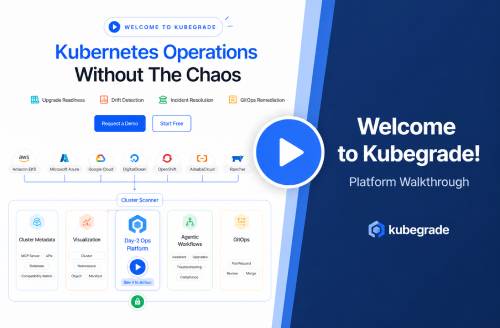
Kubegrade is a platform designed to simplify Kubernetes cluster management. It provides secure and automated K8s operations, including monitoring, upgrades, and optimization. This article will cover how to automate deployments, scaling, and monitoring to efficiently manage K8s.
Key Areas for Kubernetes DevOps Workflow Automation
Several core areas within a Kubernetes DevOps workflow benefit from automation. These include deployment, scaling, monitoring, and rollbacks. Automating these processes addresses the challenges of manual operations, leading to improved efficiency and reliability.
Deployment Automation
Challenges of Manual Processes: Manually deploying applications to Kubernetes can be time-consuming and prone to errors. Manual deployments often involve complex configurations and steps, increasing the risk of mistakes and inconsistencies [1].
How Automation Provides a Solution: Automation tools can streamline the deployment process by automating configuration, testing, and deployment steps. For example, automated CI/CD pipelines can automatically build and deploy new application versions whenever code changes are made [1].
Example: Instead of manually applying YAML configurations, an automated system uses GitOps principles to deploy changes directly from a repository, consistency across environments.
Scaling Automation
Challenges of Manual Processes: Manually scaling applications based on traffic or resource usage requires constant monitoring and intervention. This can lead to delays in scaling, resulting in performance issues or wasted resources [1].
How Automation Provides a Solution: Automated scaling solutions can automatically adjust the number of application instances based on real-time metrics. Kubernetes Horizontal Pod Autoscaler (HPA) can automatically scale deployments based on CPU utilization or other custom metrics [1].
Example: An e-commerce application experiencing a surge in traffic during a flash sale can automatically scale up its pods to handle the increased load, a smooth user experience.
Monitoring and Alerting Automation
Challenges of Manual Processes: Manually monitoring Kubernetes clusters and applications is challenging due to the nature of the environment. Identifying and responding to issues manually can be slow and inefficient [1].
How Automation Provides a Solution: Automated monitoring and alerting tools can continuously monitor the health and performance of Kubernetes clusters and applications. These tools can automatically send alerts when issues are detected, allowing teams to respond quickly [1].
Example: An automated monitoring system detects high error rates in a microservice and automatically alerts the on-call team, enabling them to investigate and resolve the issue before it impacts users.
Automated Rollbacks
Challenges of Manual Processes: Manual rollbacks can be complex and time-consuming, especially if the deployment process involves multiple steps. Manual rollbacks also increase the risk of introducing new issues or inconsistencies [1].
How Automation Provides a Solution: Automated rollback mechanisms can quickly revert to a previous known-good state in case of a failed deployment. This minimizes downtime and reduces the impact of faulty deployments [1].
Example: If a new application version introduces critical bugs, an automated system can automatically roll back to the previous version, minimal disruption to users.
Kubegrade can assist in automating these key areas by providing tools and features that streamline deployment, scaling, monitoring, and rollback processes. Its platform offers a centralized interface for managing and automating K8s operations, helping teams improve efficiency and reduce errors.
Deployment Automation
Automating Kubernetes deployments is important for teams looking to improve their software delivery process. Manual deployments are often error-prone and can lead to inconsistencies across different environments [1].
Challenges of Manual Deployments:
- Errors: Manual deployments involve many steps, increasing the chance of human error [1].
- Inconsistencies: Different environments may have slightly different configurations, leading to unexpected behavior [1].
- Time-Consuming: Manual deployments can take a significant amount of time, slowing down the release cycle [1].
Automation Solutions:
- CI/CD Pipelines: Continuous Integration and Continuous Delivery pipelines automate the build, test, and deployment processes. Tools like Jenkins, GitLab CI, and CircleCI can be used to create these pipelines [1].
- GitOps: GitOps uses Git repositories as the single source of truth for declarative infrastructure and application configurations. Tools like Argo CD and Flux automate deployments based on changes to the Git repository [1].
Examples of Successful Strategies:
- Automated deployments triggered by code commits to a Git repository.
- Automated rollouts with canary deployments or blue-green deployments to minimize risk.
- Automated rollback to a previous version if a deployment fails.
Kubegrade simplifies deployment automation by providing a platform to manage and automate K8s operations. Its features streamline the deployment process, helping teams improve efficiency and reduce errors.
Scaling Automation
Automating the scaling of Kubernetes applications makes sure that applications can handle varying levels of traffic and resource demands. This automation helps to maintain performance and optimize resource utilization [1].
How Autoscaling Works:
- Horizontal Pod Autoscaling (HPA): HPA automatically adjusts the number of pod replicas in a deployment based on observed CPU utilization, memory consumption, or custom metrics [1].
- Vertical Pod Autoscaling (VPA): VPA automatically adjusts the CPU and memory requests/limits of individual pods to right-size them based on their resource usage over time [1].
Challenges of Manual Scaling:
- Resource Wastage: Manual scaling often leads to over-provisioning of resources to handle potential spikes in traffic, resulting in wasted resources during periods of low demand [1].
- Performance Bottlenecks: If scaling is not performed quickly enough, applications may experience performance bottlenecks during peak traffic periods, leading to a poor user experience [1].
Examples of Improved Performance:
- An e-commerce application that automatically scales up during flash sales, that users can browse and purchase products without experiencing delays.
- A video streaming service that automatically scales down during off-peak hours, reducing infrastructure costs.
Kubegrade facilitates scaling automation by providing tools to easily configure and manage HPA and VPA settings. Its platform offers insights into resource utilization, helping teams make informed decisions about scaling their applications.
Monitoring and Alerting Automation
Automated monitoring and alerting are important in Kubernetes environments for maintaining application health and performance. These tools provide visibility into the state of the cluster and applications, allowing teams to identify and resolve issues [1].
Tools for Monitoring and Alerting:
- Prometheus: Prometheus is a monitoring solution that collects metrics from Kubernetes clusters and applications. It stores these metrics in a time-series database and provides a query language for analyzing the data [1].
- Grafana: Grafana is a data visualization tool that can be used to create dashboards and visualizations based on metrics collected by Prometheus. It allows teams to monitor the health and performance of their applications in real-time [1].
Benefits of Automated Alerts:
- Early Issue Detection: Automated alerts can notify teams of potential issues before they impact users [1].
- Faster Resolution: Automated alerts provide context and information about the issue, enabling teams to resolve problems more quickly [1].
Challenges of Manual Monitoring and Alerting:
- Alert Fatigue: Manual monitoring often generates a high volume of alerts, many of which are false positives or not actionable, leading to alert fatigue [1].
- Missed Issues: Manual monitoring may not be comprehensive enough to detect all potential issues, especially in complex and environments [1].
Kubegrade provides integrated monitoring and alerting capabilities, allowing teams to monitor the health and performance of their Kubernetes clusters and applications from a single platform. Its features help reduce alert fatigue and that critical issues are identified and resolved quickly.
Automated Rollbacks
Automated rollbacks are a part of Kubernetes deployments, providing a safety net in case of deployment failures. They allow teams to quickly revert to a previous, stable version of an application, minimizing the impact of faulty deployments [1].
Benefits of Automated Rollbacks:
- Reduced Downtime: Automated rollbacks can quickly restore service to a working state, minimizing downtime [1].
- Data Protection: By quickly reverting to a stable version, automated rollbacks can help prevent data loss or corruption [1].
Challenges of Manual Rollbacks:
- Downtime: Manual rollbacks can take a significant amount of time, resulting in extended downtime [1].
- Data Loss: Manual rollbacks may not be able to fully restore the previous state of the application, potentially leading to data loss [1].
Examples of Minimizing Impact:
- If a new application version introduces critical bugs, an automated system can automatically roll back to the previous version, minimal disruption to users.
- If a deployment fails due to a configuration error, an automated system can automatically revert to the previous configuration, preventing the application from becoming unavailable.
Kubegrade supports automated rollbacks, allowing teams to quickly revert to a previous version of their applications in case of deployment failures. Its features help minimize downtime and protect data, a experience for users.
Tools and Technologies for Kubernetes Workflow Automation
Several tools and technologies are available to automate Kubernetes DevOps workflows. These tools help streamline different aspects of the application lifecycle, from building and testing to deploying and monitoring [1].
CI/CD Tools
CI/CD tools automate the build, test, and deployment processes. Popular options include:
- Jenkins: A tool for automating CI/CD pipelines, providing plugins for Kubernetes integration [1].
- GitLab CI: Integrated CI/CD pipelines within GitLab, allowing for automated builds, tests, and deployments to Kubernetes [1].
Configuration Management Tools
Configuration management tools help manage and automate the configuration of servers and applications. Examples include:
- Ansible: An automation tool that can be used to configure Kubernetes resources and deploy applications [1].
- Chef: An automation platform that transforms infrastructure into code [1].
Infrastructure as Code (IaC) Tools
IaC tools allow you to define and manage infrastructure using code. Common IaC tools are:
- Terraform: A tool for building, changing, and versioning infrastructure [1].
- CloudFormation: A service that helps you model and set up your AWS resources [1].
Monitoring Tools
Monitoring tools provide visibility into the health and performance of Kubernetes clusters and applications. Key tools include:
- Prometheus: A monitoring solution for collecting and storing metrics [1].
- Grafana: A data visualization tool for creating dashboards and visualizations based on metrics collected by Prometheus [1].
Choosing the Right Tools
When selecting tools for Kubernetes workflow automation, it’s important to consider your specific needs and environment. Factors include:
- Existing infrastructure and tools: Choose tools that integrate with your systems [1].
- Team expertise: Select tools that your team is familiar with or can easily learn [1].
- Budget: Consider the cost of licensing, support, and training [1].
Kubegrade is compatible with these tools, offering integrations to streamline K8s operations. Its platform complements these technologies, providing a centralized interface for managing and automating Kubernetes workflows.
CI/CD Tools (Jenkins, GitLab CI)
CI/CD tools play a role in automating the software delivery process in Kubernetes environments. They help teams automate the build, test, and deployment of applications, resulting in faster release cycles and improved code quality [1].
Integration with Kubernetes:
- Jenkins: Jenkins can be integrated with Kubernetes using plugins such as the Kubernetes Plugin and the CloudBees Kubernetes Connector. These plugins allow Jenkins to provision build agents in Kubernetes, build and push Docker images, and deploy applications to Kubernetes [1].
- GitLab CI: GitLab CI has built-in support for Kubernetes, allowing teams to define CI/CD pipelines that automatically build, test, and deploy applications to Kubernetes. GitLab CI can also be used to manage Kubernetes resources using tools like Helm and kubectl [1].
Benefits of Using CI/CD Tools:
- Faster Release Cycles: CI/CD tools automate the software delivery process, allowing teams to release new features and bug fixes more quickly [1].
- Improved Code Quality: CI/CD pipelines can automatically run tests and code analysis tools, helping teams identify and fix issues early in the development process [1].
Examples of Configuring CI/CD Pipelines:
- A Jenkins pipeline that automatically builds a Docker image from a Git repository, pushes the image to a container registry, and deploys the image to a Kubernetes cluster.
- A GitLab CI pipeline that runs unit tests, integration tests, and end-to-end tests on every code commit, and automatically deploys the application to a staging environment if all tests pass.
Kubegrade is compatible with Jenkins and GitLab CI, allowing teams to integrate their existing CI/CD pipelines with the Kubegrade platform. Its features streamline the deployment process, helping teams improve efficiency and reduce errors.
Configuration Management (Ansible, Chef)
Configuration management is important in Kubernetes environments for maintaining consistency and repeatability across clusters and applications. Configuration management tools help automate the process of configuring servers, applications, and other infrastructure components [1].
How Ansible and Chef Can Be Used:
- Ansible: Ansible uses a approach to automate configuration management tasks. It can be used to provision and configure Kubernetes clusters, deploy applications, and manage Kubernetes resources using modules [1].
- Chef: Chef uses a Ruby-based DSL (Domain Specific Language) to define infrastructure as code. It can be used to automate the configuration of Kubernetes clusters, deploy applications, and manage Kubernetes resources [1].
Benefits of Using Configuration Management Tools:
- Consistency: Configuration management tools ensure that all systems are configured consistently, reducing the risk of configuration drift and other issues [1].
- Repeatability: Configuration management tools allow you to easily repeat configuration tasks, making it easy to create new environments or recover from failures [1].
Examples of Using Ansible:
- Using Ansible to provision a Kubernetes cluster on AWS, Azure, or GCP.
- Using Ansible to deploy a web application to a Kubernetes cluster.
- Using Ansible to manage Kubernetes resources such as deployments, services, and pods.
Kubegrade integrates with configuration management tools, allowing teams to manage their Kubernetes configurations from a centralized platform. Its features streamline the configuration process, helping teams improve efficiency and reduce errors.
Infrastructure as Code (Terraform, CloudFormation)
Infrastructure as Code (IaC) is the practice of managing and provisioning infrastructure through code, rather than through manual processes. IaC enables teams to automate infrastructure management, improve consistency, and reduce errors. It plays a role in Kubernetes automation by allowing teams to define and manage Kubernetes infrastructure in a predictable and repeatable way [1].
How Terraform and CloudFormation Can Be Used:
- Terraform: Terraform is an IaC tool that allows you to define and provision infrastructure across multiple cloud providers. It can be used to create Kubernetes clusters on AWS, Azure, GCP, and other platforms [1].
- CloudFormation: CloudFormation is an IaC service provided by AWS that allows you to define and provision AWS resources. It can be used to create Kubernetes clusters on AWS using services like EKS (Elastic Kubernetes Service) [1].
Benefits of Using IaC:
- Version Control: IaC allows you to store your infrastructure configuration in version control systems like Git, making it easy to track changes, collaborate with other team members, and revert to previous versions [1].
- Infrastructure Reproducibility: IaC ensures that your infrastructure can be easily reproduced, making it easy to create new environments or recover from failures [1].
Examples of Using Terraform:
- Using Terraform to create a Kubernetes cluster on AWS using the EKS module.
- Using Terraform to create a Kubernetes cluster on Azure using the AKS module.
- Using Terraform to create a Kubernetes cluster on GCP using the GKE module.
Kubegrade supports IaC practices, allowing teams to manage their Kubernetes infrastructure using tools like Terraform and CloudFormation. Its features streamline the infrastructure management process, helping teams improve efficiency and reduce errors.
Monitoring Tools (Prometheus, Grafana)
Monitoring is important in Kubernetes DevOps workflows. It provides visibility into the health and performance of clusters and applications. Monitoring tools enable teams to detect issues early, optimize resource utilization, and maintain application [1].
How Prometheus and Grafana Can Be Used:
- Prometheus: Prometheus collects metrics from Kubernetes clusters and applications. It stores these metrics in a time-series database, allowing teams to query and analyze the data. Prometheus also provides alerting capabilities, enabling teams to be notified of potential issues [1].
- Grafana: Grafana is a data visualization tool that can be used to create dashboards and visualizations based on metrics collected by Prometheus. It allows teams to monitor the health and performance of their applications in real-time and identify trends and patterns [1].
Benefits of Using Monitoring Tools:
- Issue Detection: Monitoring tools can detect issues before they impact users, allowing teams to resolve problems and minimize downtime [1].
- Performance Optimization: Monitoring tools provide insights into application performance and resource utilization, enabling teams to optimize their applications and infrastructure for efficiency [1].
Kubegrade offers integrated monitoring capabilities and is compatible with Prometheus and Grafana. Its features streamline the monitoring process, helping teams improve and maintain application .
Implementing Kubernetes DevOps Workflow Automation: Best Practices
Implementing Kubernetes DevOps workflow automation requires a approach. By following best practices, teams can ensure that their automation efforts are successful and that they achieve the benefits of increased efficiency, reduced errors, and faster release cycles [1].
Infrastructure as Code (IaC)
Treat infrastructure as code by defining and managing it through code. Use tools like Terraform or CloudFormation to provision and manage Kubernetes clusters and resources. This enables version control, repeatability, and collaboration [1].
Example: Define your Kubernetes cluster configuration in a Terraform file and store it in a Git repository. This allows you to track changes, collaborate with other team members, and easily reproduce your infrastructure in different environments.
Automated Testing
Automate testing at all stages of the software delivery process, including unit tests, integration tests, and end-to-end tests. Use CI/CD pipelines to automatically run tests on every code commit [1].
Example: Configure your CI/CD pipeline to run unit tests on every code commit. If any tests fail, the pipeline should automatically stop and notify the team.
Continuous Integration and Continuous Delivery (CI/CD) Pipelines
Implement CI/CD pipelines to automate the build, test, and deployment processes. Use tools like Jenkins or GitLab CI to create pipelines that automatically build Docker images, run tests, and deploy applications to Kubernetes [1].
Example: Create a CI/CD pipeline that automatically builds a Docker image from a Git repository, pushes the image to a container registry, and deploys the image to a Kubernetes cluster.
Security Automation
Automate security tasks such as vulnerability scanning, compliance checks, and access control. Integrate security tools into your CI/CD pipelines to automatically identify and address security issues [1].
Example: Integrate a vulnerability scanner into your CI/CD pipeline to automatically scan Docker images for vulnerabilities. If any vulnerabilities are found, the pipeline should automatically stop and notify the team.
Version Control, Collaboration, and Monitoring
Use version control to track changes to your code, configuration, and infrastructure. Encourage collaboration among team members by using tools like Git and Slack. Implement monitoring to track the health and performance of your applications and infrastructure [1].
Example: Use Git to track changes to your code, configuration, and infrastructure. Use Slack to communicate with team members and share information. Use Prometheus and Grafana to monitor the health and performance of your applications and infrastructure.
Kubegrade helps in adhering to these best practices by providing features that streamline infrastructure management, automate deployments, and improve . Its platform simplifies the implementation process, helping teams achieve the benefits of Kubernetes DevOps workflow automation.
Infrastructure as Code (IaC) Best Practices
Using Infrastructure as Code (IaC) is a practice for managing Kubernetes infrastructure. By following these best practices, teams can ensure that their IaC efforts are and that they achieve the benefits of automation, consistency, and repeatability [1].
Define Infrastructure in Code:
Define your Kubernetes infrastructure in code using tools like Terraform or CloudFormation. This allows you to manage your infrastructure in a predictable and repeatable way [1].
Store Infrastructure Code in Version Control:
Store your infrastructure code in a version control system like Git. This allows you to track changes, collaborate with other team members, and revert to previous versions if necessary [1].
Automate Infrastructure Provisioning:
Automate the provisioning of your Kubernetes infrastructure using CI/CD pipelines. This ensures that your infrastructure is provisioned consistently and reliably [1].
Automate Infrastructure Management:
Automate the management of your Kubernetes infrastructure using tools like Ansible or Chef. This allows you to manage your infrastructure in a consistent and way [1].
Examples of IaC Automation:
- Using Terraform to create a Kubernetes cluster on AWS, Azure, or GCP.
- Using CloudFormation to create a Kubernetes cluster on AWS.
- Using Ansible to deploy a web application to a Kubernetes cluster.
Kubegrade supports IaC best practices, allowing teams to manage their Kubernetes infrastructure using tools like Terraform and CloudFormation. Its features streamline the infrastructure management process, helping teams improve and reduce errors.
Automated Testing Best Practices
Automated testing is important for Kubernetes DevOps workflows. By following these best practices, teams can ensure that their testing efforts are and that they improve code quality and reduce deployment risks [1].
Integrate Tests into CI/CD Pipelines:
Integrate unit tests, integration tests, and end-to-end tests into your CI/CD pipelines. This ensures that tests are run automatically on every code commit, providing feedback on code quality [1].
Implement Test-Driven Development (TDD):
Implement Test-Driven Development (TDD) by writing tests before writing code. This helps ensure that your code meets the requirements and that it is testable [1].
Practice Continuous Testing:
Practice continuous testing by running tests frequently and automatically. This provides feedback on code quality and helps identify issues early in the development process [1].
Examples of Automated Testing:
- Running unit tests on every code commit to verify that individual components of the application are working correctly.
- Running integration tests on every code commit to verify that different components of the application are working together correctly.
- Running end-to-end tests on every code commit to verify that the application is working correctly from the user’s perspective.
Kubegrade facilitates automated testing by providing features that streamline the testing process. Its platform helps teams improve code quality and reduce deployment risks.
CI/CD Pipeline Best Practices
Designing and implementing effective CI/CD pipelines is a key practice for Kubernetes deployments. By following these guidelines, teams can automate the build, test, and deployment processes, resulting in faster release cycles and improved code quality [1].
Automate Build, Test, and Deployment:
Automate the build, test, and deployment processes using tools like Jenkins or GitLab CI. This ensures that applications are built, tested, and deployed consistently and reliably [1].
Implement Continuous Integration (CI):
Implement Continuous Integration (CI) by integrating code changes frequently and automatically. This helps identify integration issues early in the development process [1].
Implement Continuous Delivery (CD):
Implement Continuous Delivery (CD) by automating the deployment of applications to different environments. This ensures that applications are deployed consistently and reliably [1].
Optimize Pipelines for Speed and Reliability:
Optimize CI/CD pipelines for speed and reliability by using techniques such as parallel execution, caching, and automated rollback [1].
Examples of Optimizing CI/CD Pipelines:
- Using parallel execution to run multiple tests simultaneously.
- Using caching to reduce the time it takes to build Docker images.
- Implementing automated rollback to quickly revert to a previous version of the application in case of deployment failures.
Kubegrade integrates with CI/CD pipelines, allowing teams to manage their deployments from a centralized platform. Its features streamline the deployment process, helping teams improve and reduce errors.
Security Automation Best Practices
Automating security is a key practice for Kubernetes DevOps workflows. By following these best practices, teams can secure their Kubernetes environments from threats and comply with security policies [1].
Implement Security Scanning:
Implement security scanning to automatically identify vulnerabilities in code, containers, and infrastructure. Use tools like Clair or Anchore to scan Docker images for vulnerabilities [1].
Automate Vulnerability Management:
Automate vulnerability management to automatically track and remediate vulnerabilities. Use tools like Aqua Security or Twistlock to manage vulnerabilities in Kubernetes environments [1].
Automate Access Control:
Automate access control to automatically manage access to Kubernetes resources. Use tools like RBAC (Role-Based Access Control) or Open Policy Agent (OPA) to control access to Kubernetes resources [1].
Embrace DevSecOps and Security as Code:
Embrace DevSecOps by integrating security into every stage of the software delivery process. Treat security as code by defining and managing security policies through code [1].
Examples of Security Automation:
- Automatically scanning Docker images for vulnerabilities and blocking deployments of images with critical vulnerabilities.
- Automatically enforcing access control policies to prevent unauthorized access to Kubernetes resources.
- Automatically auditing Kubernetes clusters for compliance with security policies.
Kubegrade helps in implementing security automation best practices by providing features that streamline security scanning, vulnerability management, and access control. Its platform simplifies the process of securing Kubernetes environments, helping teams comply with security policies and protect their applications from threats.
Overcoming Challenges in Kubernetes Automation

Implementing Kubernetes DevOps workflow automation can present challenges. Complexity, security concerns, and integration issues are common hurdles. Addressing these challenges requires planning, training, and governance [1].
Complexity
Kubernetes can be complex, with many moving parts and configurations. This complexity can make it difficult to automate workflows. Solutions include:
- Start Small: Begin by automating parts of the workflow, gradually expanding automation efforts.
- Use Managed Services: Managed Kubernetes services simplify cluster management, reducing complexity.
- Use Abstraction: Use tools that abstract away the complexity of Kubernetes, providing a interface.
Security Concerns
Automating Kubernetes workflows can introduce security risks if not implemented correctly. Solutions include:
- Implement RBAC: Use Role-Based Access Control (RBAC) to restrict access to Kubernetes resources.
- Automate Security Scanning: Integrate security scanning into CI/CD pipelines to identify vulnerabilities.
- Follow Security Best Practices: Adhere to security best practices for Kubernetes deployments.
Integration Issues
Integrating different tools and technologies can be challenging. Solutions include:
- Choose Compatible Tools: Select tools that integrate with each other.
- Use APIs and Webhooks: Use APIs and webhooks to connect tools.
- Implement Standardized Interfaces: Use standardized interfaces to integration.
Importance of Planning, Training, and Governance
Proper planning, training, and governance are important for success. This includes:
- Planning: Define clear goals and objectives for automation efforts.
- Training: Provide training to team members on Kubernetes and automation tools.
- Governance: Implement policies and procedures to ensure that automation efforts are aligned with security and compliance requirements.
Kubegrade helps mitigate these challenges through its interface and features. Its platform simplifies Kubernetes management, allowing teams to overcome complexity, address security concerns, and integration issues. By providing a centralized interface and features, Kubegrade enables teams to implement Kubernetes DevOps workflow automation effectively.
Addressing Complexity
Kubernetes has inherent complexity, with numerous components and configurations. This complexity can make automation difficult and time-consuming [1].
Strategies for Simplifying Kubernetes Deployments and Management:
- Use Higher-Level Abstractions: Use tools like Helm to manage Kubernetes applications. Helm allows you to package, configure, and deploy applications as charts, simplifying the deployment process [1].
- Use Automation Tools: Use automation tools like Ansible or Terraform to automate tasks such as cluster provisioning, application deployment, and configuration management [1].
- Break Down Tasks: Break down complex tasks into smaller, components. This makes it easier to automate and manage the tasks [1].
Kubegrade helps reduce complexity through its interface and features. Its platform simplifies Kubernetes management, allowing teams to automate workflows without having to deal with the underlying complexity of Kubernetes.
Mitigating Security Concerns
Security concerns are common with Kubernetes automation. Misconfigurations and vulnerabilities can expose Kubernetes deployments to risks [1].
Solutions for Securing Kubernetes Deployments:
- Implement Role-Based Access Control (RBAC): RBAC restricts access to Kubernetes resources, access is granted only to authorized users and service accounts [1].
- Use Network Policies: Network policies control traffic between pods, preventing unauthorized access to applications [1].
- Regularly Scan for Vulnerabilities: Regularly scan Docker images and Kubernetes clusters for vulnerabilities. Use tools like Clair or Anchore to automate vulnerability scanning [1].
- Follow Security Best Practices: Follow security best practices for Kubernetes deployments, such as using least privilege, encrypting data in transit and at rest, and regularly auditing security configurations [1].
Kubegrade helps mitigate security risks by providing features that streamline security scanning, vulnerability management, and access control. Its platform simplifies the process of securing Kubernetes environments, helping teams comply with security policies and protect their applications from threats.
Resolving Integration Issues
Integrating Kubernetes with other tools and systems can be challenging. These integration issues can hinder automation efforts and limit the of Kubernetes deployments [1].
Strategies for Resolving Integration Issues:
- Use APIs: Use APIs to integrate Kubernetes with other tools and systems. APIs provide a standardized way to exchange data and functionality between applications [1].
- Use Webhooks: Use webhooks to trigger actions in other tools and systems when events occur in Kubernetes. Webhooks enable applications to react to changes in Kubernetes in real-time [1].
- Use Service Meshes: Use service meshes like Istio or Linkerd to manage traffic between services in Kubernetes. Service meshes provide features such as traffic management, security, and observability [1].
Kubegrade offers compatibility and integration capabilities, enabling teams to Kubernetes with their existing infrastructure. Its platform simplifies the integration process, helping teams improve and reduce errors.
Importance of Planning, Training, and Governance
Proper planning, training, and governance are important for Kubernetes automation initiatives. Without these elements, automation efforts can fail to deliver the benefits or may introduce risks [1].
Develop a Automation Strategy:
Develop a automation strategy that outlines the goals, objectives, and scope of automation efforts. The strategy should identify the key areas to automate, the tools to use, and the metrics to track progress [1].
Train Teams on Kubernetes and Automation Tools:
Provide training to team members on Kubernetes and automation tools. This ensures that team members have the skills and knowledge needed to automate workflows effectively [1].
Establish Governance Policies:
Establish governance policies to ensure that automation efforts are aligned with security and compliance requirements. The policies should define standards for code quality, security, and compliance [1].
Kubegrade supports planning, training, and governance efforts by providing features that streamline infrastructure management, automate deployments, and improve . Its platform simplifies the automation process, helping teams achieve the benefits of Kubernetes DevOps workflow automation.
Conclusion: The Future of Kubernetes DevOps Workflow Automation
Kubernetes DevOps workflow automation offers benefits, including increased efficiency, reduced errors, and faster release cycles. It is important for modern DevOps practices, enabling teams to deliver software more quickly and reliably [1].
Future trends in Kubernetes automation include:
- Increased use of AI and Machine Learning to automate tasks.
- Greater adoption of GitOps practices for managing infrastructure and applications.
- More focus on security automation to protect Kubernetes environments from threats.
To simplify and automate your Kubernetes workflows, explore Kubegrade. Kubegrade’s platform offers secure, , and automated K8s operations, enabling monitoring, upgrades, and optimization. Start automating your Kubernetes DevOps workflow today and experience the benefits of increased efficiency and reduced errors.

