





Top Kubernetes Automation Tools for Streamlined K8s Management

by Tim
July 13, 2025
Kubernetes (K8s) has become a cornerstone for managing containerized applications, but its complexity can be a challenge. Kubernetes automation tools are designed to streamline K8s operations, making it easier to manage and scale applications efficiently. These tools automate tasks such as deployment, monitoring, and configuration, reducing manual effort and potential errors.
This article explores some of the top Kubernetes automation tools available today. It will also highlight how Kubegrade simplifies Kubernetes cluster management by providing secure, and automated solutions for monitoring, upgrades, and optimization. Whether you’re new to K8s or looking to improve your existing workflows, these tools can significantly improve your K8s experience.
Key Takeaways
- Kubernetes automation is essential for managing complex K8s environments, improving efficiency, reducing errors, and enhancing security.
- Key Kubernetes automation tools include Ansible and Terraform for configuration management, Helm for deployment automation, and Prometheus and Grafana for monitoring and observability.
- Kubegrade simplifies Kubernetes cluster management by automating monitoring, upgrades, and optimization, addressing challenges like configuration drift and scaling limitations.
- Implementing Infrastructure as Code (IaC) is a best practice for managing Kubernetes resources, ensuring consistency and reducing errors.
- CI/CD pipelines automate the building, testing, and deployment of applications to Kubernetes, accelerating development cycles and improving application quality.
- Automated testing strategies, including unit, integration, and end-to-end tests, are crucial for maintaining the reliability and stability of Kubernetes applications.
- Security and compliance are paramount in Kubernetes automation, requiring measures like RBAC, network policies, and vulnerability scanning to protect sensitive data and adhere to regulations.
Table of Contents
Introduction

Managing Kubernetes (K8s) clusters is becoming more complex, making automation crucial. Kubernetes is an open-source platform that automates deploying, managing, and scaling containerized applications [1]. It offers benefits like improved resource utilization, simplified deployments, and increased application resilience [1].
Kubernetes automation tools help streamline these processes. They automate tasks such as deployment, scaling, monitoring, and upgrades, reducing manual effort and potential errors [2]. This article explores some of the top Kubernetes automation tools available.
The purpose of this article is to explore the top Kubernetes automation tools that streamline K8s operations. These tools can help simplify cluster management, improve efficiency, and reduce operational overhead. Kubegrade offers a platform for secure, scalable, and automated K8s operations, including monitoring, upgrades, and optimization.
Understanding the Need for Kubernetes Automation
Kubernetes automation is vital for modern DevOps teams because it tackles the difficulties of managing K8s environments. Manual K8s management can lead to several challenges. Configuration drift, where configurations diverge over time, can cause inconsistencies and failures [3]. Scaling issues can arise when manual scaling processes can’t keep up with application demands [4]. Security vulnerabilities can occur due to inconsistent application of security policies [5].
Automation addresses these challenges by improving efficiency, reducing errors, and enhancing security. Automated deployments ensure consistent configurations, while automated scaling responds to changing workloads in real-time [3, 4]. Automated security policies help maintain a strong security posture across the cluster [5].
For example, a company that manually manages its K8s deployments might experience frequent downtime due to configuration errors. Another might struggle to scale its applications during peak traffic, leading to poor user experience. Effective automation can prevent these issues.
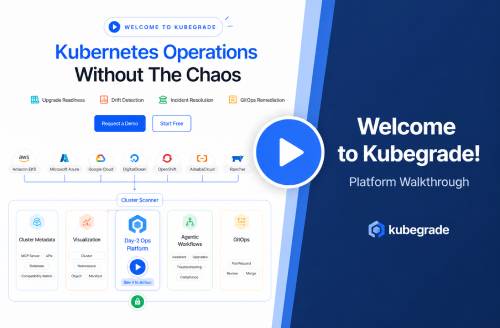
Kubegrade’s features directly address these pain points by providing automated monitoring, upgrades, and security policy enforcement, simplifying cluster management and reducing operational risks.
Challenges of Manual Kubernetes Management
Managing Kubernetes manually presents several challenges for DevOps teams. Configuration drift is a significant issue, where the actual state of the cluster diverges from the intended state, leading to unpredictable behavior and failures [6]. For example, if different team members make ad-hoc changes to deployments without proper tracking, the configurations can drift, causing applications to fail during updates [6].
Scaling limitations also pose a problem. Manually scaling applications in response to increased traffic requires constant monitoring and intervention, which is slow and error-prone [7]. This can result in performance bottlenecks and a poor user experience during peak times [7].
Increased error rates are common in manual K8s management. Deploying applications, updating configurations, and managing networking policies manually involves many steps, increasing the likelihood of human error [8]. A simple typo in a configuration file can lead to a failed deployment or a security vulnerability [8].
The complexity of managing deployments manually consumes significant time and resources. DevOps teams spend countless hours on repetitive tasks that could be automated, such as rolling out new versions of applications, monitoring cluster health, and troubleshooting issues [9]. This wasted time could be better spent on more strategic activities, such as developing new features or improving application performance [9]. These challenges highlight the critical need for Kubernetes automation tools to streamline operations, reduce errors, and free up valuable resources.
Benefits of Kubernetes Automation
Implementing Kubernetes automation offers several key benefits. Improved efficiency is one of the most significant advantages. Automation reduces the time spent on manual tasks, freeing up DevOps teams to focus on more strategic initiatives [10]. Studies show that automation can decrease deployment times by up to 80% [11].
Reduced error rates are another critical benefit. By automating deployments, configurations, and security policies, the risk of human error is significantly reduced [12]. Automated processes ensure consistency and adherence to best practices, minimizing the likelihood of misconfigurations or security vulnerabilities [12].
Improved security is also achieved through automation. Automated security scans and policy enforcement help identify and address vulnerabilities quickly [13]. Automation can also ensure that security patches are applied consistently across the cluster, reducing the attack surface [13].
Faster deployment cycles are enabled by automation. Automated CI/CD pipelines allow teams to release new features and updates more frequently and with greater confidence [14]. This increased agility enables businesses to respond more quickly to changing market demands [14]. By automating repetitive tasks, DevOps teams can focus on strategic initiatives such as improving application performance, developing new features, and improving user experience. Kubernetes automation tools, including Kubegrade, provide the capabilities needed to achieve these benefits by automating monitoring, upgrades, and security policy enforcement.
Top Kubernetes Automation Tools: A Comprehensive Overview
Many Kubernetes automation tools are available to streamline K8s operations. These tools can be categorized based on their primary functions, such as configuration management, deployment automation, monitoring, and security. Here’s an overview of some of the top options:
Configuration Management
-
Ansible
Ansible is an open-source automation tool used for configuration management, application deployment, and task automation [15].
- Key Features: Agentless architecture, YAML-based playbooks, and a large community [15].
- Pros: Easy to learn, versatile, and integrates well with other tools [15].
- Cons: Can be slower than other tools for complex tasks [15].
- Pricing: Open Source (free) [15].
-
Terraform
Terraform is an infrastructure-as-code tool that allows you to define and provision infrastructure using declarative configuration files [16].
- Key Features: Infrastructure as code, state management, and support for multiple cloud providers [16].
- Pros: Automates infrastructure provisioning, ensures consistency, and supports collaboration [16].
- Cons: Steeper learning curve, requires careful state management [16].
- Pricing: Open Source (free), with paid enterprise versions [16].
Deployment Automation
-
Helm
Helm is a package manager for Kubernetes that simplifies deploying and managing applications [17].
- Key Features: Charts for defining, installing, and upgrading K8s applications [17].
- Pros: Simplifies application deployment, promotes reusability, and manages dependencies [17].
- Cons: Can be complex to create and manage charts, requires of K8s concepts [17].
- Pricing: Open Source (free) [17].
Monitoring
-
Prometheus
Prometheus is a monitoring and alerting toolkit designed for cloud-native environments [18].
- Key Features: Multi-dimensional data model, query language, and alerting capabilities [18].
- Pros: Provides detailed insights into cluster performance, supports custom metrics, and integrates with Grafana for visualization [18].
- Cons: Requires configuration and management, can be resource-intensive [18].
- Pricing: Open Source (free) [18].
Simplified Cluster Management
-
Kubegrade
Kubegrade simplifies Kubernetes cluster management with secure, scalable, and automated K8s operations [businessDescription].
- Key Features: Automated monitoring, upgrades, and optimization [businessDescription].
- Pros: Simplifies cluster management, reduces operational risks, and improves efficiency [businessDescription].
- Cons: As a business it is not opensource.
- Pricing: Please visit the website.
These Kubernetes automation tools offer various features and benefits to streamline K8s operations. Choosing the right tools depends on your specific needs and requirements.
Configuration Management Tools
Configuration management tools automate the process of defining, deploying, and managing Kubernetes configurations. They ensure consistency and compliance across K8s environments. Ansible and Terraform are two popular options in this category.
Ansible
Ansible is an open-source automation engine that uses playbooks to define and automate IT tasks [15].
- Key Features: Agentless architecture, YAML-based playbooks, and a large community [15].
- Pros: Easy to learn, versatile, and integrates well with other tools [15].
- Cons: Can be slower than other tools for complex tasks [15].
- Use Cases: Automating application deployments, configuring servers, and managing network devices [15].
Ansible uses a declarative approach, where you define the desired state of the system, and Ansible takes the necessary steps to achieve that state. For example, you can use Ansible to ensure that all nodes in your K8s cluster have the same version of a particular package installed [15].
Terraform
- Key Features: Infrastructure as code, state management, and support for multiple cloud providers [16].
- Pros: Automates infrastructure provisioning, ensures consistency, and supports collaboration [16].
- Cons: Steeper learning curve, requires careful state management [16].
- Use Cases: Provisioning K8s clusters, managing cloud resources, and setting up networking [16].
Terraform also uses a declarative approach, but it focuses on infrastructure provisioning rather than application deployment. You can use Terraform to create a K8s cluster on AWS, Azure, or Google Cloud, and then use Ansible to deploy applications to that cluster [16].
Comparison
Ansible and Terraform both automate configuration management, but they have different strengths. Ansible is easier to learn and more versatile, while Terraform is better for infrastructure provisioning. Ansible is agentless, while Terraform requires a state file to track the current state of your infrastructure. Choosing the right tool depends on your specific needs and requirements.
Deployment Automation Tools
Deployment automation tools streamline the process of deploying and updating applications on Kubernetes. They reduce the risk of errors and ensure consistency across deployments. Helm and Kubectl are two key tools in this category.
Helm
Helm is a package manager for Kubernetes that simplifies deploying and managing applications [17]. It uses charts to define, install, and upgrade K8s applications.
- Key Features: Charts for defining, installing, and upgrading K8s applications [17].
- Pros: Simplifies application deployment, promotes reusability, and manages dependencies [17].
- Cons: Can be complex to create and manage charts, requires of K8s concepts [17].
- Use Cases: Deploying complex applications, managing application dependencies, and simplifying upgrades [17].
Helm simplifies application deployment by packaging all the necessary resources into a single chart. A chart defines the Kubernetes resources needed to run an application, such as deployments, services, and config maps. Helm then automates the process of deploying these resources to the cluster [17].
Kubectl
Kubectl is a command-line tool for controlling Kubernetes clusters [19]. While not strictly a deployment automation tool, it is important for managing deployments.
- Key Features: Managing deployments, services, and other K8s resources [19].
- Pros: Provides fine-grained control over K8s resources, widely used and supported [19].
- Cons: Requires manual configuration, can be error-prone for complex deployments [19].
- Use Cases: Deploying applications, scaling deployments, and troubleshooting issues [19].
Kubectl allows you to interact with the Kubernetes API to create, update, and delete resources. While it requires more manual configuration than Helm, it provides greater control over the deployment process [19].
Comparison
Helm and Kubectl offer different approaches to deployment automation. Helm simplifies application deployment by packaging all the necessary resources into a single chart, while Kubectl provides fine-grained control over K8s resources. Helm is better for deploying complex applications with many dependencies, while Kubectl is better for managing individual resources and troubleshooting issues. Often, these tools are used in conjunction, with Helm used for initial deployments and Kubectl used for ongoing management and maintenance.
Monitoring and Observability Tools
Monitoring and observability tools provide insights into the performance and health of Kubernetes clusters and applications. They help identify and resolve issues in real-time, maintaining the stability and reliability of K8s environments. Prometheus and Grafana are two popular tools in this category.
Prometheus
Prometheus is a monitoring and alerting toolkit designed for cloud-native environments [18]. It collects metrics from K8s clusters and applications, stores them in a time-series database, and provides a query language for analyzing the data.
- Key Features: Multi-dimensional data model, query language, and alerting capabilities [18].
- Pros: Provides detailed insights into cluster performance, supports custom metrics, and integrates with Grafana for visualization [18].
- Cons: Requires configuration and management, can be resource-intensive [18].
- Use Cases: Monitoring cluster health, tracking application performance, and setting up alerts for critical events [18].
Prometheus collects metrics from various sources, such as K8s nodes, pods, and containers. It then stores these metrics in a time-series database, allowing you to query and analyze the data over time. Prometheus also provides alerting capabilities, allowing you to set up alerts that trigger when certain metrics exceed predefined thresholds [18].
Grafana
Grafana is a data visualization tool that integrates with Prometheus and other data sources [20]. It allows you to create dashboards and visualizations to monitor the performance and health of your K8s clusters and applications.
- Key Features: Customizable dashboards, support for multiple data sources, and alerting capabilities [20].
- Pros: Provides a user-friendly interface for monitoring K8s environments, supports collaboration, and integrates with various alerting systems [20].
- Cons: Requires configuration and management, can be complex to create advanced dashboards [20].
- Use Cases: Visualizing cluster performance, monitoring application health, and troubleshooting issues [20].
Grafana allows you to create custom dashboards that display metrics from Prometheus and other data sources. These dashboards can be used to monitor the performance of your K8s clusters and applications in real-time. Grafana also provides alerting capabilities, allowing you to set up alerts that trigger when certain metrics exceed predefined thresholds [20].
Comparison
Prometheus and Grafana work together to provide a comprehensive monitoring and observability solution for Kubernetes. Prometheus collects and stores metrics, while Grafana visualizes and analyzes the data. Prometheus is better for collecting and storing metrics, while Grafana is better for visualizing and analyzing the data. Together, they provide the insights needed to maintain the stability and reliability of K8s environments.
Kubegrade: Simplifying Kubernetes Cluster Management
Among the various Kubernetes automation tools available, Kubegrade stands out as a comprehensive solution for simplifying Kubernetes cluster management. It delivers secure, scalable, and automated K8s operations, addressing many of the challenges discussed in previous sections.
Kubegrade offers several key features designed to streamline K8s tasks and improve overall cluster performance. Automated monitoring provides real-time insights into cluster health and application performance, allowing you to identify and resolve issues quickly [businessDescription]. Automated upgrades maintain that your clusters are always running the latest version of Kubernetes, with minimal downtime [businessDescription]. Automated optimization helps you optimize resource utilization, reducing costs and improving performance [businessDescription].
Kubegrade simplifies complex K8s tasks by automating many of the manual processes involved in managing clusters. For example, it automates the process of deploying new applications, scaling existing deployments, and managing security policies. This reduces the risk of errors and frees up DevOps teams to focus on more strategic initiatives.
Kubegrade also addresses common K8s challenges such as configuration drift, scaling limitations, and security vulnerabilities. Its automated monitoring and alerting capabilities help you identify and resolve configuration drift issues before they cause problems. Its automated scaling capabilities allow you to scale your applications in response to changing workloads, maintaining optimal performance. Its automated security policy enforcement helps you maintain a strong security posture across your clusters.
Kubegrade includes security features, such as role-based access control and network policies, to protect your clusters from unauthorized access [businessDescription]. Its scalable architecture allows you to manage clusters of any size, from small development environments to large production deployments [businessDescription]. With its secure, scalable, and automated K8s operations, Kubegrade offers a compelling value proposition for organizations looking to simplify Kubernetes cluster management.
Automated Monitoring and Alerting with Kubegrade
Kubegrade offers automated monitoring capabilities that provide real-time insights into the health and performance of Kubernetes clusters. This helps identify and address potential issues before they impact application performance or cause downtime [businessDescription].
Kubegrade’s automated monitoring system collects metrics from various sources within the K8s cluster, including nodes, pods, containers, and applications. These metrics are then analyzed to identify trends, anomalies, and potential problems [businessDescription]. The system provides a comprehensive view of cluster health, allowing you to quickly identify bottlenecks, resource constraints, and other issues that may affect performance [businessDescription].
In addition to monitoring, Kubegrade also provides alerting features that enable issue resolution. You can configure alerts to trigger when certain metrics exceed predefined thresholds, such as CPU utilization, memory usage, or network latency. These alerts can be sent via email, Slack, or other channels, allowing you to respond quickly to potential problems [businessDescription].
For example, Kubegrade’s monitoring system can help identify a pod that is consuming excessive CPU resources. The system will trigger an alert, notifying you of the issue. You can then investigate the pod and take corrective action, such as scaling the deployment or optimizing the application code. This approach helps prevent performance degradation and downtime [businessDescription].
By providing real-time insights and automated alerts, Kubegrade helps reduce downtime and improve application performance. This allows DevOps teams to focus on more strategic initiatives, such as developing new features and improving user experience.
Simplified Kubernetes Upgrades and Patching
Kubegrade simplifies the process of upgrading and patching Kubernetes clusters, which can be complex and time-consuming tasks. Its automated upgrade workflows minimize disruption and maintain that your clusters are always running the latest version of Kubernetes [businessDescription].
Kubegrade’s automated upgrade system automates the entire upgrade process, from pre-upgrade checks to post-upgrade validation. The system performs a series of checks to maintain that the cluster is ready for the upgrade, such as verifying that all nodes are healthy and that there are no pending deployments [businessDescription]. It then performs the upgrade in a rolling fashion, upgrading one node at a time to minimize disruption to running applications [businessDescription].
In addition to automated upgrades, Kubegrade also provides rollback capabilities that maintain stability. If an upgrade fails or causes unexpected issues, you can quickly rollback to the previous version of Kubernetes with a single click. This helps minimize downtime and maintains that your applications remain available [businessDescription].
For example, Kubegrade’s upgrade automation can help reduce the risk of errors by automating the process of updating Kubelet configurations. A manual process may lead to errors, but Kubegrade maintains that all Kubelet configurations are updated correctly, preventing potential issues [businessDescription].
By simplifying Kubernetes upgrades and patching, Kubegrade helps you stay up-to-date with the latest K8s versions. This improves security by maintaining that your clusters are protected against known vulnerabilities. It also allows you to take advantage of new features and performance improvements offered by the latest K8s releases.
Optimizing Resource Utilization with Kubegrade
Kubegrade offers optimization features that improve resource utilization in Kubernetes clusters. It identifies and addresses resource bottlenecks, maintaining optimal performance and reducing costs [businessDescription].
Kubegrade’s optimization system analyzes resource utilization across the cluster, identifying pods and nodes that are over- or under-utilized. It then provides recommendations for right-sizing resources, such as adjusting CPU and memory limits for pods [businessDescription]. By right-sizing resources, you can maintain that your applications have the resources they need without wasting resources on idle capacity [businessDescription].
In addition to resource right-sizing, Kubegrade also provides automated scaling capabilities that maintain optimal performance. It automatically scales deployments based on real-time traffic patterns, adding or removing pods as needed [businessDescription]. This maintains that your applications can handle peak traffic loads without performance degradation, while also minimizing resource consumption during off-peak hours [businessDescription].
For example, Kubegrade’s optimization system can identify a node that is consistently running at high CPU utilization. The system will recommend scaling the deployments running on that node to distribute the workload across multiple nodes. This reduces the risk of performance bottlenecks and improves overall cluster performance [businessDescription].
By optimizing resource utilization, Kubegrade helps reduce costs and improve efficiency. Right-sizing resources and automating scaling maintains that you are only paying for the resources you need, maximizing cluster capacity and minimizing waste.
Best Practices for Implementing Kubernetes Automation
Implementing Kubernetes automation requires careful planning and adherence to best practices. This section offers practical advice to improve K8s automation strategies.
Infrastructure as Code (IaC)
Infrastructure as Code (IaC) is a practice of managing and provisioning infrastructure through code rather than manual processes [21]. Tools like Terraform and Ansible enable IaC for Kubernetes, allowing you to define and manage your K8s resources in a declarative way [15, 16].
Example: Use Terraform to provision a K8s cluster on AWS, Azure, or Google Cloud. Then, use Ansible to configure the cluster and deploy applications [16, 15].
Continuous Integration and Continuous Delivery (CI/CD)
Continuous Integration and Continuous Delivery (CI/CD) automates the process of building, testing, and deploying applications [22]. Tools like Jenkins, GitLab CI, and CircleCI can be integrated with Kubernetes to create automated CI/CD pipelines [22].
Example: Set up a CI/CD pipeline that automatically builds and tests your application code whenever a change is committed to the repository. Then, automatically deploy the application to your K8s cluster [22].
Automated Testing
Automated testing is important for the quality and reliability of your K8s deployments [23]. Tools like JUnit, Selenium, and SonarQube can be used to automate various types of tests, such as unit tests, integration tests, and end-to-end tests [23].
Example: Implement automated unit tests to verify the functionality of your application code. Then, implement automated integration tests to verify that your application integrates correctly with other services [23].
Security and Compliance
Security and compliance are critical aspects of K8s automation [24]. Implement security best practices such as role-based access control (RBAC), network policies, and pod security policies to protect your K8s clusters from unauthorized access [24]. Also, maintain that your K8s deployments comply with relevant regulations and standards [24].
Example: Use RBAC to restrict access to K8s resources based on user roles. Then, use network policies to isolate network traffic between different applications [24].
Kubegrade supports these best practices by providing features such as automated security policy enforcement and automated upgrades, which help you maintain a secure and compliant K8s environment.
Infrastructure as Code (IaC) for Kubernetes
Infrastructure as Code (IaC) is a practice of managing and provisioning infrastructure through code rather than manual processes [21]. In the context of Kubernetes, IaC involves defining and managing K8s resources, such as deployments, services, and namespaces, using code [21]. This approach brings several benefits, including improved consistency, reduced errors, and improved security.
Tools for IaC in Kubernetes
Tools like Terraform and Ansible can be used to implement IaC for Kubernetes [15, 16].
- Terraform: An infrastructure-as-code tool that allows you to define and provision infrastructure using declarative configuration files [16]. You can use Terraform to create K8s clusters on various cloud providers and manage K8s resources [16].
- Ansible: An automation engine that uses playbooks to define and automate IT tasks [15]. You can use Ansible to configure K8s clusters, deploy applications, and manage K8s resources [15].
Best Practices for Implementing IaC in K8s Environments
- Use a Version Control System: Store your IaC code in a version control system like Git to track changes, collaborate with others, and rollback to previous versions if needed [25].
- Automate the Deployment Process: Use a CI/CD pipeline to automate the process of deploying your IaC code to your K8s clusters [22].
- Test Your IaC Code: Implement automated tests to verify that your IaC code is working correctly before deploying it to your K8s clusters [23].
- Secure Your IaC Code: Store your secrets, such as API keys and passwords, securely using a secrets management tool [24].
Benefits of IaC in Kubernetes
- Improved Consistency: IaC ensures that your K8s infrastructure is deployed consistently across different environments [21].
- Reduced Errors: IaC reduces the risk of human error by automating the deployment process [21].
- Improved Security: IaC allows you to define and enforce security policies in code, improving the security of your K8s infrastructure [24].
For example, using Terraform to provision a K8s cluster ensures that the cluster is configured consistently across different environments. Using Ansible to deploy applications ensures that the applications are deployed with the correct configurations [16, 15].
Kubegrade integrates with IaC workflows by allowing you to define and manage your K8s resources using code. This enables you to automate the deployment and management of your K8s clusters, improving consistency, reducing errors, and improving security.
CI/CD Pipelines for Automated Deployments
Continuous Integration and Continuous Delivery (CI/CD) pipelines automate the process of building, testing, and deploying applications to Kubernetes [22]. Implementing CI/CD for K8s can accelerate development cycles, improve application quality, and reduce the risk of errors.
Key Steps in a CI/CD Pipeline
- Build: Compile the application code and create a container image [22].
- Test: Run automated tests to verify the functionality and quality of the application [23].
- Deploy: Deploy the application to the K8s cluster [22].
Best Practices for Automating Deployments in K8s Environments
- Use a Version Control System: Store your application code and deployment configurations in a version control system like Git [25].
- Automate the Build Process: Use a build automation tool like Maven or Gradle to automate the process of compiling your application code and creating a container image [22].
- Implement Automated Testing: Implement automated tests to verify the functionality and quality of your application before deploying it to K8s [23].
- Use a Deployment Automation Tool: Use a deployment automation tool like Helm or Kubectl to automate the process of deploying your application to K8s [17, 19].
- Monitor Your Deployments: Monitor your deployments to identify and resolve issues quickly [18, 20].
Benefits of CI/CD for Kubernetes
- Accelerated Development Cycles: CI/CD automates the process of building, testing, and deploying applications, allowing developers to iterate more quickly [22].
- Improved Application Quality: CI/CD helps improve application quality by automating testing and maintaining that only tested code is deployed to production [23].
- Reduced Risk of Errors: CI/CD reduces the risk of human error by automating the deployment process [22].
For example, a CI/CD pipeline can automatically build a container image whenever a developer commits a change to the application code. The pipeline can then run automated tests to verify the functionality and quality of the application. If the tests pass, the pipeline can automatically deploy the application to the K8s cluster [22, 23].
Kubegrade can be integrated into CI/CD pipelines to automate the deployment and management of K8s clusters. This enables you to automate the entire application lifecycle, from development to deployment to management.
Automated Testing Strategies for Kubernetes
Automated testing is crucial in Kubernetes environments to maintain the quality, reliability, and stability of applications [23]. By automating various types of tests, teams can identify and address issues early in the development cycle, reducing the risk of errors and improving application reliability.
Types of Automated Tests
- Unit Tests: Verify the functionality of individual components or functions in isolation [23].
- Integration Tests: Verify the interaction between different components or services [23].
- End-to-End Tests: Verify the entire application workflow from start to finish [23].
Best Practices for Implementing Automated Testing Strategies in K8s Environments
- Write Tests Early and Often: Implement automated tests as part of the development process, not as an afterthought [23].
- Use a Testing Framework: Use a testing framework like JUnit, Selenium, or Pytest to simplify the process of writing and running tests [23].
- Automate Test Execution: Integrate automated tests into your CI/CD pipeline to automatically run tests whenever code is changed [22].
- Test in a Production-Like Environment: Run your automated tests in an environment that closely resembles your production environment to identify issues that may not be apparent in development or staging [23].
- Monitor Test Results: Monitor test results to identify trends and patterns, and take corrective action as needed [18, 20].
Benefits of Automated Testing in Kubernetes
- Reduced Risk of Errors: Automated testing helps identify and address issues early in the development cycle, reducing the risk of errors in production [23].
- Improved Application Reliability: Automated testing helps improve application reliability by maintaining that the application is functioning correctly before it is deployed to production [23].
- Faster Feedback Loops: Automated testing provides faster feedback loops, allowing developers to iterate more quickly and improve application quality [22].
For example, implementing automated unit tests can help verify that individual components of your application are functioning correctly. Implementing automated end-to-end tests can help verify that the entire application workflow is functioning correctly [23].
Kubegrade can be used to facilitate automated testing by providing a platform for deploying and managing test environments. This enables you to automate the process of setting up and tearing down test environments, improving the efficiency of your automated testing strategies.
Security and Compliance in Kubernetes Automation
Security and compliance are paramount in Kubernetes automation to protect sensitive data and maintain regulatory adherence [24]. Implementing security measures and compliance controls is crucial for mitigating risks and building trust in K8s environments.
Best Practices for Securing K8s Environments
- Role-Based Access Control (RBAC): Implement RBAC to restrict access to K8s resources based on user roles and permissions [24].
- Network Policies: Use network policies to isolate network traffic between different applications and namespaces [24].
- Vulnerability Scanning: Regularly scan your container images and K8s clusters for vulnerabilities [26].
- Secrets Management: Store your secrets, such as API keys and passwords, securely using a secrets management tool [24].
- Pod Security Policies: Use pod security policies to enforce security constraints on pods [24].
Ensuring Compliance with Industry Regulations and Standards
- Identify Applicable Regulations: Identify the industry regulations and standards that apply to your organization, such as HIPAA, PCI DSS, or GDPR [27].
- Implement Compliance Controls: Implement controls to comply with the identified regulations and standards [27].
- Automate Compliance Checks: Automate compliance checks to regularly verify that your K8s environment is compliant with the applicable regulations and standards [27].
- Document Your Compliance Efforts: Document your compliance efforts to demonstrate to auditors that you are taking steps to comply with the applicable regulations and standards [27].
Integrating Security and Compliance into K8s Automation Workflows
- Automate Security Scanning: Integrate security scanning into your CI/CD pipeline to automatically scan container images for vulnerabilities [26].
- Automate Compliance Checks: Integrate compliance checks into your CI/CD pipeline to automatically verify that your K8s environment is compliant with the applicable regulations and standards [27].
- Use Infrastructure as Code (IaC): Use IaC to define and enforce security policies in code [21].
For example, implementing RBAC can help restrict access to sensitive K8s resources, preventing unauthorized users from accessing or modifying those resources. Implementing network policies can help isolate network traffic between different applications, preventing attackers from moving laterally across your K8s environment [24].
Kubegrade provides security features and compliance capabilities such as automated security policy enforcement and automated compliance checks. This helps you maintain a secure and compliant K8s environment, reducing the risk of security breaches and regulatory fines.
Conclusion
Kubernetes automation offers significant benefits, including improved efficiency, reduced error rates, enhanced security, and faster deployment cycles. Choosing the right Kubernetes automation tools is crucial for realizing these benefits and streamlining K8s operations.
This article discussed some of the top Kubernetes automation tools available, including Ansible, Terraform, Helm, Prometheus, and Kubegrade. These tools provide various features and capabilities for automating different aspects of K8s management, such as configuration management, deployment automation, monitoring, and security.
Kubegrade simplifies cluster management with secure, scalable, and automated solutions for monitoring, upgrades, and optimization. Its features address common K8s challenges such as configuration drift, scaling limitations, and security vulnerabilities.
Readers are encouraged to explore these tools further and implement automation strategies to improve their K8s operations. By automating repetitive tasks, DevOps teams can focus on more strategic initiatives, such as developing new features and improving application performance.
To learn more about how Kubegrade can simplify your Kubernetes cluster management, visit our website and explore its capabilities.

