





Automated kubernetes cost optimization: best practices and tools guide

by Tim
November 20, 2025
Modern cloud-native environments face an unprecedented challenge as Kubernetes adoption drives substantial infrastructure costs. According to the CNCF Survey, 49% of organizations report increased cloud spending directly attributed to Kubernetes deployments, while 70% identify workload over-provisioning as their primary cost driver.?
Manual resource management across large-scale clusters proves time-consuming and error-prone, creating opportunities for significant financial waste. Automated Kubernetes cost optimization emerges as the definitive solution, leveraging intelligent algorithms and machine learning to continuously right-size resources, eliminate inefficiencies, and maintain optimal performance.
?This comprehensive guide explores proven strategies, advanced automation techniques, and essential tools for implementing effective Kubernetes cost optimization while preserving application reliability and operational excellence.

Essential cost optimization strategies and implementation approaches
Effective resource management begins with proper right-sizing of both nodes and pods to prevent costly over-provisioning scenarios. Setting appropriate CPU and memory requests and limits forms the foundation of efficient resource utilization, where requests define minimum guaranteed resources while limits establish maximum consumption thresholds.?
Over-provisioning results in idle resources and inflated costs, whereas under-provisioning causes performance degradation and potential service disruptions.
Resource right-sizing and management fundamentals
Implementing precise resource allocation requires continuous monitoring of actual workload consumption patterns versus allocated resources. Organizations achieving optimal efficiency typically maintain utilization rates between 70-80% for production workloads, ensuring adequate headroom for traffic spikes while minimizing waste.?
Advanced rightsizing algorithms analyze historical usage data to automatically adjust resource specifications, eliminating guesswork from capacity planning decisions.
| Resource Type | Optimization Target | Expected Savings |
| CPU Requests | 70-80% utilization | 20-30% |
| Memory Allocation | 80-85% utilization | 15-25% |
| Storage Provisioning | Remove orphaned volumes | 10-40% |
Kubernetes native autoscaling mechanisms
Kubernetes provides three primary autoscaling mechanisms that work synergistically to optimize resource utilization.?
The Horizontal Pod Autoscaler (HPA) adjusts replica counts based on CPU or memory metrics, while the Vertical Pod Autoscaler (VPA) modifies resource requests based on historical consumption patterns. The Cluster Autoscaler dynamically provisions or removes nodes to match actual demand, preventing infrastructure waste during low-traffic periods.
Storage cost optimization techniques
Storage optimization involves strategic use of Persistent Volume Claims (PVCs) and appropriate storage class selection.?
High-performance SSDs should be reserved for latency-sensitive applications, while standard storage serves non-critical workloads effectively. Regular audits using kubectl commands help identify unattached volumes that continue incurring charges after workload deletion, representing immediate cost recovery opportunities.

Advanced machine learning and intelligent automation techniques
Machine learning algorithms revolutionize Kubernetes cost optimization by analyzing complex usage patterns and predicting future resource requirements. These systems continuously learn from workload behavior, automatically adjusting resource requests and limits to maintain optimal efficiency without human intervention.?
AI-driven platforms demonstrate documented savings of up to 50% through intelligent rightsizing and automated resource management.
AI-driven resource optimization
Sophisticated algorithms process massive datasets from cluster metrics, application performance indicators, and historical usage patterns. Predictive analytics enables proactive scaling decisions, preventing both resource starvation and over-allocation scenarios. These systems integrate with existing monitoring infrastructure to provide real-time optimization recommendations while respecting application-specific constraints and performance requirements.
- Historical pattern analysis – Examines weeks or months of usage data
- Real-time adjustment algorithms – Responds to immediate workload changes
- Predictive scaling models – Forecasts future resource demands
- Performance-aware optimization – Balances cost and application reliability
Intelligent pod placement and bin packing
Advanced bin-packing algorithms consolidate workloads onto fewer nodes through strategic pod placement, enabling automatic removal of underutilized infrastructure. These systems consider node affinity rules, resource requirements, and application dependencies when making placement decisions.
?Zero-downtime container migration capabilities allow workload rebalancing without service interruption, previously impossible for applications requiring persistent storage.
Predictive scaling and demand forecasting
Forecast-based machine learning analyzes seasonal patterns, business cycles, and application-specific usage trends to anticipate scaling requirements. This approach prevents reactive scaling delays that could impact user experience while avoiding premature resource provisioning. Intelligent forecasting considers multiple variables including time of day, day of week, and historical growth patterns to deliver accurate capacity predictions.
Comprehensive cost monitoring and financial visibility
Effective cost visibility requires granular tracking capabilities that attribute expenses to specific teams, projects, or services. Real-time cost allocation systems integrate with cloud billing APIs to provide accurate financial insights across multiple clusters and cloud providers. This transparency enables informed decision-making and accountability for infrastructure spending.
Real-time cost allocation and tracking
Modern cost allocation systems utilize workload labels, namespace annotations, and resource tags to provide detailed expense breakdowns. Integration with cloud provider billing systems ensures accuracy while enabling showback and chargeback mechanisms for internal cost recovery.?
Multi-cluster environments require centralized cost aggregation to identify optimization opportunities across the entire Kubernetes infrastructure.
- Namespace-level cost attribution enables team-based budgeting and accountability
- Workload-specific expense tracking identifies high-cost applications requiring optimization
- Multi-cloud cost aggregation provides unified visibility across providers
- Historical trend analysis reveals spending patterns and growth trajectories
Monitoring tools and metrics implementation
Comprehensive monitoring relies on tools like Prometheus and Grafana for real-time observability, combined with cloud-native solutions including AWS CloudWatch, Azure Monitor, and Google Cloud Operations Suite. Custom metrics creation enables application-specific monitoring while automated alerting mechanisms provide proactive notification of resource consumption anomalies.
Financial reporting and analysis
Advanced reporting systems generate automated cost reports with configurable frequency and granularity levels. These reports include variance analysis, budget tracking, and optimization recommendations based on usage patterns. Integration with enterprise financial systems enables seamless budget management and forecasting capabilities.

Cloud provider integration and cost efficiency
Cloud-specific optimization strategies leverage provider-native features to achieve substantial cost reductions. Spot instance automation provides 70-90% savings compared to on-demand pricing for fault-tolerant workloads, while reserved instance utilization optimizes predictable workload costs through commitment-based pricing models.
Spot instance lifecycle management
Intelligent spot instance management balances cost reduction with reliability requirements through automated interruption handling and fallback mechanisms. Advanced systems monitor spot pricing trends across availability zones and instance types, automatically migrating workloads to maintain optimal cost efficiency. During spot droughts, automatic fallback to on-demand instances ensures continuous operation.
| Instance Type | Cost Savings | Best Use Cases |
| Spot Instances | 70-90% | Batch processing, stateless applications |
| Reserved Instances | 30-70% | Predictable workloads, baseline capacity |
| Committed Use | 20-50% | Long-term stable workloads |
Reserved instance and commitment optimization
Reserved instance optimization requires careful analysis of workload patterns to identify stable, predictable capacity requirements. Commitment utilization strategies balance flexibility with cost savings, ensuring maximum value from long-term commitments while maintaining operational agility for dynamic workloads.
Multi-cloud cost strategies
Multi-cloud deployments require sophisticated cost management approaches that account for cross-zone data transfer charges and provider-specific pricing models. Egress cost optimization becomes critical in distributed architectures, particularly for applications with significant east-west or north-south traffic patterns.
Policy enforcement and automated governance
Policy-based resource management ensures consistent optimization across development teams and deployment environments. Automated quota enforcement maintains resource boundaries without requiring manual intervention, while CI/CD integration provides cost-aware development workflows that prevent expensive deployments from reaching production.
Resource quota and policy management
Resource quotas define consumption limits at the namespace level, preventing runaway resource usage while ensuring fair allocation across teams. LimitRanges establish default and maximum values for individual containers, creating guardrails that prevent accidental over-provisioning during development phases.
Cost-aware CI/CD integration
Integrating cost considerations into development workflows enables shift-left validation of resource requirements. Automated checks flag deployments exceeding predefined thresholds while providing developers with immediate feedback on cost implications. This approach prevents expensive mistakes from reaching production environments.
- Pre-deployment cost estimation provides impact analysis before changes reach production
- Automated resource validation ensures compliance with organizational policies
- Real-time developer feedback educates teams on optimization best practices
Enterprise governance and compliance
Enterprise environments require robust governance frameworks that maintain compliance while enabling optimization. Role-based access control ensures secure operations, while audit trails provide transparency in optimization decisions. Financial governance through showback and chargeback mechanisms enables accurate cost attribution across business units.
Leading optimization tools and platform selection
Selecting appropriate optimization platforms requires careful evaluation of capabilities including automated resource allocation, zero-downtime optimization, and multi-cluster management features. Comprehensive platforms integrate multiple optimization techniques while specialized tools focus on specific cost management aspects.
Comprehensive optimization platforms
Leading platforms provide end-to-end optimization capabilities including automated rightsizing, intelligent scaling, and advanced bin-packing algorithms. These solutions typically offer zero-downtime optimization, ensuring continuous application availability during resource adjustments while maintaining performance SLAs.
Specialized cost management solutions
Specialized tools focus on specific aspects of cost optimization such as visibility, monitoring, or particular cloud provider integrations. Open-source solutions provide vendor-neutral alternatives while proprietary platforms offer advanced features and enterprise support.
- Visibility-focused tools excel at cost tracking and reporting
- Automation platforms emphasize intelligent resource management
- Cloud-specific solutions optimize provider-native features
- Open-source alternatives provide customizable optimization frameworks
Tool selection and implementation criteria
Evaluation criteria should include scalability requirements, integration capabilities with existing infrastructure, performance impact on running workloads, and enterprise features like governance and compliance support.
?Expected ROI timelines typically range from 3-6 months for mature platforms, making cost optimization investments highly attractive for organizations operating significant Kubernetes infrastructure.
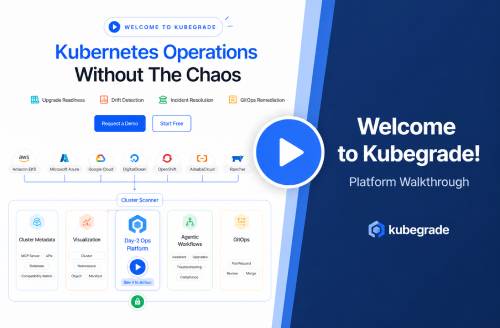
From configuration drift to policy enforcement, Kubegrade keeps your Kubernetes environment under full control.
Optimize your Kubernetes costs effortlessly with Kubegrade ? automate resource management, eliminate waste, and gain full visibility into your cloud spend today.

