





Top Kubernetes Resource Management Tools for Efficient Cluster Operations

by Tim
November 19, 2025
Effectively managing resources in Kubernetes is crucial for maintaining performance, controlling costs, and guaranteeing scalability. Kubernetes resource management tools provide the functionalities needed to monitor, allocate, and optimize resource usage within a cluster. These tools help teams ensure their applications have the resources they need while avoiding over-provisioning and waste.
This article explores some of the top Kubernetes resource management tools available. It will cover features, benefits, and how they can assist in streamlining cluster operations, improving resource utilization, and reducing operational overhead. By implementing these tools, one can achieve a more efficient and cost-effective Kubernetes environment.
“`
Key Takeaways
- Effective Kubernetes resource management is crucial for optimizing cluster performance, improving cost efficiency, and enhancing scalability.
- Key features to look for in resource management tools include monitoring, automated scaling, cost optimization, policy enforcement, and integration capabilities.
- Tools like Prometheus, Grafana, and KubeCost offer specific functionalities for monitoring, visualization, and cost management in Kubernetes.
- Implementing strategies such as setting resource requests/limits, utilizing namespaces, and leveraging autoscaling are essential for efficient resource allocation.
- Monitoring resource usage helps identify bottlenecks and optimize resource consumption, leading to improved application performance and reduced costs.
- Kubegrade simplifies Kubernetes cluster management by providing a platform for secure, adaptable, and automated K8s operations.
- Choosing the right resource management tools depends on specific organizational needs, technical requirements, and budget constraints.
Table of Contents
“`html
Introduction to Kubernetes Resource Management

Kubernetes has become key for deploying applications because it helps manage them across different environments. Kubernetes resource management involves efficiently allocating and monitoring computing resources like CPU, memory, and storage within a Kubernetes cluster.
Effective resource management is crucial for several reasons. It optimizes cluster performance by making sure applications have the resources they need without wasting any. It also improves cost efficiency by reducing unnecessary resource consumption. Good resource management also improves the ability to grow, allowing applications to expand or contract based on demand.
Managing resources in Kubernetes presents challenges, such as dealing with complex configurations and the need for constant monitoring. However, the right tools can help ease these issues. Kubegrade simplifies Kubernetes cluster management by providing a platform for secure, adaptable, and automated K8s operations. It helps with monitoring, upgrades, and optimization.
“““html
Key Features to Look for in Kubernetes Resource Management Tools
When choosing Kubernetes resource management tools, there are several key features to think about. These features can significantly impact how well a tool supports efficient cluster operations and improves resource use.
Monitoring and Visibility
A resource management tool should offer thorough monitoring and visibility into resource consumption. This includes real-time data on CPU, memory, and storage usage across all nodes and pods. For example, a dashboard that shows resource usage trends can help identify bottlenecks and optimize resource allocation.
Automated Scaling
Automated scaling is another important feature. It allows the cluster to automatically adjust resource allocation based on demand. For instance, if an application experiences a surge in traffic, the tool should automatically scale up the number of pods to handle the load. This makes sure there is high availability and optimal performance.
Cost Optimization
Cost optimization features help reduce expenses by identifying idle or underutilized resources. A tool that provides recommendations on rightsizing instances or deleting unused resources can lead to significant cost savings. For example, it might identify that certain pods are using more resources than they need and suggest reducing their resource limits.
Policy Enforcement
Policy enforcement makes sure that resource usage adheres to predefined rules and standards. This can help prevent resource contention and make sure there is fair allocation across different teams or applications. For instance, a policy might limit the amount of CPU or memory that a particular team can use, preventing them from monopolizing cluster resources.
Integration Capabilities
The tool should integrate well with other tools and platforms in the ecosystem, such as monitoring solutions, CI/CD pipelines, and cloud provider services. This allows for a more streamlined and automated workflow. For example, integration with a CI/CD pipeline can automate resource provisioning and deployment as part of the application release process.
It?s important to think about tools that align with specific business needs and technical requirements. The right tool can make a big difference in managing Kubernetes resources effectively.
“““html
Monitoring and Visibility
Monitoring and visibility are vital in Kubernetes resource management because they allow users to track how resources are being used, spot performance bottlenecks, and fix problems quickly. Without proper monitoring, it?s difficult to understand how efficiently a cluster is running.
Key metrics that should be monitored include CPU usage, memory consumption, and network traffic. CPU usage indicates how much processing capacity applications are using. High CPU usage can indicate that an application needs more resources or that there?s a performance issue. Memory consumption shows how much memory applications are using. High memory usage can lead to slowdowns or crashes. Network traffic monitoring helps identify network-related issues that might affect application performance.
Monitoring tools can help optimize resource allocation by providing insights into resource usage patterns. For example, if a tool shows that a particular application is consistently using only a small fraction of its allocated resources, its resource limits can be reduced. This frees up resources for other applications that need them. Monitoring can also help improve application performance by identifying performance bottlenecks. For instance, if an application is experiencing slow response times, monitoring might reveal that it?s waiting for network resources. Addressing this bottleneck can significantly improve performance.
Good monitoring and visibility contribute to the overall goal of efficient cluster operations by providing the data needed to make informed decisions about resource allocation and optimization. This leads to better performance, lower costs, and improved resource utilization.
“““html
Automated Scaling
Automated scaling offers many benefits in Kubernetes environments. Autoscaling flexibly adjusts resource allocation based on application demand, which makes sure there is optimal performance and cost efficiency. By automatically scaling resources up or down as needed, organizations can avoid over-provisioning and reduce waste.
There are different types of autoscaling available in Kubernetes. Horizontal Pod Autoscaling (HPA) automatically adjusts the number of pod replicas in a deployment based on observed CPU utilization or other select metrics. Vertical Pod Autoscaling (VPA) automatically adjusts the CPU and memory resources allocated to individual pods. HPA is useful for handling traffic spikes by adding more pods to distribute the load. VPA is useful for optimizing the resource allocation of individual pods based on their actual usage.
For example, if an e-commerce website experiences a sudden surge in traffic during a flash sale, HPA can automatically increase the number of pods to handle the increased load. This prevents the website from slowing down or becoming unavailable. Similarly, if a pod is consistently using more CPU than allocated, VPA can automatically increase its CPU limit to prevent resource exhaustion and improve performance.
Automated scaling plays a key role in maintaining application availability and responsiveness. By automatically adjusting resources based on demand, it makes sure that applications can handle unexpected traffic spikes and maintain optimal performance under varying conditions.
“““html
Cost Optimization
Kubernetes resource management tools can significantly help optimize costs in cloud environments. By implementing effective strategies, organizations can reduce resource waste and achieve substantial savings.
One strategy is right-sizing instances, which involves matching the size of the virtual machines to the actual resource needs of the applications. Many times, instances are over-provisioned, leading to wasted resources. Another strategy is identifying idle resources, such as unused volumes or underutilized nodes, and reclaiming them. Spot instances, which are spare compute capacity available at discounted prices, can also be used to reduce costs for fault-tolerant workloads.
Cost management tools provide insights into resource spending by tracking resource usage and costs across different teams, applications, and environments. These tools can identify areas where costs can be reduced, such as overspending on certain resources or inefficient resource allocation. For example, a cost management tool might reveal that a particular team is using more expensive instance types than necessary, prompting them to switch to more cost-effective options.
Cost optimization features can lead to significant savings in cloud infrastructure costs. By reducing resource waste, optimizing resource allocation, and leveraging cost-saving options, organizations can lower their cloud bills and improve their bottom line. Knowing the resource requirements of different applications and allocating resources accordingly, while also staying within the allocated budget, is crucial for achieving cost efficiency.
“““html
Policy Enforcement and Governance
Policy enforcement and governance are important in Kubernetes resource management. These features can make sure there is compliance with organizational standards and regulatory requirements. By implementing policies and governance practices, organizations can maintain a consistent and secure environment.
Policy enforcement tools can prevent misconfigurations by validating resource definitions against predefined rules. They can also enforce security policies by controlling which resources can be accessed and how they can be used. For example, a policy might restrict the creation of privileged containers or require that all containers run with a non-root user.
Policy enforcement can mitigate risks and improve the overall security of Kubernetes environments. For instance, a policy might prevent the deployment of images from untrusted registries, reducing the risk of introducing malicious code into the cluster. Another policy might enforce encryption of sensitive data at rest and in transit, protecting it from unauthorized access.
Governance plays a key role in maintaining consistency and control across the cluster. By establishing clear policies and procedures for resource management, organizations can make sure that all teams and applications follow the same standards. This helps prevent inconsistencies and reduces the risk of errors or security vulnerabilities.
“““html
Top Kubernetes Resource Management Tools
Many Kubernetes resource management tools are available, each offering unique features and benefits. These tools help in monitoring, cost management, and automation, making it easier to manage Kubernetes clusters effectively. Choosing the right tool depends on specific needs, technical requirements, and budget constraints.
Kubegrade
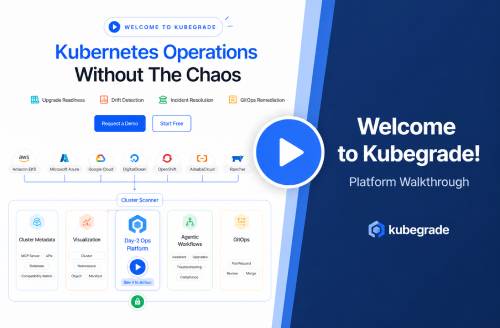
Kubegrade simplifies Kubernetes cluster management with its platform for secure, adaptable, and automated K8s operations. Key features include automated monitoring, streamlined upgrades, and resource optimization. Kubegrade is ideal for organizations looking for a comprehensive solution that improves security and simplifies K8s management.
Other Kubernetes Resource Management Tools
Besides Kubegrade, several other Kubernetes resource management tools are worth considering:
- Prometheus: An open-source monitoring solution that collects and stores metrics as time-series data. It?s often used with Grafana for visualization. Prometheus is well-suited for monitoring cluster performance and identifying issues.
- Kubernetes Dashboard: A web-based UI that allows users to manage and monitor their Kubernetes cluster. It provides insights into the status of deployments, pods, and other resources. The Kubernetes Dashboard is useful for basic monitoring and management tasks.
- KubeCost: A cost monitoring tool that provides visibility into the cost of running Kubernetes workloads. It helps identify cost drivers and optimize resource allocation. KubeCost is ideal for organizations looking to reduce their cloud spending.
- Sysdig: A monitoring and security platform that provides deep visibility into Kubernetes environments. It offers features for threat detection, incident response, and compliance. Sysdig is well-suited for organizations with complex security requirements.
Comparison
When comparing Kubernetes resource management tools, consider factors such as ease of use, adaptability, integration capabilities, and pricing. Some tools are easier to set up and use than others. Adaptability is important for handling growing workloads. Integration capabilities allow the tool to work with other systems. Pricing varies widely, with some tools being open-source and others offering commercial licenses.
Ultimately, the best Kubernetes resource management tools are those that align with your specific needs and help you meet your objectives for efficient cluster operations.
“““html
Monitoring Tools
Effective monitoring is crucial for managing Kubernetes resources. Several tools offer capabilities for tracking resource utilization, identifying performance bottlenecks, and troubleshooting issues. Here?s an overview of some leading Kubernetes monitoring tools:
- Prometheus: Prometheus is an open-source monitoring solution known for its flexible query language (PromQL) and ability to collect metrics from various sources. It is easy to use for basic monitoring setups and expands well with large clusters. Prometheus integrates well with Grafana for creating dashboards and visualizations. Real-world examples include identifying CPU spikes in pods and detecting memory leaks. Prometheus is free to use, making it ideal for organizations of all sizes.
- Grafana: While often used with Prometheus, Grafana can also integrate with other data sources to provide comprehensive monitoring dashboards. It offers a user-friendly interface for creating custom dashboards and setting up alerts. Grafana is adaptable and supports a wide range of integrations. It can help identify performance bottlenecks by visualizing metrics such as CPU usage, memory consumption, and network traffic. Grafana has a free open-source version and paid plans for larger teams.
- Datadog: Datadog is a monitoring and analytics platform that provides deep visibility into Kubernetes environments. It offers features for real-time monitoring, alerting, and log management. Datadog is easy to use and expands well with large clusters. It integrates with a wide range of services and platforms. Real-world examples include detecting anomalous behavior in applications and identifying security threats. Datadog offers a free trial and various paid plans based on usage.
- Sysdig Monitor: Sysdig Monitor provides comprehensive monitoring and security for Kubernetes. It offers features for container monitoring, threat detection, and compliance. Sysdig is adaptable and integrates with various platforms. It helps identify performance bottlenecks by providing detailed insights into container behavior. Sysdig offers a free trial and paid plans based on the number of hosts.
Kubegrade also offers monitoring capabilities as part of its broader cluster management platform. While it may not have the same depth of features as dedicated monitoring tools like Prometheus or Datadog, Kubegrade provides integrated monitoring for key metrics, making it a convenient option for organizations seeking a unified management solution.
“““html
Cost Management Tools
Managing costs is a key aspect of Kubernetes resource management, especially in cloud environments. Several tools are available to help track spending, optimize resource allocation, and reduce cloud costs. Here?s an overview of some leading Kubernetes cost management tools:
- KubeCost: KubeCost provides real-time visibility into the cost of running Kubernetes workloads. It tracks resource usage and costs across different namespaces, deployments, and pods. KubeCost offers recommendations for optimizing resource allocation and reducing waste. It integrates with cloud billing platforms such as AWS, Azure, and GCP. Real-world examples include identifying over-provisioned resources and right-sizing instances. KubeCost is open-source with enterprise versions available.
- CloudHealth by VMware: CloudHealth provides a comprehensive view of cloud spending across multiple cloud providers. It offers features for cost tracking, optimization recommendations, and policy enforcement. CloudHealth integrates with cloud billing platforms and provides detailed reports on resource usage. Real-world examples include identifying cost savings opportunities and automating cost optimization tasks. CloudHealth offers a free trial and paid plans based on usage.
- Densify: Densify is a resource management platform that uses machine learning to optimize resource allocation and reduce cloud costs. It analyzes resource usage patterns and provides recommendations for right-sizing instances and optimizing resource limits. Densify integrates with cloud billing platforms and provides detailed reports on cost savings. Real-world examples include reducing cloud spending by identifying and eliminating waste. Densify offers a free trial and paid plans based on the number of resources managed.
Kubegrade assists in cost management through its resource optimization features. By providing insights into resource usage and recommendations for right-sizing instances, Kubegrade helps organizations reduce waste and lower their cloud bills. While it may not have the same depth of cost management features as dedicated tools like KubeCost or CloudHealth, Kubegrade offers integrated cost management as part of its broader cluster management platform.
“““html
Automation and Orchestration Tools
Automation and orchestration are key to managing Kubernetes resources effectively. Several tools are available to automate deployments, scaling, and resource management, reducing operational overhead and improving efficiency. Here?s an overview of some leading Kubernetes automation and orchestration tools:
- Helm: Helm is a package manager for Kubernetes that simplifies the deployment and management of applications. It uses charts to define, install, and upgrade even the most complex Kubernetes applications. Helm streamlines deployments, making them repeatable and easier to manage. Real-world examples include deploying complex applications with multiple dependencies and managing application upgrades. Helm is open-source and free to use.
- Ansible: Ansible is an automation tool that can be used to provision and configure Kubernetes clusters, as well as deploy and manage applications. It uses playbooks to define automation tasks, making it easy to automate complex workflows. Ansible is well-suited for automating infrastructure management tasks and application deployments. Real-world examples include automating the creation of Kubernetes clusters and deploying applications across multiple environments. Ansible is open-source with enterprise versions available.
- Terraform: Terraform is an infrastructure-as-code tool that can be used to provision and manage Kubernetes clusters, as well as other cloud resources. It uses declarative configuration files to define infrastructure, making it easy to automate infrastructure deployments. Terraform is well-suited for managing complex infrastructure environments. Real-world examples include automating the creation of Kubernetes clusters and managing cloud resources across multiple providers. Terraform is open-source with enterprise versions available.
Kubegrade stands out in secure, adaptable, and automated K8s operations. Its key advantage lies in providing a unified platform that combines automation, security, and management capabilities. Compared to other automation tools, Kubegrade offers a more integrated approach, simplifying K8s operations and making it easier to manage complex deployments.
“““html
Implementing Effective Resource Management Strategies
Effective resource management is crucial for optimizing the performance, cost efficiency, and scalability of Kubernetes clusters. By implementing the right strategies, organizations can make sure that applications have the resources they need without wasting any. Here?s some practical advice on implementing effective resource management strategies in Kubernetes:
Setting Resource Requests and Limits
Resource requests and limits are key for managing resource allocation in Kubernetes. Resource requests specify the minimum amount of resources that a container needs, while resource limits specify the maximum amount of resources that a container can use. Setting appropriate resource requests and limits helps prevent resource contention and makes sure that applications have the resources they need to run properly. For example, setting a resource request for CPU and memory makes sure that a pod is scheduled on a node with enough capacity to meet its minimum requirements. Setting a resource limit prevents a pod from consuming more resources than it?s allowed, which can prevent it from affecting other applications.
Utilizing Namespaces for Resource Isolation
Namespaces provide a way to divide cluster resources between multiple teams or applications. By creating separate namespaces for different teams or applications, organizations can isolate resources and prevent them from interfering with each other. This can help improve security and stability. For example, creating separate namespaces for development, testing, and production environments makes sure that resources in one environment don?t affect resources in another environment.
Leveraging Autoscaling to Flexibly Adjust Resource Allocation
Autoscaling automatically adjusts resource allocation based on application demand. By using Horizontal Pod Autoscaling (HPA), organizations can automatically scale the number of pods in a deployment based on CPU utilization or other metrics. This helps make sure that applications can handle traffic spikes and maintain optimal performance. For example, if an application experiences a sudden surge in traffic, HPA can automatically increase the number of pods to handle the increased load.
Monitoring Resource Usage and Identifying Potential Bottlenecks
Monitoring resource usage is crucial for identifying potential bottlenecks and optimizing resource allocation. By tracking metrics such as CPU usage, memory consumption, and network traffic, organizations can identify areas where resources are being wasted or where applications are experiencing performance issues. For example, if monitoring reveals that a particular application is consistently using only a small fraction of its allocated resources, its resource limits can be reduced.
Optimizing Resource Consumption and Reducing Costs
Optimizing resource consumption is key for reducing costs in Kubernetes environments. By right-sizing instances, identifying idle resources, and leveraging spot instances, organizations can lower their cloud bills and improve their bottom line. For example, right-sizing instances involves matching the size of the virtual machines to the actual resource needs of the applications.
By implementing these strategies, organizations can achieve effective resource management in Kubernetes and optimize the performance, cost efficiency, and scalability of their applications.
“““html
Setting Resource Requests and Limits
Setting resource requests and limits in Kubernetes is crucial for efficient resource utilization. These settings control how much CPU and memory each container within a pod can request and consume. Properly configured requests and limits ensure that applications have the resources they need to run smoothly, while also preventing any single application from monopolizing cluster resources.
Resource requests specify the minimum amount of resources that a container needs. The Kubernetes scheduler uses these requests to find a node with enough available capacity to run the pod. Resource limits, specify the maximum amount of resources that a container can use. If a container tries to exceed its limit, Kubernetes may throttle its CPU usage or, in the case of memory, terminate the container.
Setting resource requests and limits too low can lead to performance issues. If a container doesn’t have enough resources, it may experience slowdowns or even crash. Setting them too high can lead to wasted resources. If a container requests more resources than it actually needs, those resources will be reserved for it, even if it’s not using them.
Here’s an example of how to define resource requests and limits in a YAML file:
apiVersion: v1 kind: Pod metadata: name: my-pod spec: containers: - name: my-container image: nginx resources: requests: cpu: 100m memory: 256Mi limits: cpu: 500m memory: 512Mi In this example, the container my-container requests 100 millicores of CPU and 256MiB of memory. It is limited to using a maximum of 500 millicores of CPU and 512MiB of memory.
These settings impact scheduling and resource allocation by telling Kubernetes how to place pods on nodes and how to manage their resource consumption. By carefully configuring resource requests and limits, organizations can optimize resource utilization and make sure that applications run efficiently.
“““html
Utilizing Namespaces for Resource Isolation
Namespaces in Kubernetes provide a way to divide cluster resources between multiple users, teams, or environments. They act as virtual clusters within a physical cluster, allowing for resource isolation and improved organization. By using namespaces effectively, organizations can improve security, resource management, and overall cluster stability.
One key benefit of using namespaces is multi-tenancy. In a multi-tenant environment, multiple teams or applications share the same Kubernetes cluster. Namespaces allow each tenant to have their own isolated environment, preventing them from interfering with each other’s resources. This makes sure that one tenant cannot consume all the resources in the cluster and starve other tenants.
Namespaces are also useful for managing development and production environments. By creating separate namespaces for each environment, organizations can isolate resources and prevent accidental changes in one environment from affecting another. This makes it easier to test new features and deploy updates without risking production stability.
Here’s an example of how to create a namespace using kubectl:
kubectl create namespace my-namespace Once a namespace is created, you can specify it when creating resources using the --namespace flag or by setting the namespace in the resource definition file.
Resource quotas can be applied to namespaces to limit the amount of resources that can be consumed within that namespace. This helps prevent resource exhaustion and makes sure that resources are fairly distributed across different namespaces. For example, you can set a resource quota to limit the total amount of CPU, memory, and storage that can be used in a namespace.
Therefore, namespaces play a key role in improving security and resource management in Kubernetes. By providing a way to isolate resources and enforce resource quotas, namespaces help organizations maintain a stable and secure cluster environment.
“““html
Leveraging Autoscaling for Flexible Resource Allocation
Autoscaling in Kubernetes allows for the adaptable adjustment of resource allocation based on application demand. This makes sure that applications have the resources they need to perform well, while also optimizing resource utilization and reducing costs. By automatically scaling resources up or down as needed, organizations can avoid over-provisioning and minimize waste.
There are two main types of autoscaling in Kubernetes: Horizontal Pod Autoscaling (HPA) and Vertical Pod Autoscaling (VPA). HPA automatically adjusts the number of pod replicas in a deployment based on observed CPU utilization, memory consumption, or custom metrics. VPA automatically adjusts the CPU and memory resources allocated to individual pods.
To configure HPA, you need to define a target metric (e.g., CPU utilization) and a target value. The HPA controller will then automatically adjust the number of pod replicas to maintain the target metric at the desired level. For example, you can configure HPA to automatically increase the number of pod replicas if CPU utilization exceeds 70%.
To configure VPA, you need to deploy the VPA controller and configure it to monitor the resource usage of your pods. The VPA controller will then automatically adjust the CPU and memory resources allocated to the pods based on their actual usage. For example, VPA can automatically increase the CPU limit of a pod if it consistently uses more CPU than its current limit.
Several factors influence autoscaling decisions, including CPU utilization, memory consumption, and custom metrics. CPU utilization is a common metric for scaling CPU-bound workloads, while memory consumption is a common metric for scaling memory-bound workloads. Custom metrics can be used to scale based on application-specific metrics, such as the number of requests per second or the queue length.
Autoscaling plays a key role in maintaining application performance and cost efficiency. By automatically adjusting resource allocation based on demand, it makes sure that applications can handle traffic spikes and maintain optimal performance under varying conditions. At the same time, it optimizes resource utilization and reduces costs by avoiding over-provisioning.
“““html
Monitoring Resource Usage and Identifying Bottlenecks
Monitoring resource usage is key for identifying and resolving performance bottlenecks in Kubernetes. Several tools can be used to monitor resource usage, including kubectl, Prometheus, and Grafana. By tracking key metrics and analyzing resource consumption patterns, organizations can optimize resource allocation and improve application performance.
kubectl provides basic commands for monitoring resource usage in Kubernetes. For example, the kubectl top command displays the CPU and memory usage of pods and nodes. This can be useful for quickly identifying pods or nodes that are consuming excessive resources.
Prometheus is an open-source monitoring solution that collects and stores metrics as time-series data. It can be used to monitor a wide range of metrics in Kubernetes, including CPU utilization, memory consumption, network traffic, and disk I/O. Prometheus integrates well with Grafana for creating dashboards and visualizations.
Grafana provides a user-friendly interface for creating custom dashboards and visualizing metrics collected by Prometheus. It can be used to create dashboards that display key metrics for Kubernetes pods, nodes, and services. Grafana also supports alerting, allowing you to be notified when certain metrics exceed predefined thresholds.
Key metrics that should be monitored include CPU utilization, memory consumption, network traffic, and disk I/O. High CPU utilization can indicate that an application is CPU-bound and needs more CPU resources. High memory consumption can indicate that an application is memory-bound and needs more memory resources. High network traffic can indicate network congestion or excessive network usage. High disk I/O can indicate disk bottlenecks or inefficient disk access patterns.
By monitoring these metrics and analyzing resource consumption patterns, you can identify potential bottlenecks and optimize resource allocation. For example, if you notice that a particular pod is consistently experiencing high CPU utilization, you can increase its CPU limit or scale up the number of pod replicas. If you notice that a particular node is experiencing high disk I/O, you can investigate the disk access patterns of the pods running on that node and identify opportunities for optimization.
In one real-world example, monitoring revealed that a particular application was experiencing slow response times due to high disk I/O. After investigating the issue, it was discovered that the application was writing large amounts of data to disk in an inefficient manner. By optimizing the application’s disk access patterns, the disk I/O was reduced, and the application’s response times improved significantly.
“““html
Conclusion: Optimizing Kubernetes with the Right Tools

Kubernetes resource management tools are important for achieving efficient cluster operations, cost savings, and the ability to grow. These tools help organizations optimize resource allocation, identify performance bottlenecks, and automate management tasks. By using the right tools, organizations can make sure that their Kubernetes clusters are running efficiently and cost-effectively.
Key features to look for in Kubernetes resource management tools include monitoring and visibility, automated scaling, cost optimization, policy enforcement, and integration capabilities. Top tools discussed in this article include Prometheus, Grafana, KubeCost, and Kubegrade, each offering unique features and benefits.
It?s important for organizations to carefully assess their requirements and select tools that align with their specific needs. Factors to consider include ease of use, scalability, integration capabilities, and pricing. The right tools can make a big difference in managing Kubernetes resources effectively.
Kubegrade simplifies Kubernetes cluster management and enables secure, adaptable, and automated K8s operations. Its integrated platform combines automation, security, and management capabilities, making it easier to manage complex deployments and optimize resource utilization.
“`

