





Unlock Peak Performance: K8s Optimization Services for Enhanced Efficiency

by Tim
October 23, 2025
Kubernetes (K8s) has become a key tool for managing containerized applications. However, simply deploying K8s is not enough. To truly benefit, businesses need to optimize their K8s deployments for efficiency, cost savings, and scalability. K8s optimization services offer the expertise and tools needed to achieve these goals.
These services help organizations fine-tune their K8s environments, making sure they perform at their best. By focusing on resource utilization, automation, and continuous improvement, businesses can get the most out of their K8s investments. This leads to better application performance and lower operational costs.
“`
Key Takeaways
- Kubernetes optimization is crucial for maximizing resource utilization, reducing costs, and supporting scalability in application deployments.
- Common challenges in Kubernetes resource management include inefficient resource allocation, over-provisioning, lack of visibility, and scaling difficulties.
- Effective strategies for K8s optimization involve right-sizing containers, implementing resource quotas and limits, leveraging Horizontal Pod Autoscaling (HPA), and utilizing node selectors and affinity.
- Automation plays a vital role in K8s optimization by streamlining resource provisioning, scaling, monitoring, and configuration management through Infrastructure-as-Code (IaC) and GitOps.
- Kubegrade simplifies K8s cluster management by offering secure and automated operations, including monitoring, upgrades, and optimization, enabling businesses to focus on innovation.
- Continuous K8s optimization, supported by tools like Kubegrade, leads to better resource utilization, lower costs, improved scalability, and enhanced application performance.
- Automated monitoring and alerting are essential for identifying performance bottlenecks and potential issues in Kubernetes environments, enabling proactive optimization measures.
Table of Contents
“`html
Introduction: The Imperative of K8s Optimization
Kubernetes (K8s) has become vital for deploying applications . Its ability to automate deployment, scaling, and management makes it a favorite for businesses managing complex applications . However, many organizations find it difficult to manage K8s environments efficiently .
K8s optimization is about maximizing resource utilization, reducing costs, and supporting scaling . Effective K8s optimization services can help organizations achieve peak performance from their K8s deployments . This involves fine-tuning configurations, automating tasks, and continuously monitoring the environment .
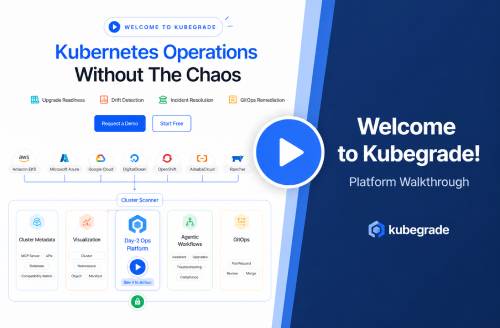
Kubegrade is a platform designed to simplify K8s cluster management . It offers secure and automated K8s operations, including monitoring, upgrades, and optimization, and supports scaling. With Kubegrade, businesses can streamline their K8s workflows and focus on innovation .
“““html
Key Challenges in Kubernetes Resource Management
Managing Kubernetes resources presents several challenges for organizations. These issues can affect application performance and increase operational costs .
- Inefficient Resource Allocation: Applications may not be using the resources they are allocated, leading to waste. For instance, a microservice might be assigned more CPU and memory than it needs, preventing other services from using those resources .
- Over-Provisioning: To avoid performance issues, teams often allocate more resources than necessary. This safety net results in significant waste and higher infrastructure costs. A large enterprise might over-provision its K8s clusters by 30-40%, resulting in considerable expenses .
- Lack of Visibility: Without proper monitoring tools, it’s hard to understand how resources are being used. This lack of insight makes it difficult to identify bottlenecks and optimize resource allocation. Teams may struggle to pinpoint why an application is slow or failing .
- Scaling Difficulties: Scaling applications in K8s can be difficult, especially when dealing with stateful applications or microservices with dependencies. Incorrect scaling configurations can lead to performance degradation or instability. A sudden spike in traffic might overwhelm an improperly scaled application .
K8s optimization services can help address these challenges by providing tools and expertise to improve resource allocation, reduce over-provisioning, improve visibility, and simplify scaling . By implementing these services, organizations can achieve better performance and lower costs .
“““html
Inefficient Resource Allocation and Over-Provisioning
A common issue in Kubernetes is that applications frequently ask for more resources than they truly require. This leads to underutilized capacity and wasted resources. For example, a development team might request 2 CPU cores and 4GB of memory for a microservice, but it only uses 0.5 CPU cores and 1GB of memory on average. The remaining resources sit idle, preventing other applications from using them .
Over-provisioning is a strategy where teams allocate more resources than needed to avoid performance problems. While this approach can prevent outages, it significantly increases infrastructure costs. Companies often over-provision to handle peak loads that rarely occur, resulting in constant waste .
K8s optimization services can play a crucial role in identifying and fixing these inefficient resource allocations. By monitoring resource usage in real-time, these services can pinpoint applications that are over-requesting resources. They can also provide recommendations for right-sizing resource requests based on actual application needs .
Kubegrade helps allocate resources based on application needs. It continuously analyzes resource consumption and adjusts allocations to match demand. This ensures that applications have the resources they need without wasting capacity, leading to significant cost savings .
“““html
Lack of Visibility into Resource Utilization
Monitoring and tracking resource utilization in Kubernetes clusters can be difficult. Without proper visibility, it’s hard to spot performance bottlenecks and optimize how resources are allocated. This lack of insight can lead to inefficient use of resources and higher costs .
Using monitoring tools and dashboards is important for gaining insights into resource usage patterns. These tools can provide data on CPU usage, memory consumption, network traffic, and disk I/O. By analyzing this data, teams can identify which applications are consuming the most resources and where there are potential bottlenecks .
K8s optimization services offer monitoring and reporting capabilities. These services provide real-time data and historical trends, making it easier to understand resource usage. They also offer alerts and notifications to help teams respond quickly to performance issues .
Kubegrade includes monitoring features that help users understand resource consumption. Its dashboards provide a view of resource usage across the cluster, allowing users to identify underutilized and overutilized resources. This information helps in making informed decisions about resource allocation and optimization .
“““html
Complexity of Scaling Applications
Scaling applications in Kubernetes involves several difficulties. Configuring Horizontal Pod Autoscaling (HPA) can be challenging, and making sure applications scale efficiently with changing demand requires careful planning. Incorrect configurations can result in performance issues or wasted resources .
Load balancing and traffic management are also important for scaling applications. Distributing traffic evenly across multiple instances ensures that no single instance is overwhelmed. Proper load balancing can improve application performance and availability .
K8s optimization services can simplify the scaling process and ensure performance. These services offer tools to automate HPA configuration and provide recommendations for scaling policies. They also help in setting up load balancing and traffic management .
Kubegrade automates scaling based on real-time metrics. It continuously monitors application performance and adjusts the number of pods to meet demand. This automation ensures that applications scale efficiently without manual intervention, optimizing resource utilization and performance .
“““html
Strategies for Effective K8s Optimization
To optimize Kubernetes deployments, organizations can implement several strategies and best practices. These approaches improve resource use and reduce costs .
- Right-Sizing Containers: Adjust container resource requests and limits to match actual application needs. This prevents over-allocation and ensures resources are used efficiently.
K8s optimization servicescan help analyze resource usage and recommend appropriate sizes . - Implementing Resource Quotas and Limits: Set quotas and limits on namespaces to control resource consumption by different teams or applications. This prevents a single application from consuming all available resources. Kubegrade provides tools to easily manage quotas and limits .
- Leveraging Horizontal Pod Autoscaling (HPA): Automatically scale the number of pods based on CPU utilization or other metrics. This ensures applications can handle varying levels of traffic without manual intervention.
K8s optimization servicescan help configure HPA policies . - Utilizing Node Selectors and Affinity: Schedule pods on specific nodes based on labels or affinity rules. This allows for better resource allocation and ensures that applications run on appropriate hardware. Kubegrade simplifies the process of setting node selectors and affinity rules .
- Employing Monitoring and Alerting Tools: Use monitoring tools to track resource usage and identify potential issues. Set up alerts to notify teams of performance problems or resource constraints.
K8s optimization servicesoffer comprehensive monitoring and alerting capabilities .
By implementing these strategies with the assistance of K8s optimization services like Kubegrade, organizations can achieve significant improvements in resource utilization and cost savings .
“““html
Right-Sizing Containers for Optimal Resource Use
Right-sizing containers involves setting appropriate resource requests and limits to match their actual needs. This practice is important for efficient resource utilization in Kubernetes. When containers are not right-sized, resources can be wasted, leading to increased costs and performance issues .
To determine the correct resource requests and limits, monitor container resource usage over time. Tools like Prometheus, Grafana, and Kubernetes Metrics Server can provide insights into CPU, memory, and other resource consumption patterns. Analyze this data to understand the average and peak resource usage of each container .
Several techniques can help in identifying opportunities for optimization. Vertical Pod Autoscaling (VPA) automatically adjusts container resource requests based on usage. Load testing can help determine how containers perform under different loads, providing data for right-sizing .
K8s optimization services can automate the process of right-sizing containers. These services use algorithms to analyze resource usage and recommend optimal configurations. By automating this process, teams can ensure that containers are always properly sized, without manual intervention .
Kubegrade helps in analyzing container performance and recommending configurations. It provides a view of container resource usage and suggests adjustments to resource requests and limits. This ensures that containers are sized according to their actual needs, optimizing resource utilization and reducing costs .
“““html
Resource Quotas and Limits: Preventing Resource Starvation
Resource quotas and limits in Kubernetes serve to control resource consumption and prevent resource starvation. They ensure that individual containers or namespaces do not consume excessive resources, which could negatively impact the performance of other applications. By setting quotas and limits, organizations can maintain a fair distribution of resources across their K8s environment .
Resource quotas are applied at the namespace level and limit the total amount of resources that can be consumed by all pods within that namespace. Resource limits, restrict the amount of resources that a single container can use, and are applied to individual containers. Configuring these effectively involves knowing the resource requirements of different applications and setting appropriate boundaries .
To configure resource quotas and limits, define the desired CPU and memory limits in the namespace or pod specification files. It is important to monitor resource usage and adjust these values as needed to ensure optimal performance .
K8s optimization services can assist organizations in implementing and managing resource quotas and limits. These services provide tools for monitoring resource consumption, identifying potential bottlenecks, and recommending optimal quota and limit configurations. They also offer features for automating the enforcement of resource policies .
Kubegrade simplifies the configuration and enforcement of resource policies. Its interface allows users to easily define and apply resource quotas and limits across their K8s clusters. This ensures that resources are distributed fairly and that no single application can monopolize the available resources, preventing performance degradation for other applications .
“““html
Horizontal Pod Autoscaling (HPA): Scaling Applications Automatically
Horizontal Pod Autoscaling (HPA) in Kubernetes automatically adjusts the number of pods in a deployment based on resource utilization or custom metrics. HPA allows applications to scale to meet demand, supporting performance and availability. When resource usage increases, HPA adds more pods. When resource usage decreases, HPA removes pods .
To configure HPA, define the target CPU utilization or custom metrics in the HPA specification. Set minimum and maximum pod counts to control the scaling range. It’s important to choose appropriate target values based on application performance characteristics .
Effective HPA configuration supports applications scale efficiently without wasting resources. Overly aggressive scaling can lead to unnecessary resource consumption, while conservative scaling can result in performance bottlenecks .
K8s optimization services can optimize HPA configurations. These services provide recommendations for target values and scaling ranges based on historical data and performance analysis. They also offer tools for monitoring HPA performance and identifying potential issues .
Kubegrade automates HPA based on monitoring and prediction. It analyzes resource usage patterns and predicts future demand, adjusting the number of pods in advance. This automation supports applications scale efficiently without manual intervention, optimizing resource utilization and performance .
“““html
Node Selectors and Affinity: Optimizing Pod Placement
Node selectors and affinity in Kubernetes control the placement of pods on specific nodes. They use labels or other criteria to ensure pods run on appropriate hardware. Node selectors provide a simple way to direct pods to nodes with specific labels. Affinity offers more control over pod placement based on relationships between pods and nodes .
To use node selectors, add the nodeSelector field to the pod specification and specify the desired labels. For affinity, use the affinity field to define rules based on node labels or pod relationships. This allows for fine-grained control over pod placement .
Using node selectors and affinity optimizes resource utilization and improves application performance. For example, place resource-intensive pods on nodes with more CPU or memory. Schedule pods that communicate frequently on the same node to reduce latency .
K8s optimization services can help organizations use node selectors and affinity. These services provide guidance on defining appropriate labels and affinity rules based on application requirements. They also offer tools for monitoring pod placement and identifying potential issues .
Kubegrade schedules pods based on resource availability and performance requirements. It analyzes node resources and pod requirements to ensure pods are placed optimally. This intelligent scheduling improves resource utilization and application performance .
“““html
The Role of Automation in K8s Optimization
Automation is important for continuous K8s optimization. Automation tools and platforms streamline tasks like resource provisioning, scaling, and monitoring. By automating these processes, organizations can reduce manual effort and improve efficiency .
Infrastructure-as-Code (IaC) and GitOps are beneficial for managing K8s configurations. IaC allows teams to define and manage infrastructure using code, enabling version control and reproducibility. GitOps uses Git repositories as the source of truth for declarative infrastructure and application configurations, automating deployments and rollbacks .
Kubegrade’s automation capabilities simplify K8s operations and reduce manual effort. It automates tasks such as resource allocation, scaling, and monitoring, freeing up teams to focus on innovation. This automation ensures that K8s environments are always optimized for performance and cost .
K8s optimization services rely on automation to enable optimization. By automating resource management and scaling, these services can identify and address issues. This approach ensures that K8s environments are always running and are optimized .
“““html
Automated Resource Provisioning and Scaling
Automation streamlines resource provisioning in Kubernetes, reducing manual effort and the risk of errors. Instead of manually configuring resources, automation tools define and provision resources. This speeds up deployment times and ensures consistency across environments .
Automated scaling, driven by real-time metrics, ensures applications handle fluctuating workloads. By monitoring metrics like CPU utilization and request latency, automated scaling tools can adjust resources to meet demand. This ensures applications perform without over-provisioning .
Tools like Kubegrade automate these processes. They offer automated resource provisioning and scaling, reducing manual intervention. This automation ensures that resources are allocated and scaled based on application needs .
K8s optimization services use automation to achieve resource utilization and cost savings. By automating resource provisioning and scaling, these services ensure that resources are used efficiently. This leads to reduced waste and lower infrastructure costs .
“““html
Infrastructure-as-Code (IaC) and GitOps for K8s Configuration
Infrastructure-as-Code (IaC) involves managing and provisioning infrastructure through code, rather than manual processes. GitOps uses Git as a single source of truth for declarative infrastructure and application configurations. Both IaC and GitOps are valuable for Kubernetes configuration management .
IaC enables deployments by defining infrastructure configurations in code. This makes deployments consistent and repeatable across different environments. GitOps provides a approach to managing K8s resources by storing configurations in Git repositories. Changes to the Git repository trigger automated deployments, making sure that the cluster state matches the desired state .
Using IaC and GitOps provides benefits such as version control, collaboration, and auditability. Version control allows teams to track changes to infrastructure configurations over time. Collaboration enables multiple team members to work on infrastructure configurations. Auditability provides a record of all changes, facilitating compliance and troubleshooting .
K8s optimization services use IaC and GitOps to automate configuration changes and support consistency. By managing infrastructure configurations through code, these services can automate deployments and rollbacks. This reduces manual effort and makes sure that K8s environments are always configured .
Kubegrade integrates with GitOps workflows. It allows users to manage K8s configurations through Git repositories, automating deployments and rollbacks. This integration ensures that K8s environments are managed and are aligned with best practices .
“““html
Automated Monitoring and Alerting for Optimization
Automated monitoring and alerting are important for identifying performance bottlenecks and potential issues in Kubernetes environments. By continuously monitoring key metrics, organizations can detect problems before they impact application performance. Automated alerts can trigger optimization measures, preventing performance degradation and application availability .
Automated alerts enable teams to respond quickly to issues. When a threshold is breached, automated alerts notify the appropriate personnel, allowing them to investigate and resolve the problem. This approach reduces downtime and ensures applications remain available .
Tools that provide monitoring and alerting capabilities offer benefits. They provide real-time data on resource utilization, application performance, and system health. They also offer features for setting thresholds, configuring alerts, and generating reports .
K8s optimization services use automated monitoring and alerting to optimize K8s deployments. By monitoring key metrics and setting alerts, these services can identify potential issues and optimization opportunities. This enables them to take actions to improve performance and resource utilization .
Kubegrade’s monitoring and alerting features enable optimization. It provides dashboards and visualizations that offer insights into K8s environments. It also offers customizable alerts that notify users of performance issues or resource constraints. This enables teams to take actions and improve performance .
“““html
Conclusion: Embracing K8s Optimization for Long-Term Success

K8s optimization offers benefits, including better resource utilization, lower costs, and scalability. By optimizing their K8s deployments, organizations can achieve performance and reduce operational expenses .
Adopting a continuous optimization approach is important for success. By monitoring resource usage, automating scaling, and implementing best practices, organizations can ensure their K8s environments are always running .
Kubegrade is a partner for organizations seeking to simplify K8s management and achieve performance. Its automation capabilities and monitoring features make it easier to optimize K8s deployments and reduce manual effort .
Explore Kubegrade’s K8s optimization services to unlock the potential of your Kubernetes deployments. With Kubegrade, you can achieve better resource utilization, lower costs, and scalability .
“`

