





Top Kubernetes (K8s) Monitoring Tools in 2024

by Tim
October 22, 2025
In 2024, the health and efficiency of Kubernetes (K8s) clusters is more important than ever. These clusters, which manage containerized applications, can become complex and challenging to monitor. Effective K8s monitoring tools are critical for maintaining optimal performance, promptly identifying potential issues, and guaranteeing the reliability and security of applications.
This article explores some of the top K8s monitoring tools available, looking at both open-source and commercial solutions. It will help to make informed decisions to keep K8s deployments running smoothly. From real-time insights to comprehensive analytics, these tools offer a range of features designed to meet the needs of different environments and use cases.
Key Takeaways
- Kubernetes monitoring is crucial for maintaining performance, reliability, and security in containerized applications.
- Key features of K8s monitoring tools include real-time monitoring, alerting, visualization, historical data analysis, and integration capabilities.
- Open-source tools like Prometheus, Grafana, and ELK Stack offer flexibility, while commercial solutions like Datadog, New Relic, and Dynatrace provide comprehensive features and support.
- Effective monitoring strategies involve setting up alerts, defining KPIs, and creating dashboards to gain visibility into K8s environments.
- Historical data analysis helps identify trends and optimize resource allocation in K8s deployments.
- Real-time monitoring and alerting enable quick responses to issues, minimizing downtime and maintaining system stability.
- Kubegrade can streamline K8s deployments and simplify monitoring tasks, helping teams focus on innovation.
Table of Contents
Introduction to Kubernetes Monitoring
Kubernetes (K8s) has become a cornerstone for managing and scaling containerized applications. K8s helps to automate deployment, scaling, and operations of application containers across clusters of hosts. Monitoring is important in a K8s environment for maintaining performance, reliability, and security. It provides real-time insights into cluster health, enabling quick issue resolution and improved application uptime.
Effective monitoring allows for the timely detection of problems like resource shortages, failing pods, and nodes unable to join the cluster. By tracking metrics such as CPU usage, memory allocation, and network traffic, teams can optimize resource allocation and meet service level agreements. Monitoring aids in identifying unusual events, such as sudden spikes in resource consumption, which may indicate underlying issues.
However, monitoring K8s environments presents unique challenges due to their changing and distributed nature. The ephemeral nature of pods and containers, which are created and destroyed as needed, makes it difficult for traditional monitoring tools to keep up. The distributed nature of K8s, with components running across multiple nodes, adds complexity to maintaining a consistent view of system health. These challenges necessitate specialized K8s monitoring tools that can handle high data volume and provide comprehensive visibility.
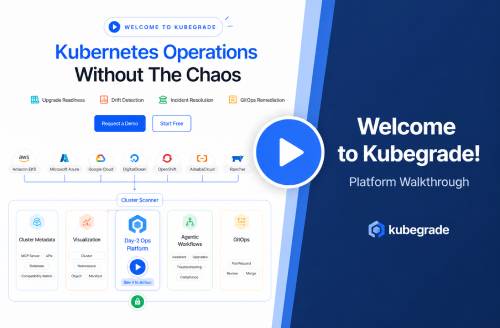
To simplify K8s management, Kubegrade offers a platform for secure, adaptable, and automated K8s operations, including monitoring, upgrades, and optimization. By using Kubegrade, teams can streamline their K8s deployments and ensure optimal performance.
Key Features to Look for in K8s Monitoring Tools
Selecting the right K8s monitoring tools is important for maintaining cluster health and application performance . Several key features contribute to effective K8s management, including real-time monitoring, alerting, visualization, historical data analysis, and integration capabilities .
Real-Time Monitoring
Real-time monitoring provides up-to-date insights into the state of K8s clusters . It allows for the immediate detection of issues, helping teams to address problems before they escalate . A monitoring tool should collect and analyze data instantly, alerting you to performance degradation or resource constraints . Real-time metrics and notifications help applications operate smoothly .
Alerting
Automated alerting notifies users when predefined thresholds are breached . This feature is important for identifying and responding to critical events promptly . Tools like Prometheus integrate with Alertmanager to manage and route alerts based on set conditions . Alerting helps teams to address issues early, minimizing downtime and maintaining system stability .
Visualization
Visualization is key to grasping complex K8s environments . Tools like Grafana transform raw data into insightful dashboards, making it easier to monitor K8s clusters . Customizable dashboards allow users to focus on the metrics most relevant to their applications and services . Visualization tools should support multiple data sources, enabling the consolidation of data from various sources in one place .
Historical Data Analysis
Analyzing historical data helps in identifying trends and patterns, which is important for capacity planning and performance optimization . Access to historical data enables teams to pinpoint the root causes of issues and make informed decisions about resource allocation . By tracking performance data and event logs over time, teams can improve root cause analysis and prevent future problems .
Integration with Other Tools
Integration with other tools, such as Prometheus and Grafana, is a key feature of effective K8s monitoring tools . Prometheus is an open-source monitoring solution that provides real-time monitoring and alerting for K8s clusters . Grafana is a data visualization tool that works well with Prometheus, allowing users to create dashboards and visualize metrics . Integration with tools like Elasticsearch, Logstash, and Kibana (ELK) provides centralized log storage and analysis .
Support for Various K8s Components
A K8s monitoring tool should support various K8s components, including pods, nodes, services, and deployments . Monitoring these components helps in tracking resource utilization, application health, and overall cluster performance . Tools like cAdvisor provide real-time monitoring of container resource usage, offering insights into CPU, memory, and disk usage for individual containers .
Real-Time Monitoring and Alerting
Real-time monitoring is vital in K8s environments because it provides immediate visibility into the cluster’s health and performance. This immediacy helps teams identify and resolve issues swiftly, reducing potential downtime and maintaining application stability. The ability to see what is happening as it happens allows for quick responses to anomalies and unexpected behavior .
Real-time data enables informed decision-making and early intervention. For example, if CPU usage on a pod spikes unexpectedly, real-time monitoring can detect this immediately. Teams can then investigate the cause and take corrective actions, such as scaling resources or troubleshooting the application .
Alerting systems play a key role in notifying administrators about critical events. These systems monitor metrics and trigger alerts when predefined thresholds are breached. Effective alerting strategies involve setting appropriate thresholds and defining clear notification channels .
Examples of effective alerting strategies include:
- CPU Usage: Alert when CPU usage exceeds 80% for more than 5 minutes.
- Memory Usage: Alert when memory usage exceeds 90% for more than 5 minutes.
- Pod Failures: Alert when the number of failed pods exceeds a set threshold within a specific time frame.
- Node Health: Alert when a node becomes unreachable or reports critical errors.
These alerts can be routed to different teams based on the severity and type of issue. For instance, a critical alert about a failing node might go directly to the operations team, while a warning about high CPU usage could go to the development team .
As highlighted in this section, real-time monitoring and alerting are key features to look for in K8s monitoring tools. They provide the visibility and responsiveness needed to maintain a healthy and stable K8s environment .
Visualization and Dashboarding
Data visualization is significant for grasping K8s performance because it transforms complex data into understandable formats. By representing metrics visually, teams can quickly identify trends, anomalies, and potential issues that might be missed in raw data. Visualization helps in making informed decisions and optimizing resource allocation .
Dashboards provide a comprehensive view of K8s metrics, consolidating data from various sources into a single interface. A well-designed dashboard offers a snapshot of cluster health, application performance, and resource utilization. This unified view enables teams to monitor the entire K8s environment efficiently .
Different types of visualizations serve various use cases:
- Graphs: Line graphs are useful for tracking metrics over time, such as CPU usage, memory consumption, and network traffic. They help in identifying trends and patterns .
- Charts: Pie charts and bar charts are suitable for comparing different components or categories, such as resource allocation across namespaces or the distribution of pod statuses .
- Heatmaps: Heatmaps can display resource utilization across nodes or pods, highlighting hotspots and areas of concern. They are useful for identifying imbalances and optimizing resource distribution .
Examples of effective dashboard designs include:
- Cluster Overview: Displays overall cluster health, node status, and resource utilization.
- Application Performance: Shows key performance indicators (KPIs) for specific applications, such as response time, error rates, and request volume.
- Resource Monitoring: Tracks CPU, memory, and network usage for pods, nodes, and services.
- Custom Dashboards: Customized to specific use cases or applications, providing focused insights into relevant metrics.
These dashboards should be customizable, allowing users to focus on the metrics most relevant to their roles and responsibilities. The ability to drill down into specific components or time ranges is also important for detailed analysis .
As highlighted in this section, visualization and dashboarding are key features to look for in K8s monitoring tools. They provide the insights needed to maintain a healthy, efficient, and well-performing K8s environment .
Historical Data Analysis and Reporting
Historical data analysis is important for identifying trends and patterns in K8s performance. By examining past performance data, teams can gain insights into how their clusters behave over time. This information is useful for spotting recurring issues, knowing resource utilization patterns, and making informed decisions about future deployments .
Historical data can be used for capacity planning and optimization. By analyzing past resource consumption, teams can forecast future needs and allocate resources effectively. For example, if historical data shows that CPU usage consistently spikes during certain times of the day, teams can adjust resource limits or scale up deployments to handle the increased load .
Reporting tools play a key role in generating insights from historical data. These tools can create reports that summarize performance metrics, highlight trends, and identify areas for improvement. Reports can be customized to focus on specific components, applications, or time ranges .
Examples of useful reports and analyses include:
- Resource Utilization Reports: Show CPU, memory, and network usage over time for pods, nodes, and services.
- Performance Trend Analysis: Identify trends in application response time, error rates, and request volume.
- Capacity Planning Reports: Forecast future resource needs based on historical consumption patterns.
- Cost Optimization Reports: Analyze resource costs and identify opportunities for reducing expenses.
These reports can be used to communicate performance insights to stakeholders, track progress against goals, and drive continuous improvement. The ability to schedule reports and deliver them automatically is also a useful feature .
As highlighted in this section, historical data analysis and reporting are key features to look for in K8s monitoring tools. They provide the insights needed to optimize K8s deployments, improve resource utilization, and plan for future growth .
Top Open-Source K8s Monitoring Tools
Several open-source K8s monitoring tools are available in 2024, each with unique features and benefits. These tools can be used individually or combined to create a comprehensive monitoring solution for K8s environments. Here’s an overview of some of the best open-source options:
Prometheus
Prometheus is a popular open-source monitoring and alerting toolkit designed for reliability and adaptability. It collects metrics from targets by scraping endpoints, evaluates rule expressions, triggers alerts, and can integrate with visualization tools like Grafana .
Key Features:
- Multi-dimensional data model with time series data identified by metric name and key-value pairs.
- PromQL, a flexible query language to use this dimensionality.
- Autonomous single server nodes, no reliance on distributed storage.
- Time series collection happens via a pull model over HTTP.
- Pushing time series is supported via an intermediary gateway.
- Targets are discovered via service discovery or static configuration.
- Multiple modes of graphing and dashboarding support.
Benefits:
- Provides a strong and adaptable monitoring solution.
- Offers a flexible query language for analyzing metrics.
- Integrates well with other K8s components.
Limitations:
- Requires configuration and management of scraping targets.
- Lacks built-in dashboarding capabilities, often requiring integration with Grafana.
Grafana
Grafana is an open-source data visualization and monitoring tool that supports various data sources, including Prometheus, Elasticsearch, and InfluxDB. It allows users to create customizable dashboards, explore metrics, and set up alerts .
Key Features:
- Support for various data sources.
- Customizable dashboards with a wide range of visualization options.
- Alerting and notification capabilities.
- Collaboration features for sharing dashboards and insights.
Benefits:
- Provides a user-friendly interface for visualizing K8s metrics.
- Offers a wide range of visualization options.
- Integrates well with Prometheus and other monitoring tools.
Limitations:
- Requires configuration and management of data sources.
- Does not collect metrics on its own, relying on external data sources like Prometheus.
ELK Stack (Elasticsearch, Logstash, Kibana)
The ELK Stack is a popular open-source logging and analytics platform that can be used to collect, store, and analyze K8s logs. Elasticsearch is a distributed search and analytics engine, Logstash is a data processing pipeline, and Kibana is a visualization tool .
Key Features:
- Centralized logging for K8s clusters.
- Effective search and analysis capabilities.
- Real-time log monitoring and alerting.
- Customizable dashboards and visualizations.
Benefits:
- Provides a comprehensive logging solution for K8s environments.
- Offers effective search and analysis capabilities.
- Integrates well with other K8s components.
Limitations:
- Requires significant resources to run and manage.
- Can be complex to set up and configure.
These open-source K8s monitoring tools can be used together to create a comprehensive monitoring solution. For example, Prometheus can be used to collect metrics, Grafana can be used to visualize those metrics, and the ELK Stack can be used to collect and analyze logs. By combining these tools, teams can gain complete visibility into their K8s environments and ensure optimal performance .
Prometheus
Prometheus is a leading open-source monitoring solution designed for K8s environments. It is great at collecting and processing time-series data, making it a valuable tool for monitoring the changing nature of K8s clusters. Its architecture is designed for reliability and adaptability, making sure it can handle the demands of modern containerized applications .
Key features of Prometheus include:
- Multi-Dimensional Data Model: Prometheus stores data as time series, identified by a metric name and a set of key-value pairs (labels). This model allows for flexible and detailed analysis of metrics .
- Effective Query Language (PromQL): PromQL enables users to query and aggregate metrics in real-time. It supports a wide range of functions and operators, allowing for complex analysis and alerting .
- Efficient Time-Series Database: Prometheus uses a custom-built time-series database that is optimized for storing and querying metrics. This database is designed for high performance and efficient storage .
Prometheus collects metrics from K8s components by scraping HTTP endpoints. It discovers targets through service discovery or static configuration. Each K8s component exposes metrics in a standardized format, which Prometheus then collects and stores in its time-series database .
Benefits in the context of K8s monitoring:
- Provides detailed insights into the performance of K8s clusters.
- Enables the creation of alerts based on complex queries.
- Supports the monitoring of a wide range of K8s components.
Limitations in the context of K8s monitoring:
- Requires configuration and management of scraping targets.
- Lacks built-in dashboarding capabilities.
Prometheus integrates well with other tools in the K8s ecosystem. It is commonly used with Grafana for visualization, Alertmanager for alerting, and various exporters for collecting metrics from different sources. This integration allows for a comprehensive monitoring solution that covers all aspects of K8s environments .
Grafana
Grafana complements Prometheus by providing data visualization and dashboarding capabilities, addressing Prometheus’s lack of built-in visualization tools. Grafana takes the metrics collected by Prometheus and presents them in a user-friendly and understandable format, enabling teams to monitor their K8s environments more effectively .
Key features of Grafana include:
- Support for Various Data Sources: Grafana supports a wide range of data sources, including Prometheus, Elasticsearch, InfluxDB, and Graphite. This flexibility allows users to create dashboards that combine data from multiple sources .
- Customizable Dashboards: Grafana allows users to create custom dashboards with a variety of visualization options, such as graphs, charts, tables, and heatmaps. These dashboards can be designed to specific use cases and applications .
- Alerting System: Grafana has an alerting system that allows users to set up alerts based on metric thresholds. These alerts can be sent to various notification channels, such as email, Slack, and PagerDuty .
Grafana can be used to create comprehensive K8s monitoring dashboards by visualizing metrics collected by Prometheus. These dashboards can display key performance indicators (KPIs) for K8s clusters, such as CPU usage, memory consumption, network traffic, and pod status. By creating dashboards that focus on specific components or applications, teams can gain detailed insights into their K8s environments .
- Provides a user-friendly interface for visualizing K8s metrics.
- Offers a wide range of visualization options.
- Enables the creation of custom dashboards designed to specific use cases.
- Does not collect metrics on its own, relying on external data sources like Prometheus.
- Requires configuration and management of data sources.
Grafana integrates well with other tools in the K8s ecosystem. It is commonly used with Prometheus for metric collection, Alertmanager for alerting, and various exporters for collecting metrics from different sources. This integration allows for a complete monitoring solution that covers all aspects of K8s environments .
ELK Stack (Elasticsearch, Logstash, Kibana)
The ELK Stack (Elasticsearch, Logstash, Kibana) is a well-known open-source solution for log management and analysis in K8s environments. It provides a centralized logging system that allows teams to collect, process, store, and analyze logs from various K8s components. This makes it a valuable tool for monitoring K8s logs and troubleshooting issues .
Each component of the ELK Stack plays a specific role:
- Elasticsearch: Elasticsearch is a distributed, RESTful search and analytics engine that stores and indexes logs. It provides fast and adaptable search capabilities, allowing users to quickly find relevant log entries .
- Logstash: Logstash is a data processing pipeline that collects, parses, and enriches logs. It can ingest logs from various sources, transform them into a common format, and send them to Elasticsearch .
- Kibana: Kibana is a data visualization and exploration tool that allows users to create dashboards and visualizations based on the logs stored in Elasticsearch. It provides a user-friendly interface for exploring logs and identifying trends and patterns .
The ELK Stack can be used to monitor K8s logs and troubleshoot issues by providing a centralized view of all logs in the cluster. Teams can use Kibana to search for specific log entries, filter logs based on various criteria, and create visualizations that highlight important trends and patterns. This allows them to quickly identify and resolve issues .
- Provides a centralized logging solution for K8s environments.
- Offers effective search and analysis capabilities.
- Enables real-time log monitoring and alerting.
The ELK Stack integrates well with other tools in the K8s ecosystem. It can be used with Fluentd or Filebeat for log collection, Prometheus for metric monitoring, and Alertmanager for alerting. This integration allows for a comprehensive monitoring solution that covers all aspects of K8s environments .
Leading Commercial K8s Monitoring Solutions
Besides open-source options, several commercial K8s monitoring solutions offer advanced features and support for enterprises. These tools often provide a more comprehensive set of capabilities, including automated discovery, artificial intelligence (AI)-driven insights, and dedicated customer support. Here’s a review of some leading commercial K8s monitoring tools in the market:
Datadog
Datadog is a monitoring and analytics platform that provides visibility into K8s environments, applications, and infrastructure. It offers real-time monitoring, alerting, and visualization capabilities, as well as log management and security monitoring .
Key Features:
- Automated discovery of K8s components.
- Real-time monitoring and alerting.
- Customizable dashboards and visualizations.
- Log management and security monitoring.
- AI-driven insights and recommendations.
Pricing Model:
- Datadog offers a variety of pricing plans based on the number of hosts, containers, and users.
- Free trial available.
Target Audience:
- Enterprises with complex K8s environments.
- Teams that need a comprehensive monitoring solution with advanced features.
New Relic
New Relic is an observability platform that provides full-stack visibility into K8s environments. It offers application performance monitoring (APM), infrastructure monitoring, log management, and browser monitoring .
Key Features:
- Application performance monitoring (APM).
- Infrastructure monitoring.
- Log management.
- Browser monitoring.
- Real-time dashboards and analytics.
Pricing Model:
- New Relic offers a variety of pricing plans based on the number of users and data ingested.
- Free tier available.
Target Audience:
- Enterprises that need full-stack visibility into their K8s environments.
- Teams that want to monitor application performance and user experience.
Dynatrace
Dynatrace is an AI-driven monitoring platform that provides end-to-end visibility into K8s environments. It offers automated discovery, real-time monitoring, and AI-driven insights, as well as application security and digital experience monitoring .
Key Features:
- Automated discovery of K8s components.
- Real-time monitoring and alerting.
- AI-driven insights and recommendations.
- Application security monitoring.
- Digital experience monitoring.
Pricing Model:
- Dynatrace offers a variety of pricing plans based on the number of hosts and cloud units.
- Free trial available.
Target Audience:
- Enterprises that need an AI-driven monitoring solution with end-to-end visibility.
- Teams that want to automate monitoring and optimize application performance.
Advantages and Disadvantages of Commercial Solutions vs. Open-Source Tools
Commercial K8s monitoring tools offer several advantages over open-source tools, including:
- Comprehensive feature sets.
- Automated discovery and configuration.
- AI-driven insights and recommendations.
- Dedicated customer support.
However, commercial solutions also have some disadvantages, such as:
- Higher cost.
- Vendor lock-in.
- Less flexibility and customization.
Open-source K8s monitoring tools, however, offer more flexibility and customization, as well as lower cost. However, they may require more manual configuration and management, and they may not offer the same level of support as commercial solutions. The choice between commercial and open-source K8s monitoring tools depends on the specific needs and requirements of the organization .
Datadog
Datadog stands out as a leading commercial K8s monitoring solution, offering a wide array of features designed to provide complete visibility into K8s environments. It combines infrastructure monitoring, application performance monitoring (APM), log management, and security monitoring into a single, unified platform .
Key features of Datadog include:
- Comprehensive Monitoring Capabilities: Datadog offers real-time monitoring of K8s clusters, nodes, pods, and containers. It collects metrics, logs, and traces from various sources, providing a holistic view of system performance .
- Integrations with Various K8s Components: Datadog integrates with a wide range of K8s components, including Kubernetes itself, Docker, and various cloud providers. This integration allows for automated discovery and monitoring of K8s resources .
- User-Friendly Interface: Datadog provides a user-friendly interface with customizable dashboards, visualizations, and alerting capabilities. This interface makes it easy for teams to monitor their K8s environments and troubleshoot issues .Pricing Model:
- Datadog offers a variety of pricing plans based on the number of hosts, containers, and users.
- Pricing is typically based on a per-host or per-container basis, with additional charges for certain features and add-ons.
- Free trial available.
Target Audience:
- Datadog is aimed at enterprises and medium-sized businesses that need a comprehensive monitoring solution with advanced features.
- It is also suitable for teams that want to streamline their monitoring workflows and improve collaboration.
Compared to open-source tools, Datadog offers several advantages:
- More comprehensive feature set.
- Automated discovery and configuration.
- Dedicated customer support.
However, Datadog also has some disadvantages compared to open-source tools:
- Higher cost.
- Vendor lock-in.
Overall, Datadog is an effective K8s monitoring solution that offers a wide range of features and benefits. It is well-suited for enterprises and medium-sized businesses that need a comprehensive monitoring solution with advanced capabilities .
New Relic
New Relic is a well-regarded commercial K8s monitoring solution that provides full-stack observability for K8s environments. It offers a suite of tools designed to monitor application performance, infrastructure health, and user experience, providing a comprehensive view of system performance .
Key features of New Relic include:
- Application Performance Monitoring (APM) Capabilities: New Relic provides detailed insights into application performance, including transaction traces, error rates, and response times. This allows teams to identify and resolve performance bottlenecks quickly .
- Infrastructure Monitoring: New Relic monitors the health and performance of K8s clusters, nodes, and containers. It collects metrics on CPU usage, memory consumption, and network traffic, providing a comprehensive view of infrastructure health .
- Log Management: New Relic offers log management capabilities that allow teams to collect, store, and analyze logs from various K8s components. This makes it easy to troubleshoot issues and identify trends .
Pricing Model:
- New Relic offers a variety of pricing plans based on the number of users and data ingested.
- Pricing is typically based on a per-user or per-GB basis, with additional charges for certain features and add-ons.
- Free tier available.
Target Audience:
- New Relic is aimed at enterprises and medium-sized businesses that need full-stack observability for their K8s environments.
- It is also suitable for teams that want to monitor application performance and user experience.
Compared to open-source tools, New Relic offers several advantages:
- Comprehensive feature set.
- Integrated monitoring capabilities.
- Dedicated customer support.
However, New Relic also has some disadvantages compared to open-source tools:
Overall, New Relic is a valuable K8s monitoring solution that offers a wide range of features and benefits. It is well-suited for enterprises and medium-sized businesses that need full-stack observability for their K8s environments .
Dynatrace
Dynatrace is a commercial K8s monitoring solution known for its AI-driven capabilities and end-to-end observability. It provides automated monitoring, performance analysis, and problem resolution, making it a valuable tool for managing complex K8s environments .
Key features of Dynatrace include:
- AI-Driven Monitoring: Dynatrace uses AI to automatically detect anomalies, identify root causes, and provide useful insights. This helps teams to address issues early and improve performance .
- Full-Stack Observability: Dynatrace offers full-stack observability, monitoring everything from the application layer to the infrastructure layer. It collects metrics, logs, and traces from various sources, providing a complete view of system performance .
- Automated Problem Detection: Dynatrace automatically detects and diagnoses problems in K8s environments. It uses AI to identify the root cause of issues and provide recommendations for resolving them .
Pricing Model:
- Dynatrace offers a variety of pricing plans based on the number of hosts and cloud units.
- Pricing is typically based on a per-host or per-cloud unit basis, with additional charges for certain features and add-ons.
- Free trial available.
Target Audience:
- Dynatrace is aimed at large enterprises that need an AI-driven monitoring solution with end-to-end observability.
- It is also suitable for teams that want to automate monitoring and improve application performance.
Compared to open-source tools, Dynatrace offers several advantages:
- AI-driven monitoring and problem detection.
- Automated discovery and configuration.
- Dedicated customer support.
However, Dynatrace also has some disadvantages compared to open-source tools:
- Higher cost.
- Less flexibility and customization.
Overall, Dynatrace is an effective K8s monitoring solution that offers a wide range of features and benefits. It is well-suited for large enterprises that need an AI-driven monitoring solution with end-to-end observability .
Implementing Effective K8s Monitoring Strategies

Implementing effective K8s monitoring strategies is important for the health, performance, and stability of containerized applications. By setting up alerts, defining key performance indicators (KPIs), and creating dashboards, teams can gain visibility into their K8s environments and respond quickly to issues. Here’s some practical advice on how to implement these strategies:
Setting Up Alerts
Alerts notify teams when predefined thresholds are breached, allowing them to take action before issues escalate. When setting up alerts, it’s important to define clear thresholds and notification channels. Some key metrics to monitor and alert on include:
- CPU usage.
- Memory consumption.
- Disk I/O.
- Network traffic.
- Pod status.
- Node status.
Alerts should be routed to the appropriate teams based on the severity and type of issue. For example, critical alerts about failing nodes might be sent to the operations team, while warning alerts about high CPU usage could be sent to the development team .
Defining Key Performance Indicators (KPIs)
KPIs are metrics that measure the performance and health of K8s environments. By defining KPIs, teams can track progress against goals and identify areas for improvement. Some useful KPIs to track include:
- Application response time.
- Error rates.
- Request volume.
- Resource utilization.
- Deployment frequency.
KPIs should be aligned with business objectives and used to drive decision-making. For example, if application response time is consistently high, teams can investigate the cause and take corrective actions, such as optimizing code or scaling resources .
Creating Dashboards
Dashboards provide a visual representation of K8s metrics, allowing teams to quickly understand the state of their environments. When creating dashboards, it’s important to focus on the most relevant metrics and use clear and concise visualizations. Some useful dashboards to create include:
- Cluster overview.
- Application performance.
- Resource monitoring.
- Security monitoring.
Dashboards should be customizable, allowing users to focus on the metrics most relevant to their roles and responsibilities. The ability to drill down into specific components or time ranges is also important for detailed analysis .
Using Monitoring Data to Optimize K8s Performance and Troubleshoot Issues
Monitoring data can be used to optimize K8s performance and troubleshoot issues. By analyzing metrics, logs, and traces, teams can identify performance bottlenecks, diagnose problems, and take corrective actions. Some common use cases include:
- Identifying resource constraints.
- Diagnosing application errors.
- Optimizing resource allocation.
- Troubleshooting network issues.
Monitoring data should be used to drive continuous improvement and optimize the performance of K8s environments .
Kubegrade can assist in simplifying these strategies by providing a platform for secure, adaptable, and automated K8s operations. It helps streamline K8s deployments and make sure optimal performance.
Defining Key Performance Indicators (KPIs) for K8s Monitoring
Defining Key Performance Indicators (KPIs) is important for effective K8s monitoring because it provides a clear way to measure the health and performance of K8s environments. KPIs help teams track progress against goals, identify areas for improvement, and make informed decisions about resource allocation and optimization .
Examples of key KPIs for K8s monitoring include:
- CPU Utilization: Measures the percentage of CPU resources being used by pods, nodes, and containers. High CPU utilization can indicate resource constraints or performance bottlenecks .
- Memory Usage: Measures the amount of memory being used by pods, nodes, and containers. High memory usage can lead to application slowdowns or crashes .
- Network Latency: Measures the time it takes for data to travel between pods, nodes, and services. High network latency can impact application performance and user experience .
- Application Response Time: Measures the time it takes for applications to respond to user requests. High application response time can indicate performance issues or bottlenecks .
- Error Rates: Measures the number of errors occurring in applications and K8s components. High error rates can indicate stability issues or configuration problems .
To set realistic and measurable KPI targets, it’s important to think about the specific requirements of the applications and services running in the K8s environment. KPI targets should be based on historical data, industry benchmarks, and business objectives .
These KPIs relate to overall K8s performance and business goals by providing insights into the health and efficiency of K8s environments. By tracking KPIs, teams can make sure that their K8s environments are meeting the needs of their applications and users, and that they are aligned with business objectives .
For example, if application response time is a key business goal, teams can set a KPI target for application response time and monitor it closely. If the KPI target is not being met, teams can investigate the cause and take corrective actions, such as optimizing code or scaling resources. By aligning KPIs with business goals, teams can make sure that their K8s environments are contributing to the success of the organization .
Setting Up Effective Alerting Strategies
Setting up alerts is important to identify and address issues in K8s environments early. Effective alerting allows teams to respond quickly to problems, minimizing downtime and maintaining application stability. Alerts can notify teams of a wide range of issues, from resource constraints to application errors .
Different types of alerts include:
- Threshold-Based Alerts: Triggered when a metric exceeds or falls below a predefined threshold. For example, an alert could be triggered when CPU usage exceeds 80% or when memory usage falls below 20% .
- Anomaly Detection Alerts: Triggered when a metric deviates significantly from its historical pattern. These alerts can help identify unusual behavior that might not be detected by threshold-based alerts .
Practical advice on configuring alerts for various K8s components and KPIs includes:
- CPU Utilization: Set alerts for high CPU usage on pods, nodes, and containers. Use threshold-based alerts to detect sustained high CPU usage and anomaly detection alerts to identify unexpected spikes .
- Memory Usage: Set alerts for high memory usage on pods, nodes, and containers. Use threshold-based alerts to detect memory leaks or excessive memory consumption .
- Network Latency: Set alerts for high network latency between pods, nodes, and services. Use threshold-based alerts to detect network congestion or connectivity issues .
- Application Response Time: Set alerts for slow application response times. Use threshold-based alerts to detect performance bottlenecks or application errors .
- Pod Status: Set alerts for failed or unhealthy pods. Use threshold-based alerts to detect deployment issues or application crashes .
To integrate alerts with notification systems, use tools like Alertmanager, which can route alerts to various channels, such as email, Slack, PagerDuty, and OpsGenie. This ensures that the right teams are notified of issues quickly .
Minimizing false positives and alert fatigue is important to maintain the effectiveness of alerting strategies. To reduce false positives, adjust alert thresholds based on historical data and use anomaly detection alerts to identify unusual behavior. To reduce alert fatigue, prioritize alerts based on severity and route them to the appropriate teams .
By following these guidelines, teams can set up effective alerting strategies that help them identify and address issues in their K8s environments early .
Creating Comprehensive Monitoring Dashboards
Dashboards play a key role in visualizing K8s performance data, transforming raw metrics into understandable formats. They provide a centralized view of key metrics, allowing teams to quickly assess the health and performance of their K8s environments. A well-designed dashboard can help teams identify trends, troubleshoot issues, and improve K8s performance more effectively .
Guidance on designing effective dashboards includes:
- Focus on Key Metrics: Include only the most relevant metrics on the dashboard. Avoid overwhelming users with too much information.
- Use Clear and Concise Visualizations: Use graphs, charts, and tables to present data in a clear and concise way. Choose the right visualization for each metric to highlight important trends and patterns .
- Organize Metrics Logically: Group related metrics together on the dashboard. Use sections or tabs to organize metrics by component or application .
- Provide Context: Include labels, titles, and annotations to provide context for the metrics. Explain what each metric represents and how it relates to overall K8s performance .
- Set Thresholds and Alerts: Display alert thresholds on the dashboard to quickly identify metrics that are outside of acceptable ranges. Integrate alerts with the dashboard to notify users of critical issues .
Dashboards can be customized to meet specific monitoring needs by:
- Adding or Removing Metrics: Add or remove metrics based on the specific requirements of the team or application.
- Adjusting Visualizations: Change the type of visualization used for each metric to highlight different aspects of the data.
- Creating Custom Dashboards: Create custom dashboards for specific components, applications, or use cases .
Dashboards can be used to identify trends, troubleshoot issues, and improve K8s performance by:
- Identifying Trends: Use dashboards to track metrics over time and identify trends in K8s performance. This can help teams to address issues before they impact users .
- Troubleshooting Issues: Use dashboards to diagnose problems in K8s environments. By correlating metrics from different sources, teams can quickly identify the root cause of issues .
- Improving K8s Performance: Use dashboards to optimize resource allocation and improve the performance of K8s environments. By identifying resource constraints or performance bottlenecks, teams can take corrective actions to improve efficiency .
Tools like Grafana play a key role in dashboard creation. Grafana provides a user-friendly interface for creating and customizing dashboards, as well as a wide range of visualization options. It also integrates with various data sources, allowing teams to create dashboards that combine metrics from different sources .
Conclusion
Ultimately, K8s monitoring is important for maintaining the performance, reliability, and security of containerized applications. Selecting the right K8s monitoring tools requires careful consideration of key features such as real-time monitoring, alerting, visualization, and integration capabilities. Both open-source and commercial solutions offer unique benefits, and the choice depends on the specific needs and requirements of the organization .
Open-source tools like Prometheus, Grafana, and the ELK Stack provide flexibility and customization, while commercial solutions like Datadog, New Relic, and Dynatrace offer comprehensive feature sets and dedicated support. By combining these tools with effective monitoring strategies, teams can gain full visibility into their K8s environments and optimize application performance .
Kubegrade can improve K8s management and monitoring efforts by providing a platform for secure, adaptable, and automated K8s operations. By streamlining K8s deployments and simplifying monitoring tasks, Kubegrade helps teams focus on innovation and business value .
To improve your K8s environment, explore the mentioned tools and strategies. Implement effective monitoring practices to ensure the health, performance, and stability of your containerized applications .

