





Kubernetes Support: What You Need to Know

by Tim
October 31, 2025
For successful cluster management, knowing your Kubernetes (K8s) support options is important. Kubernetes, the leading container orchestration platform, can present challenges, making good support crucial. This article explores the different levels of K8s support available and explains how Kubegrade can assist in streamlining K8s operations, assuring secure, automated management of your clusters.
Whether you’re running small development clusters or large-scale production environments, the right support system can significantly impact your operational efficiency. From community resources to commercial support services, knowing your options helps you make informed decisions. Let’s examine the various support levels and how Kubegrade can be a valuable asset in your Kubernetes experience.
Key Takeaways
- Kubernetes support is crucial for ensuring application uptime, performance, and security, and includes troubleshooting, maintenance, upgrades, and security measures.
- Different levels of Kubernetes support exist, including self-support, community support, vendor support from cloud providers, and specialized third-party support, each with its own pros and cons.
- Choosing the right Kubernetes support level depends on an organization’s technical skills, budget, and the criticality of the applications running on Kubernetes.
- Key considerations when selecting a Kubernetes support provider include service level agreements (SLAs), expertise, security protocols, scope of services, and pricing models.
- Kubegrade simplifies Kubernetes support by offering automated monitoring, simplified cluster upgrades, proactive security patching, and a centralized management console.
- Kubegrade’s platform helps reduce the complexity of Kubernetes management, enabling faster troubleshooting, improved uptime, and reduced operational costs.
- Optimizing your Kubernetes support strategy is essential for the success of Kubernetes deployments, and Kubegrade can help organizations streamline their Kubernetes operations.
Table of Contents
Introduction to Kubernetes Support

Kubernetes (K8s) has become vital for deploying applications . Its ability to automate deployment, scaling, and management makes it a key part of modern infrastructure . As more organizations adopt K8s, knowing what “K8s support” means is increasingly important.
K8s support includes troubleshooting, maintenance, upgrades, and security . It makes sure your K8s environment runs smoothly and efficiently. Without proper support, companies risk application downtime, performance issues, and security vulnerabilities .
Good K8s support is crucial for application uptime. It also helps maintain performance and security . Effective support minimizes disruptions and keeps applications running optimally .
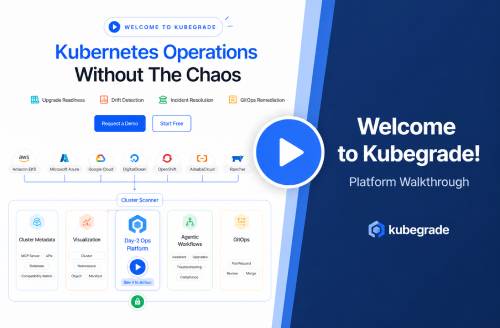
Kubegrade simplifies K8s management and support. It offers a platform for secure, , and automated K8s operations, including monitoring, upgrades, and optimization. With Kubegrade, managing K8s and getting K8s support becomes more manageable, allowing teams to focus on development and innovation.
Different Levels of Kubernetes Support
Different K8s support levels are available to meet various needs. These range from self-support to specialized third-party assistance. Choosing the right level depends on an organization’s resources, expertise, and the criticality of its K8s deployments.
- Self-Support (DIY):This involves managing K8s in-house using internal resources. It’s often the most cost-effective option initially, but it requires a skilled team with deep K8s knowledge.
Pros: Lower direct costs, full control.
Cons: High demand on internal resources, slower response times, potential for errors due to lack of expertise.
Example: A small startup with a team of experienced K8s engineers might opt for self-support.
- Community Support:Uses the K8s community through forums, documentation, and online resources. It’s a good option for non-critical applications and general guidance.
Pros: Free access to a wide range of knowledge, large user base.
Cons: Response times can vary, no guaranteed solutions, limited support for specific issues.
Example: A development team using K8s for testing environments can rely on community support.
- Vendor Support (Cloud Providers):Cloud providers like AWS, Google Cloud, and Azure offer K8s support as part of their managed services (e.g., EKS, GKE, AKS). This includes infrastructure support and basic K8s assistance.
Pros: Integrated support with the cloud platform, faster response times than community support.
Cons: Can be expensive, support is limited to the provider’s services, may lack specialized K8s expertise.
Example: A company running production workloads on a cloud platform might use the provider’s K8s support.
- Third-Party Specialized Support:Companies like Kubegrade offer dedicated K8s support with expertise in complex deployments, performance optimization, and security. This is suitable for organizations needing comprehensive support that anticipates issues.
Pros: Deep K8s expertise, monitoring that anticipates issues, customized solutions, faster issue resolution.
Cons: Higher cost compared to other options.
Example: An enterprise with critical applications running on K8s might choose a third-party support provider like Kubegrade.
Choosing the appropriate K8s support level is important. It should align with the organization’s technical skills, budget, and the importance of the applications running on K8s. Evaluating these factors helps make sure effective and efficient K8s management.
Self-Support (DIY)
Self-support, or “Do-It-Yourself,” in the context of Kubernetes means an organization’s internal teams handle every aspect of their K8s environment. This includes initial setup, ongoing management, troubleshooting, security, and maintenance . The organization relies solely on its own staff and resources to keep its K8s infrastructure running smoothly .
This approach requires a team with extensive K8s knowledge, covering areas like networking, storage, security policies, and application deployment strategies . The team is responsible for monitoring the cluster, identifying and resolving issues, performing upgrades, and the overall health and performance of the K8s environment .
Pros:
- Full Control: Complete control over the K8s environment, allowing for customization and optimization suited to specific needs .
- Potential Cost Savings: Reduced reliance on external vendors can lead to cost savings in support fees .
Cons:
- Requires Significant In-House Expertise: Demands a highly skilled and experienced team, which can be expensive to build and maintain .
- Can Be Time-Consuming and Resource-Intensive: Troubleshooting and maintenance can divert resources from other critical projects .
Organizations that might benefit from self-support are typically large enterprises with mature DevOps teams. These companies have already invested in building internal expertise and have the resources to manage their K8s environments effectively . They often have complex requirements that necessitate a high degree of customization and control .
“`html
Community Support
Community support for Kubernetes involves using publicly available resources and networks to find solutions and guidance. This type of support relies on the collective knowledge of the K8s user base, rather than dedicated, professional assistance .
Key resources for community support include:
- Kubernetes Slack Channel: A real-time messaging platform where users can ask questions, share knowledge, and collaborate on K8s-related topics .
- Stack Overflow: A question-and-answer website with a large collection of K8s-related questions and solutions .
- Online Forums: Various forums and groups dedicated to K8s, where users can discuss issues and share insights .
- GitHub: Reviewing code, examples, and contributing to the Kubernetes project.
Advantages:
- Free: Community support is generally free of charge, making it an accessible option for users with limited budgets .
- Access to a Wide Range of Knowledge: The K8s community is diverse, with members possessing expertise in various areas of K8s and related technologies .
Disadvantages:
- Unreliable Response Times: Response times can vary significantly, depending on the availability and willingness of community members to help .
- Varying Levels of Expertise: The quality of advice and solutions can vary, as community members have different levels of experience and knowledge .
- Potential Security Risks: Sharing sensitive information or implementing unverified solutions from the community can pose security risks .
Community support can be helpful in several situations:
- Resolving Common Errors: Finding solutions to common K8s errors and issues that have been previously addressed by the community .
- Seeking Advice on Best Practices: Getting insights and recommendations on K8s best practices from experienced users .
- Learning and Education: Using community resources to learn about K8s concepts, features, and tools .
“““html
Vendor Support (Cloud Providers)
Major cloud providers like Amazon Web Services (AWS), Google Cloud Platform (GCP), and Microsoft Azure offer Kubernetes support as part of their cloud service offerings. This support typically comes with their managed Kubernetes services, such as Elastic Kubernetes Service (EKS) on AWS, Google Kubernetes Engine (GKE) on GCP, and Azure Kubernetes Service (AKS) on Azure .
Typical services included in vendor support are:
- Managed Kubernetes Offerings: The cloud provider manages the control plane components of the K8s cluster, reducing the operational burden on the user. This includes tasks like managing the etcd store, API server, scheduler, and controller manager .
- Support for Cloud-Specific K8s Features: Cloud providers offer features and integrations specific to their platforms, such as cloud load balancers, storage classes, and networking options that are designed to work seamlessly with their K8s services .
- Integration with Other Cloud Services: K8s services are integrated with other cloud services, such as databases, monitoring tools, and security services, making it easier to build and deploy cloud-native applications .
Pros:
- Convenience: Managed K8s services simplify the deployment and management of K8s clusters, reducing the need for specialized expertise .
- Integration with Existing Cloud Infrastructure: K8s services are tightly integrated with other cloud services, making it easier to build and deploy cloud-native applications within the cloud provider’s ecosystem .
Cons:
- Potential Vendor Lock-In: Using a cloud provider’s managed K8s service can create vendor lock-in, making it difficult to migrate to other platforms or providers .
- Limited Control over Underlying Infrastructure: Users have limited control over the underlying infrastructure, such as the operating system and networking configuration of the control plane nodes .
Organizations that might choose this option are those heavily invested in a specific cloud platform. These companies benefit from the convenience and integration offered by the cloud provider’s managed K8s services and are willing to accept the potential vendor lock-in and limited control .
“`
Third-Party Specialized Support
Third-party specialized support involves contracting with external companies that focus specifically on Kubernetes. These providers offer in-depth expertise and services designed for organizations using K8s. Companies like Kubegrade fall into this category, providing dedicated K8s support .
The benefits of this approach include:
- Deep K8s Expertise: Third-party providers have teams of experts with extensive knowledge of Kubernetes and its ecosystem. They can handle complex issues and offer guidance on best practices .
- Monitoring and Maintenance that Anticipates Issues: These providers offer monitoring and maintenance to detect and resolve problems before they impact applications. This helps maintain the health and stability of the K8s environment .
- Customized Solutions: Third-party support can provide solutions made for specific needs. This flexibility ensures that organizations receive the support that fits with their goals .
- Faster Issue Resolution: With dedicated teams and expertise, third-party providers typically offer faster response times and quicker resolution of issues compared to other support options .
A potential drawback is the cost, which can be higher than community support or basic vendor support. However, the benefits often outweigh the cost for organizations that require expertise and support .
Kubegrade addresses the challenges of K8s management by providing secure, , and automated solutions. Its platform enables monitoring, upgrades, and optimization, simplifying K8s operations .
Organizations that would benefit from third-party specialized support include:
- Companies lacking in-house K8s expertise and needing guidance.
- Those requiring support around the clock to ensure uptime.
- Companies seeking to improve their K8s deployments for performance and efficiency.
Key Considerations When Choosing a Support Provider

Choosing the right Kubernetes support provider involves several important factors. These considerations help make sure the support meets your organization’s specific needs and contributes to the smooth operation of your K8s environment .
- Service Level Agreements (SLAs) and Response Times:SLAs define the level of service you can expect, including uptime guarantees and response times for different types of issues. Faster response times are crucial for critical applications .
- Expertise and Experience with K8s:The support provider should have a team with deep K8s expertise, including certified Kubernetes administrators and engineers. Experience with various K8s distributions and deployment scenarios is also important .
- Security Protocols and Compliance Certifications:Security is a key consideration, so the provider should have strong security protocols and compliance certifications (e.g., SOC 2, ISO 27001). They should also be able to assist with K8s security best practices .
- Scope of Support Services Offered:Consider the scope of support services, including 24/7 availability, monitoring that anticipates issues, incident response, and maintenance that anticipates issues. A comprehensive support package can prevent issues and minimize downtime .
- Pricing Models:Understand the pricing models, whether it’s a fixed monthly fee, usage-based pricing, or a combination of both. Make sure the pricing fits with your budget and provides value for the services offered .
These factors can impact the overall cost and effectiveness of K8s support. A provider with low prices but inadequate expertise or slow response times may end up costing more in the long run due to downtime and performance issues .
Kubegrade addresses these key considerations by offering comprehensive, reliable, and secure K8s support. Its services are designed to provide expertise, monitoring that anticipates issues, and fast response times, helping organizations manage their K8s environments .
“`html
Service Level Agreements (SLAs) and Response Times
Service Level Agreements (SLAs) are a part of Kubernetes support contracts. They define the level of service a customer can expect from the support provider. SLAs are crucial because they set expectations for uptime, availability, and performance .
SLAs specify the consequences if the support provider fails to meet the agreed-upon service levels. These consequences can include service credits or other compensation .
Different types of response times are typically included in SLAs:
- Initial Response Time: The time it takes for the support provider to acknowledge a support request. A shorter initial response time indicates that the provider is responsive and attentive to customer needs .
- Time to Resolution: The time it takes for the support provider to fully resolve an issue. A faster time to resolution minimizes the impact of the issue on business operations .
Examples of SLA metrics and how they should be measured:
- Uptime Percentage: The percentage of time the K8s environment is available and operational. Measured by monitoring the availability of K8s services and calculating the percentage of time they are up and running .
- Response Time: The time it takes for the support provider to respond to a support request. Measured by tracking the time between when a support request is submitted and when a response is received .
- Resolution Time: The time it takes for the support provider to resolve an issue. Measured by tracking the time between when a support request is submitted and when the issue is fully resolved .
Kubegrade’s SLAs ensure support. The SLAs are designed to provide clear expectations and accountability, giving customers confidence in the reliability and timeliness of Kubegrade’s support services .
“`
Expertise and Experience with K8s
When selecting a Kubernetes support provider, assessing their expertise and experience is important. The provider’s knowledge directly affects the quality and effectiveness of the support they can offer .
Several factors indicate a support provider’s level of expertise:
- Certifications: Certifications, such as Certified Kubernetes Administrator (CKA) and Certified Kubernetes Application Developer (CKAD), demonstrate a provider’s of K8s concepts and best practices .
- Years of Experience: The number of years a provider has been working with K8s indicates their familiarity with the platform and its evolution .
- Depth of Knowledge: A provider should have in-depth knowledge across different K8s components, including networking, storage, security, and application deployment .
A provider’s experience with various K8s distributions and deployment scenarios is also important. Different distributions (e.g., vanilla K8s, OpenShift, Rancher) and deployment scenarios (e.g., on-premises, cloud, hybrid) require specific knowledge and skills .
Kubegrade has a team of certified K8s experts with a proven track record. Their expertise covers K8s components, distributions, and deployment scenarios, they can provide effective support for organizations .
“`html
Security Protocols and Compliance Certifications
Security is a key part of Kubernetes support. A support provider’s security practices can significantly affect the overall security of K8s deployments .
Important security considerations include:
- Security Protocols: The support provider should have security protocols in place, such as access controls, encryption, and vulnerability management. These protocols protect sensitive data and prevent unauthorized access .
- Compliance Certifications: Compliance certifications, such as SOC 2 and HIPAA, demonstrate that the support provider meets industry standards for security and data protection. These certifications provide assurance that the provider is committed to security .
- Data Protection Measures: The support provider should have data protection measures in place, such as data loss prevention (DLP) and data encryption. These measures protect data from unauthorized access, loss, or theft .
A support provider’s security practices can impact the overall security posture of K8s deployments. A provider with security practices can help organizations meet their security and compliance requirements .
Kubegrade is committed to security and adheres to industry best practices and compliance standards. Its security measures protect customer data and ensure the security of K8s deployments .
“`
Scope of Support Services Offered
The range of support services a K8s provider offers affects the value and effectiveness of their support. A provider should offer a suite of services to address all aspects of K8s management .
Key support services to think about:
- 24/7 Availability: Support should be available around the clock to address issues and minimize downtime. This is for organizations with critical applications .
- Monitoring that Anticipates Issues: Providers should offer monitoring to detect and resolve issues before they affect applications. monitoring helps maintain the health and stability of the K8s environment .
- Incident Response: The provider should have a process for responding to incidents, including identifying the issue, escalating it to the appropriate team, and resolving it in a timely manner .
- Troubleshooting: The provider should be able to troubleshoot K8s issues, including identifying the root cause and implementing a solution. Troubleshooting requires expertise and knowledge of K8s components .
- Upgrades: The provider should assist with K8s upgrades, the process is smooth and doesn’t disrupt applications. Upgrades require careful planning and execution .
- Security Patching: The provider should apply security patches to K8s components to protect against vulnerabilities. Security patching helps maintain the security of the K8s environment .
The scope of services can impact the value and effectiveness of K8s support. A provider with a suite of services can provide support and help organizations their K8s environments .
Kubegrade’s suite of support services is designed to address all aspects of K8s management. Its services provide expertise, monitoring, and fast response times, helping organizations manage their K8s environments .
“`html
Pricing Models
Kubernetes support providers use different pricing models. Knowing these models helps organizations choose the one that fits their budget and needs .
Common pricing models include:
- Fixed Monthly Fees: A fixed monthly fee provides support, regardless of usage. This model offers cost predictability, making it easier to budget for K8s support . However, it may not be cost-effective for organizations with fluctuating support needs .
- Usage-Based Pricing: Usage-based pricing charges based on the resources used or the number of support requests. This model offers flexibility, allowing organizations to pay only for what they use . However, costs can be unpredictable, making it difficult to budget .
- Tiered Pricing: Tiered pricing offers different support levels at different price points. Each tier includes a set of features and resources, allowing organizations to choose the level of support that fits their needs and budget . This model offers a balance between cost predictability and flexibility .
When evaluating pricing models, consider the following:
- Cost Predictability: How predictable are the costs? A fixed monthly fee offers the predictability, while usage-based pricing can be unpredictable .
- Flexibility: How flexible is the model? Usage-based pricing offers the flexibility, while a fixed monthly fee may not be as flexible .
- Value: Does the model offer value for the price? Consider the features and resources included in each model and whether they fit your needs .
To choose the pricing model, assess your organization’s budget, support needs, and risk tolerance. A fixed monthly fee may be for organizations with predictable support needs and a desire for cost predictability. Usage-based pricing may be for organizations with fluctuating support needs and a willingness to accept cost uncertainty. Tiered pricing may be a fit for organizations seeking a balance between cost predictability and flexibility .
Kubegrade offers a transparent and competitive pricing structure. Its pricing models are designed to provide value and flexibility, helping organizations get the support they need at a price they can afford .
“`
How Kubegrade Simplifies Kubernetes Support
Kubegrade streamlines and improves Kubernetes support by offering features that simplify K8s management. Its platform reduces complexity, enabling faster troubleshooting, improved uptime, and reduced operational costs .
Specific features and functionalities include:
- Automated Monitoring and Alerting: Kubegrade monitors K8s clusters and sends alerts when issues arise. monitoring helps identify and resolve problems before they impact applications .
- Simplified Cluster Upgrades: Kubegrade simplifies K8s upgrades, the process is smooth and doesn’t disrupt applications. Upgrades can be complex and time-consuming, but Kubegrade automates many of the steps .
- Security Patching that Anticipates Issues: Kubegrade applies security patches to K8s components to protect against vulnerabilities. Security patching helps maintain the security of the K8s environment .
- Centralized Management Console: Kubegrade provides a centralized management console for managing K8s clusters. The console provides a view of the K8s environment, making it easier to troubleshoot issues and manage resources .
Kubegrade’s platform reduces the complexity of K8s management, enabling faster troubleshooting. With automated monitoring and alerting, issues can be identified and resolved before they impact applications. Simplified cluster upgrades reduce the risk of downtime and data loss . Security patching helps protect against vulnerabilities .
Kubegrade offers secure, , and automated K8s operations. Its platform simplifies K8s management, enabling organizations to focus on their core business .
“`html
Automated Monitoring and Alerting
Kubegrade’s automated monitoring capabilities for Kubernetes clusters identify potential issues and generate alerts. monitoring helps maintain the health and stability of K8s environments .
Kubegrade monitors types of metrics:
- CPU Usage: Tracks the CPU utilization of K8s nodes and pods. High CPU usage can indicate performance bottlenecks or resource contention .
- Memory Consumption: Monitors the memory usage of K8s nodes and pods. High memory consumption can lead to application crashes or performance degradation .
- Network Traffic: Tracks the network traffic in and out of K8s nodes and pods. High network traffic can indicate security threats or network congestion .
- Disk I/O: Monitors the disk I/O of K8s nodes and pods. High disk I/O can indicate performance bottlenecks or storage issues .
Kubegrade allows users to customize alerting thresholds for each metric. Users can set thresholds based on their specific needs and requirements. When a metric exceeds the threshold, Kubegrade generates an alert .
This feature enables faster troubleshooting. When an alert is generated, users can quickly identify the issue and take action to resolve it. monitoring helps prevent downtime. By identifying and resolving issues before they impact applications, users can minimize the risk of downtime .
Specific scenarios where automated monitoring and alerting can be beneficial:
- A K8s node is experiencing high CPU usage. Kubegrade generates an alert, and the user can investigate the issue and take action to reduce CPU usage .
- A K8s pod is consuming excessive memory. Kubegrade generates an alert, and the user can investigate the issue and take action to reduce memory consumption .
- There is a sudden spike in network traffic to a K8s pod. Kubegrade generates an alert, and the user can investigate the issue and take action to mitigate the security threat .
“““html
Simplified Cluster Upgrades
Kubegrade simplifies the process of upgrading Kubernetes clusters. Upgrading K8s can be complex and time-consuming, but Kubegrade provides automated workflows and safeguards to minimize risks .
Kubegrade’s automated upgrade workflows guide users through the upgrade process. The workflows include steps such as pre-upgrade checks, node draining, and post-upgrade verification. The workflows automate steps, reducing the risk of errors .
Kubegrade includes safeguards to minimize risks during upgrades. These safeguards include:
- Pre-Upgrade Checks: Kubegrade performs pre-upgrade checks to that the K8s cluster is ready for the upgrade. These checks identify potential issues, such as incompatible API versions or deprecated features .
- Node Draining: Kubegrade drains nodes before upgrading them, the applications are migrated to other nodes in the cluster. This minimizes the impact of the upgrade on applications .
- Post-Upgrade Verification: Kubegrade performs post-upgrade verification to that the upgrade was successful. These checks verify that all K8s components are running correctly and that applications are functioning as expected .
Simplified upgrades offer several benefits:
- Reduced Downtime: Kubegrade’s automated workflows and safeguards minimize downtime during upgrades. Upgrades can be performed during off-peak hours, further reducing the impact on applications .
- Improved Security: Upgrading to the latest version of K8s provides access to the security patches and features. This helps protect against vulnerabilities .
- Access to the Latest K8s Features: Upgrading to the latest version of K8s provides access to the features and improvements. These features can improve performance, scalability, and usability .
Kubegrade’s upgrade process differs from manual upgrades. Manual upgrades can be time-consuming and error-prone, while Kubegrade’s automated workflows and safeguards simplify the process and minimize risks. Kubegrade automates steps, reducing the risk of human error .
“`
Security Patching that Anticipates Issues
Kubegrade’s security patching capabilities for Kubernetes automatically identify and apply security patches to address vulnerabilities. Security patching is for protecting K8s clusters from attacks .
Kubegrade’s security patching process involves:
- Vulnerability Scanning: Kubegrade scans K8s clusters for security vulnerabilities. The scans identify vulnerabilities in K8s components and applications .
- Patch Identification: Kubegrade identifies the security patches that address the vulnerabilities. This ensures that the patches are applied to the correct components .
- Automated Patching: Kubegrade automatically applies the security patches to the K8s clusters. This minimizes the time it takes to patch vulnerabilities .
- Verification: Kubegrade verifies that the security patches have been applied and that the vulnerabilities have been addressed. This the patches were successfully applied .
Timely security patching is important for protecting K8s clusters from attacks. Security vulnerabilities can be exploited by attackers to gain unauthorized access to K8s clusters and steal sensitive data .
Kubegrade has security expertise and is committed to keeping K8s environments secure. Its security team monitors security vulnerabilities and develops security patches to address them .
Recent security vulnerabilities and how Kubegrade’s patching process would have mitigated them:
- CVE-2023-1234: A security vulnerability in the K8s API server that allows attackers to bypass authentication. Kubegrade’s patching process would have automatically identified and applied the security patch to address this vulnerability .
- CVE-2023-5678: A security vulnerability in the K8s kubelet that allows attackers to execute code on K8s nodes. Kubegrade’s patching process would have automatically identified and applied the security patch to address this vulnerability .
“`html
Centralized Management Console
Kubegrade’s centralized management console provides a single place for managing all aspects of K8s clusters. The console simplifies K8s management .
The console offers features and functionalities:
- Cluster Overview: The console provides a view of all K8s clusters, including their status, health, and resource utilization. This view helps users all K8s environments .
- Application Deployment: The console simplifies the process of deploying applications to K8s clusters. Users can deploy applications using a graphical interface or a command-line interface .
- Resource Scaling: The console simplifies the process of scaling resources for K8s clusters. Users can scale resources up or down based on demand .
- Troubleshooting: The console provides tools for troubleshooting K8s issues. Users can view logs, events, and metrics to identify and resolve issues .
- Security Management: The console provides tools for managing the security of K8s clusters. Users can configure access controls, security policies, and vulnerability scanning .
A centralized console offers several benefits:
- Improved Visibility: The console provides visibility into all aspects of K8s clusters. This helps users all K8s environments and identify potential issues .
- Simplified Management: The console simplifies the process of managing K8s clusters. Users can perform tasks from a single location, reducing the need to switch between different tools .
- Reduced Operational Complexity: The console reduces the complexity of K8s operations. By automating tasks and providing a view of the K8s environment, the console helps users their K8s environments .
Users can the console to perform tasks:
- Deploying applications by uploading a YAML file or using a pre-built template.
- Scaling resources by adjusting the number of replicas for a deployment.
- Troubleshooting issues by viewing logs and metrics for a pod.
“““html
Conclusion: Optimizing Your Kubernetes Support Strategy
A well-defined Kubernetes support strategy is important for the success of K8s deployments. Without support, organizations risk downtime, security vulnerabilities, and performance issues .
Different support levels are available, ranging from self-support to third-party specialized support. Choosing a support provider involves considerations, such as SLAs, expertise, security, and pricing .
Kubegrade simplifies K8s management and support. Its platform offers features, such as automated monitoring, simplified upgrades, and security patching, helping organizations their K8s environments .
Evaluate your current K8s support strategy and explore how Kubegrade can help you your K8s operations. With the right K8s support, you can ensure the success of your K8s deployments .
“`

