





Kubernetes DevOps: A Comprehensive Guide

by Tim
October 13, 2025
Kubernetes and DevOps are a strong combination for modern application development and deployment. Kubernetes, often referred to as K8s, is an open-source container orchestration platform that automates the deployment, scaling, and management of containerized applications. DevOps is a set of practices that combines software development and IT operations. Together, they enable teams to build, test, and release software faster and more reliably.
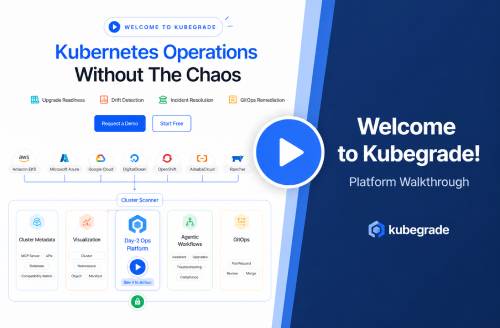
This article explores how Kubernetes and DevOps work together, highlighting how Kubegrade simplifies K8s operations. Kubegrade is a platform designed for secure and automated K8s operations, offering capabilities such as monitoring, upgrades, and optimization. By streamlining these processes, Kubegrade helps teams to focus on innovation and deliver value to their users more efficiently.
Key Takeaways
- Kubernetes DevOps combines Kubernetes with DevOps methodologies to improve application deployment, scaling, and reliability.
- Core Kubernetes components include Pods (smallest deployable units), Services (expose applications as network services), and Deployments (manage desired application state).
- DevOps principles like Continuous Integration (CI) and Continuous Delivery (CD) automate the software release process, while Infrastructure as Code (IaC) manages infrastructure through code.
- Security best practices for Kubernetes DevOps include using network policies, implementing Role-Based Access Control (RBAC), and managing secrets securely.
- Monitoring and logging are crucial for maintaining the health and performance of Kubernetes applications, requiring key metrics monitoring and centralized logging.
- Automation in Kubernetes deployments can be achieved using tools like Helm and CI/CD pipelines, streamlining updates, rollbacks, and scaling.
- Kubegrade simplifies Kubernetes cluster management with automated deployments, simplified monitoring, and streamlined upgrades, reducing operational overhead.
Table of Contents
“`html
Introduction to Kubernetes DevOps
Kubernetes DevOps is the practice of using Kubernetes, an open-source container orchestration system, alongside DevOps methodologies. The combination improves application deployment, makes scaling easier, and increases reliability in modern software development .
Combining Kubernetes and DevOps means that applications can be deployed and updated more quickly. It also allows for efficient resource management, which leads to better scaling . The goal is to automate and streamline the software development lifecycle, from coding to deployment and operations .
Kubegrade simplifies Kubernetes cluster management. It’s a platform that provides secure and automated K8s operations, which includes monitoring, upgrades, and optimization. Using Kubegrade can help teams manage their Kubernetes infrastructure more effectively .
“““html
Knowing Kubernetes
Kubernetes is a system that automates the deployment, scaling, and management of containerized applications. It groups containers into logical units for easy management and discovery .
Core Components of Kubernetes
- Pods: These are the smallest deployable units in Kubernetes. A pod can contain one or more containers that are deployed and managed together. Think of a pod as a single apartment in a building, where each container is a room within that apartment .
- Services: A service is a way to expose an application running on a set of pods as a network service. It provides a single IP address and DNS name for accessing the pods, even if they are scaled up or down. It’s like a receptionist in a building who directs visitors to the correct apartment, regardless of how many apartments there are .
- Deployments: Deployments manage the desired state of your application. They ensure that the specified number of pod replicas are running at all times. If a pod fails, the deployment automatically replaces it. This is similar to a building manager who makes sure there are always enough apartments available and fixes any problems that arise .
How Kubernetes Works
Kubernetes works by distributing application workloads across a cluster of nodes. The master node manages the cluster and schedules containers to run on the worker nodes. Kubernetes automates tasks such as:
- Deployment: Easily deploy applications without worrying about the underlying infrastructure.
- Scaling: Adjust the number of pod replicas based on demand.
- Management: Update and roll back applications with minimal downtime.
Kubegrade builds on these capabilities by offering more control and automation. It provides tools to simplify the management of Kubernetes clusters, making it easier to monitor, upgrade, and optimize applications .
“““html
Kubernetes Architecture: A Detailed Look
The architecture of Kubernetes involves several components that work together to manage containerized applications. These components are divided into the master node and worker nodes.
Master Node Components
- API Server: The API server is the front end for the Kubernetes control plane. It exposes the Kubernetes API, which allows users and other components to interact with the cluster. It receives requests, validates them, and then processes them .
- Scheduler: The scheduler assigns pods to worker nodes based on resource requirements and availability. It considers factors such as CPU, memory, and node affinity when making scheduling decisions .
- etcd: etcd is a distributed key-value store that stores the cluster’s configuration data. It serves as the backing store for all cluster data, making it a critical component for maintaining the state of the Kubernetes cluster .
Worker Node Components
- Kubelet: The kubelet is an agent that runs on each worker node. It receives instructions from the master node and ensures that the containers are running as expected. It manages the lifecycle of containers on the node .
- Kube-proxy: The kube-proxy is a network proxy that runs on each worker node. It implements the Kubernetes service abstraction by maintaining network rules and forwarding connections to the correct pods .
- Container Runtime: The container runtime is responsible for running containers. Kubernetes supports several container runtimes, such as Docker, containerd, and CRI-O .
How the Master Node Manages the Cluster
The master node manages the cluster by coordinating the activities of the worker nodes. It uses the API server to receive requests, the scheduler to assign pods to nodes, and etcd to store cluster state. The master node monitors the health of the worker nodes and takes action if a node becomes unavailable .
How Worker Nodes Execute Tasks
Worker nodes execute tasks by running the kubelet, kube-proxy, and container runtime. The kubelet receives instructions from the master node and ensures that the containers are running as expected. The kube-proxy implements the Kubernetes service abstraction, and the container runtime runs the containers .
“““html
Core Kubernetes Components: Pods, Services, and Deployments
Kubernetes uses several core components to manage applications. These include Pods, Services, and Deployments. Each component has a specific purpose and works with the others to ensure applications are deployed and managed effectively.
Pods
A Pod is the smallest unit in Kubernetes and represents a single instance of a running application. It can contain one or more containers that share the same network namespace and storage volumes. Pods are designed to be ephemeral, meaning they can be created and destroyed as needed .
Example: Imagine a Pod as a container ship carrying goods. The ship (Pod) contains different compartments (containers) that hold various items needed for the application.
Services
A Service is an abstraction that defines a logical set of Pods and a policy by which to access them. Services provide a stable IP address and DNS name for accessing Pods, even if the Pods are scaled up or down. They act as a load balancer, distributing traffic across the Pods .
Example: Think of a Service as a port authority that directs incoming ships (traffic) to the appropriate docks (Pods). The port authority ensures that ships can always find a place to unload their goods, regardless of which docks are available.
Deployments
A Deployment is a higher-level abstraction that manages the desired state of an application. It ensures that the specified number of Pod replicas are running at all times. If a Pod fails, the Deployment automatically recreates it. Deployments also provide features for updating and rolling back applications .
Example: Consider a Deployment as a shipping company that manages a fleet of container ships (Pods). The company ensures that there are always enough ships available to meet demand and that any damaged ships are quickly replaced.
How These Components Work Together
Pods, Services, and Deployments work together to deploy and manage applications in Kubernetes. Deployments manage the desired state of the application by creating and managing Pods. Services provide a stable way to access the Pods, and Pods run the actual application code. This combination allows for applications to be deployed, scaled, and managed with minimal downtime .
“““html
How Kubernetes Orchestrates Containerized Applications
Kubernetes automates the deployment, scaling, and management of containerized applications. It uses a declarative configuration approach, where users define the desired state of their applications, and Kubernetes works to achieve and maintain that state.
Declarative Configuration
In Kubernetes, users define the desired state of their applications using YAML or JSON files. These files specify the number of replicas, resource requirements, and other settings. Kubernetes then uses this configuration to create and manage the application .
For example, a user might define a Deployment that specifies three replicas of a web application. Kubernetes will then create three Pods running the web application and make sure that they are always running. If one of the Pods fails, Kubernetes will automatically recreate it to maintain the desired state.
The Role of Controllers
Controllers are control loops that watch the state of the cluster and make changes to bring it closer to the desired state. They monitor resources such as Pods, Services, and Deployments, and take action when they detect a discrepancy between the actual state and the desired state .
For example, the Deployment controller watches the number of Pod replicas. If the number of running Pods is less than the desired number, the controller creates new Pods. If the number of running Pods is greater than the desired number, the controller deletes Pods.
Handling Failures
Kubernetes is designed to handle failures automatically. If a Pod fails, Kubernetes automatically recreates it. If a node fails, Kubernetes reschedules the Pods running on that node to other nodes in the cluster. This makes sure that applications remain available even in the face of failures .
This orchestration process allows for applications to be deployed, scaled, and managed with minimal manual intervention. It also provides a high level of resilience, making sure that applications remain available even in the face of failures.
“““html
DevOps Principles and Practices

DevOps is a set of practices that automates the processes between software development and IT teams. It promotes a culture of collaboration between development and operations teams, aiming for faster and more reliable software releases .
Core Principles of DevOps
- Continuous Integration (CI): CI is the practice of frequently integrating code changes into a central repository. Automated builds and tests are run to detect integration errors early .
- Continuous Delivery (CD): CD automates the release process, allowing for frequent and reliable deployments. Code changes are automatically built, tested, and prepared for release to production .
- Automation: Automation involves automating repetitive tasks, such as infrastructure provisioning, testing, and deployment. This reduces errors and frees up developers to focus on more important tasks .
- Collaboration: DevOps promotes collaboration between development and operations teams. This helps to improve communication, leading to faster and more reliable releases .
- Monitoring: Monitoring involves tracking the performance and availability of applications and infrastructure. This helps to detect and resolve issues quickly, minimizing downtime .
Examples of DevOps Practices
- Infrastructure as Code (IaC): IaC involves managing infrastructure using code. This allows for infrastructure to be provisioned and managed automatically, reducing errors and improving consistency .
- Automated Testing: Automated testing involves writing and running tests automatically. This helps to detect errors early in the development process, improving software quality .
- CI/CD Pipelines: CI/CD pipelines automate the build, test, and deployment processes. This allows for faster and more reliable releases .
How DevOps Practices Improve Kubernetes Deployments
DevOps practices can the way Kubernetes deployments are done. IaC allows for Kubernetes infrastructure to be provisioned and managed automatically. Automated testing makes sure that applications running on Kubernetes are of high quality. CI/CD pipelines automate the deployment process, allowing for faster and more reliable releases .
“““html
Continuous Integration and Continuous Delivery (CI/CD)
Continuous Integration (CI) and Continuous Delivery (CD) are practices that automate the software release process. CI focuses on integrating code changes frequently, while CD automates the release of those changes to production .
Continuous Integration (CI)
CI involves integrating code changes from multiple developers into a central repository. Each integration is verified by an automated build and test process. This helps to detect integration errors early, before they make it into production .
Continuous Delivery (CD)
CD automates the release process, allowing for frequent and reliable deployments. Code changes are automatically built, tested, and prepared for release to production. CD can involve manual approval steps, or it can be fully automated .
CI/CD Pipelines
CI/CD pipelines automate the build, test, and deployment processes. A typical CI/CD pipeline includes the following stages:
- Build: The code is compiled and packaged into an executable artifact.
- Test: Automated tests are run to verify the quality of the code.
- Deploy: The artifact is deployed to a staging or production environment.
CI/CD pipelines can be triggered automatically by code changes, or they can be triggered manually .
Examples of CI/CD Tools
There are a number of CI/CD tools available, including:
- Jenkins
- GitLab CI
- CircleCI
- Travis CI
These tools integrate with Kubernetes to automate the deployment of containerized applications .
“““html
Infrastructure as Code (IaC)
Infrastructure as Code (IaC) is the practice of managing and provisioning infrastructure through code, rather than through manual processes. This allows for infrastructure to be treated like software, with version control, repeatability, and automation .
Benefits of IaC
- Version Control: Infrastructure configurations are stored in version control systems, allowing for changes to be tracked and rolled back if necessary.
- Repeatability: Infrastructure can be provisioned and configured consistently across different environments.
- Automation: Infrastructure provisioning and management can be automated, reducing manual effort and errors.
IaC Tools
There are several IaC tools available, including:
- Terraform
- Ansible
- CloudFormation
These tools allow teams to define infrastructure as code and automate its provisioning and management .
Using IaC with Kubernetes
IaC can be used to manage Kubernetes infrastructure, including clusters, namespaces, and deployments. For example, Terraform can be used to provision a Kubernetes cluster on a cloud provider, and Ansible can be used to configure the cluster .
“““html
Automation, Collaboration, and Monitoring in DevOps
Automation, collaboration, and monitoring are key components of DevOps. They help teams deliver software faster, with higher quality, and greater reliability .
Automation
Automation reduces manual effort and errors by automating repetitive tasks. This includes tasks such as building, testing, and deploying software, as well as provisioning and managing infrastructure. Automation frees up developers and operations teams to focus on more important tasks, such as designing and building new features .
Collaboration
Collaboration improves communication and alignment between teams. DevOps promotes a culture of shared responsibility, where development and operations teams work together to deliver software. This helps to improve communication, leading to faster and more reliable releases .
Monitoring
Monitoring provides visibility into application performance and helps identify issues quickly. Monitoring tools track metrics such as CPU usage, memory usage, and response time. This allows teams to detect and resolve issues before they affect users .
Tools and Practices for Automation, Collaboration, and Monitoring in Kubernetes Environments
There are a number of tools and practices that can be used to automate, collaborate, and monitor Kubernetes environments, including:
- Automation: Kubernetes Operators, Helm charts, and CI/CD pipelines.
- Collaboration: Slack, Microsoft Teams, and Jira.
- Monitoring: Prometheus, Grafana, and Elasticsearch.
“““html
Kubernetes DevOps Best Practices
Implementing Kubernetes DevOps requires following specific practices to ensure security, monitoring, and automation. These practices contribute to reliable, , and secure applications .
Security Best Practices
Securing Kubernetes clusters involves several strategies:
- Network Policies: Use network policies to control traffic between pods and restrict access to sensitive resources.
- RBAC (Role-Based Access Control): Implement RBAC to manage access to Kubernetes resources based on roles and permissions.
- Secrets Management: Securely store and manage sensitive information such as passwords and API keys using Kubernetes secrets or external secrets management tools.
Monitoring and Logging Best Practices
Comprehensive monitoring and logging are important for identifying and resolving issues quickly:
- Centralized Logging: Collect and centralize logs from all components of the Kubernetes cluster for analysis and troubleshooting.
- Metrics Monitoring: Monitor key metrics such as CPU usage, memory usage, and network traffic to identify performance bottlenecks and potential issues.
- Alerting: Set up alerts to notify teams of critical issues, such as high CPU usage or application errors.
Automation Best Practices
Automating Kubernetes deployments can improve efficiency and reduce errors:
- Helm: Use Helm to manage Kubernetes applications. Helm charts provide a way to package, version, and deploy applications to Kubernetes clusters.
- CI/CD Pipelines: Integrate Kubernetes deployments into CI/CD pipelines to automate the build, test, and deployment processes.
Following these practices can applications that are more reliable and secure.
“““html
Security Best Practices for Kubernetes DevOps
Securing Kubernetes environments requires a multi-layered approach. Implementing security measures at different levels of the stack is important .
Network Policies
Network policies control traffic between pods, limiting the potential impact of security breaches. By default, all pods in a Kubernetes cluster can communicate with each other. Network policies allow you to define rules that restrict this communication, allowing only authorized traffic .
To implement network policies, you can use the Kubernetes NetworkPolicy resource. This resource allows you to specify ingress and egress rules that define which pods can communicate with each other .
RBAC (Role-Based Access Control)
RBAC controls access to Kubernetes resources based on roles and permissions. It allows you to define who can access which resources and what actions they can perform. RBAC is implemented using the following Kubernetes resources:
- Roles: Define a set of permissions.
- RoleBindings: Grant permissions to users or groups.
- ServiceAccounts: Provide an identity for pods.
By using RBAC, you can restrict access to sensitive resources and prevent unauthorized users from making changes to the cluster .
Secrets Management
Secrets management involves securely storing and managing sensitive information such as passwords, API keys, and certificates. Kubernetes provides a built-in Secrets resource for storing secrets. However, it is often recommended to use external secrets management tools such as HashiCorp Vault for more secure storage and management .
HashiCorp Vault provides features such as encryption, access control, and audit logging. It allows you to store secrets securely and control access to them .
Implementing these security measures contributes to a more secure Kubernetes environment by limiting the impact of security breaches and preventing unauthorized access to sensitive resources.
“““html
Monitoring and Logging Best Practices
Monitoring and logging are important for maintaining the health and performance of Kubernetes applications. They provide visibility into the behavior of applications and infrastructure, allowing teams to identify and resolve issues quickly .
Key Metrics to Monitor
There are several key metrics that should be monitored in a Kubernetes environment, including:
- CPU Usage: Monitor CPU usage to identify performance bottlenecks and resource constraints.
- Memory Usage: Monitor memory usage to prevent out-of-memory errors and ensure that applications have enough resources.
- Network Traffic: Monitor network traffic to identify network bottlenecks and security threats.
- Disk I/O: Monitor disk I/O to identify storage performance issues.
- Application Response Time: Monitor application response time to ensure that applications are performing well.
Tools for Monitoring and Logging
There are several tools available for monitoring and logging in Kubernetes environments, including:
- Prometheus: A monitoring system that collects metrics from Kubernetes clusters.
- Grafana: A data visualization tool that allows you to create dashboards and visualize metrics.
- Elasticsearch: A search and analytics engine that allows you to store and analyze logs.
- Fluentd: A data collector that allows you to collect logs from multiple sources and forward them to Elasticsearch.
Setting Up Alerts and Dashboards
Setting up alerts and dashboards is important for identifying and addressing issues. Alerts can be configured to notify teams when certain metrics exceed predefined thresholds. Dashboards can be used to visualize metrics and track the health of applications and infrastructure .
“““html
Automation Best Practices for Kubernetes Deployments
Automating Kubernetes deployments is important for improving efficiency and reducing errors. Automation can streamline the deployment process, making it faster and more reliable .
Helm
Helm is a package manager for Kubernetes that allows you to package, version, and deploy Kubernetes applications. Helm uses charts, which are packages of pre-configured Kubernetes resources. Helm charts can be used to deploy applications, databases, and other Kubernetes resources .
Best Practices for Automating Updates, Rollbacks, and Scaling
When automating updates, rollbacks, and scaling, it is important to follow these best practices:
- Use Version Control: Store all deployment configurations in version control.
- Automate Testing: Automate testing to ensure that updates do not introduce regressions.
- Use Canary Deployments: Use canary deployments to gradually roll out updates to a subset of users.
- Automate Rollbacks: Automate rollbacks to quickly revert to a previous version if an issue is detected.
- Use Horizontal Pod Autoscaling (HPA): Use HPA to automatically scale the number of pods based on CPU usage or other metrics.
By following these practices, you can reduce manual effort and errors, leading to more reliable and efficient deployments.
“““html
Streamlining Kubernetes Operations with Kubegrade
Kubegrade simplifies Kubernetes cluster management and improves DevOps workflows. It helps teams manage their Kubernetes infrastructure more efficiently, allowing them to focus on building and deploying applications .
Kubegrade includes features such as:
- Automated deployments
- Simplified monitoring
- Streamlined upgrades
These features address common challenges in Kubernetes operations, such as managing configurations, security, and resource use. For example, Kubegrade helps manage configurations by providing a user interface for defining and managing Kubernetes resources. It also helps ensure security by providing tools for implementing security best practices.
Using Kubegrade can lead to reduced operational overhead, improved application performance, and increased developer productivity. By simplifying Kubernetes cluster management, Kubegrade allows teams to focus on delivering value to their customers .
“““html
Automated Deployments with Kubegrade
Kubegrade automates Kubernetes deployments, reducing manual effort and errors. This automation streamlines the deployment process, making it faster and more reliable .
With Kubegrade, the deployment process involves:
- Automated rollouts
- Automated rollbacks
- Automated scaling
These features simplify deployment scenarios. Kubegrade helps improve deployment speed and reliability by automating the deployment process. This automation reduces the risk of human error and ensures that deployments are performed consistently .
“““html
Simplified Monitoring and Logging
Kubegrade’s monitoring and logging capabilities provide visibility into application performance and cluster health. This visibility allows teams to identify and resolve issues quickly, before they affect users .
Kubegrade simplifies the process of setting up and managing monitoring dashboards and alerts. This allows teams to monitor their applications and infrastructure, making sure that they are performing as expected .
By providing visibility into application performance and cluster health, Kubegrade helps teams maintain application uptime and performance. This is important for a positive user experience and meeting service level agreements (SLAs) .
“““html
Streamlined Upgrades and Maintenance
Kubegrade streamlines Kubernetes upgrades and maintenance tasks. This simplified process reduces downtime and makes sure of a smooth upgrade experience .
With Kubegrade, the upgrade process involves:
- Automated pre-upgrade checks
- Automated rollback capabilities
These features simplify upgrade scenarios. By streamlining the upgrade process, Kubegrade helps reduce downtime and ensures that upgrades are performed consistently and reliably .
“““html
Conclusion
Combining Kubernetes and DevOps improves application deployment, , and reliability. This approach helps teams deliver software faster and more efficiently .
Kubegrade streamlines Kubernetes operations by offering secure and automated K8s management. This allows teams to focus on building and deploying applications, rather than managing complex infrastructure .
To optimize your Kubernetes DevOps practices, explore Kubegrade further. Learn more about Kubegrade and its capabilities to see how it can help your team improve its software delivery process.
“`

