





Kubernetes Cluster Upgrade: Best Practices for Seamless Transitions

by Tim
July 3, 2025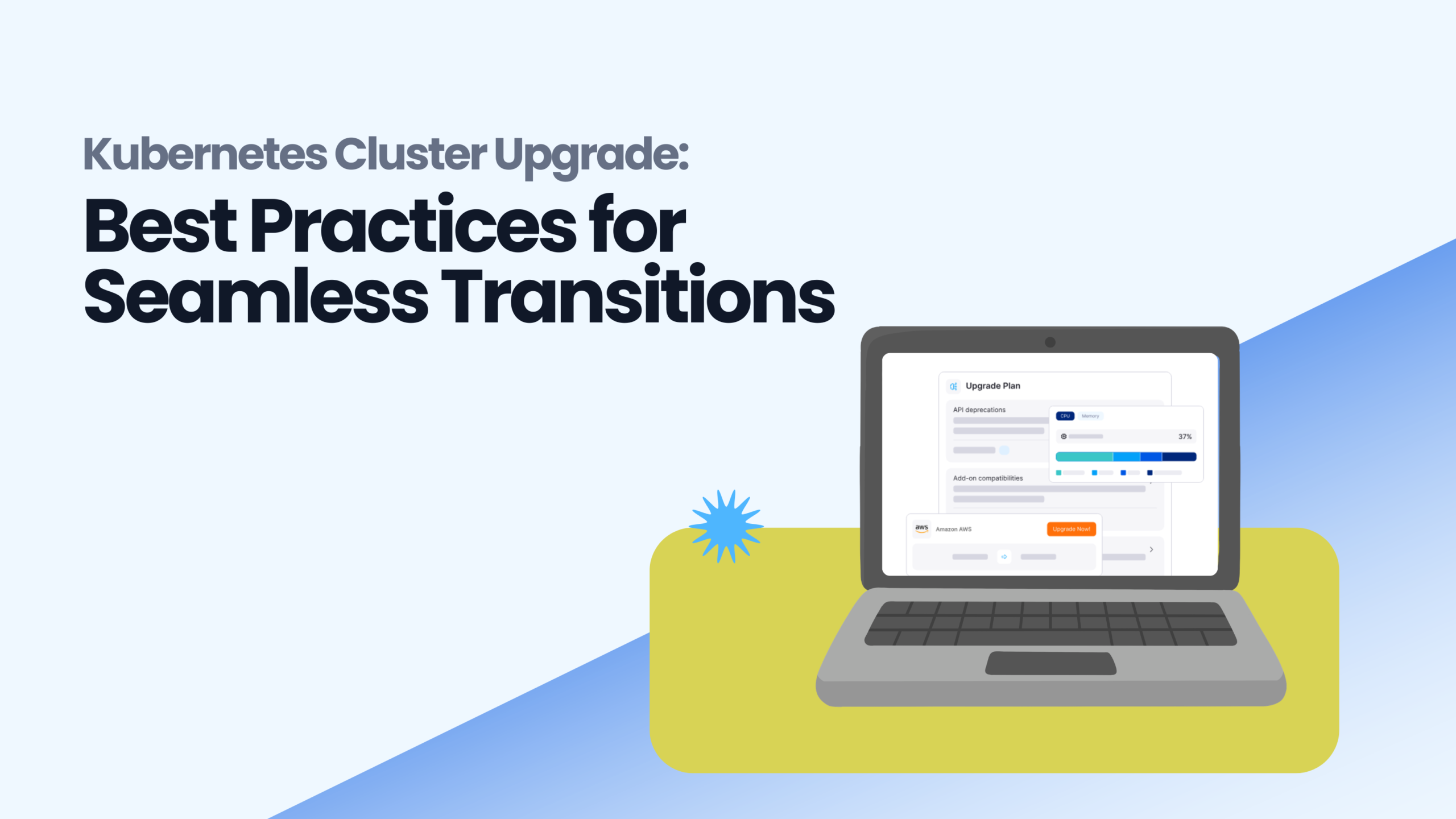
Kubernetes, the foundation of modern infrastructure orchestration, enables engineering teams to efficiently manage workloads and scale applications with reliability. However, as with any rapidly evolving open-source platform, Kubernetes undergoes frequent updates that introduce new features, security patches, and architectural improvements. Failing to upgrade in a timely manner can expose clusters to incompatibilities, performance issues, and security risks.
We must stress that regular Kubernetes cluster upgrades are not just a best practice, they?re critical to the long-term stability, security, and compliance of your environments. With each new version, the Kubernetes community addresses known issues, deprecates outdated APIs, and enhances overall platform resilience. Delaying these upgrades can lead to technical debt that becomes increasingly difficult and costly to resolve.
However, despite the clear benefits, upgrading a Kubernetes cluster remains a high-stakes operation for most organizations. Some of the common challenges include:
- Downtime risks that can disrupt application availability during production upgrades.
- Compatibility issues between the core Kubernetes platform and third-party components such as ingress controllers, storage plugins, and observability tools.
- Configuration drift and undocumented changes that increase the likelihood of failed deployments or unpredictable behavior.
- Manual processes and limited automation, which expose teams to human error and inconsistent outcomes.
These issues compound rapidly in environments with multiple clusters, legacy dependencies, or tight regulatory requirements. Without a clear strategic approach, upgrades become a burden rather than a benefit.
At Kubegrade, we recognize that Kubernetes upgrades don?t need to be painful or risky. Our platform is purpose-built to streamline the entire upgrade lifecycle (from cluster assessment and preflight checks to automated patching and validation). By providing a secure, hands-off upgrade process, Kubegrade enables DevOps and platform engineering teams to stay current, minimize downtime, and remain compliant without disrupting ongoing operations.
Why Kubernetes Cluster Upgrades Matter
A Kubernetes cluster upgrade is not merely a technical task, it is a strategic imperative for any organization running containerized workloads in production. As the Kubernetes ecosystem matures, each version release brings critical improvements that directly impact the security, efficiency, and compliance of your infrastructure.
- Security Patches and Vulnerability Fixes
One of the most compelling reasons to upgrade is the regular inclusion of security patches in every Kubernetes release. Like any software system, Kubernetes, and the broader CNCF ecosystem it integrates with, is susceptible to newly discovered vulnerabilities, from CVEs in the container runtime to weaknesses in the API server.
- Delaying upgrades leaves clusters exposed to known exploits that malicious actors can leverage to compromise workloads, escalate privileges, or access sensitive data.
- The Kubernetes project follows a structured support window, typically maintaining only the last three minor versions. Once your version falls outside this window, it no longer receives security updates or bug fixes.
- Regular upgrades ensure you benefit from timely patches, keeping your clusters compliant with security policies and resilient against emerging threats.
Maintaining an up-to-date Kubernetes version is essential to reduce your attack surface and enforce defense-in-depth strategies.
- Performance Improvements and New Features
Each new Kubernetes release introduces enhanced resource management, scheduling algorithms, and support for evolving cloud-native standards.
- For instance, newer versions may deliver improved horizontal pod autoscaling, enhanced container lifecycle hooks, or more efficient load balancing across nodes.
- Upgrades unlock beta and stable features that previously required complex workarounds or third-party tooling, streamlining operations and reducing maintenance overhead.
- Performance tuning improvements, such as enhancements to the kubelet, and optimization, or revised pod eviction logic, enable more predictable scaling and faster recovery during failures.
By staying current, you make sure that your platform benefits from the full potential of Kubernetes innovation, allowing you to optimize performance while reducing operational complexity.
- Compliance with Industry Standards and Best Practices
In regulated industries, such as finance, healthcare, and government, compliance is a non-negotiable requirement. Frameworks like SOC 2, ISO 27001, and PCI DSS often mandate that infrastructure components remain updated and secure.
- Outdated Kubernetes versions can jeopardize your certification standing, especially if they contain unresolved vulnerabilities.
- Many organizations also follow internal DevSecOps practices that align with CIS Benchmarks or NIST standards, which recommend proactive patching and version management.
- By keeping your clusters up to date, you demonstrate a commitment to governance, risk management, and continuous improvement.? All of these are crucial for stakeholder trust and regulatory audits.
Cluster upgrades are not just a technical upgrade, they?re a business enabler, ensuring your systems remain compliant, auditable, and trustworthy.
Key Challenges in Kubernetes Cluster Upgrades
While the benefits of upgrading Kubernetes clusters are substantial, the process is often fraught with operational risks and technical complexities. Many organizations, unfortunately, delay upgrades due to the very challenges they are trying to avoid, only to encounter greater issues later. Understanding these challenges is crucial to designing a safer, smoother Kubernetes cluster upgrade strategy.
- Downtime Risks and Service Disruptions
A major concern during cluster upgrades is the potential for application downtime or degraded performance, especially in production environments.
- Control plane disruptions, even if momentary, can impact workload scheduling and API responsiveness.
- Node reboots or restarts during upgrades may temporarily evict pods, leading to increased latency or dropped requests if workloads are not properly distributed or replicated.
- Improper drain strategies or misconfigured readiness/liveness probes can cause cascading failures in high-availability applications.
In the absence of automated orchestration, organizations face elevated risks of service interruptions, which can impact user experience, revenue, and SLAs.
- Add-On and Dependency Compatibility Issues
Kubernetes is rarely deployed in isolation. Most clusters run a rich set of add-ons, CRDs (Custom Resource Definitions), and integrations with observability, networking, security, and storage tools.
- These dependencies often require tight version alignment with the core Kubernetes API.
- An upgraded cluster may break compatibility with outdated ingress controllers, CNI plugins, service meshes, or Helm charts.
- Even small version mismatches can cause functionality loss, configuration conflicts, or CRD validation failures.
Dependency drift is one of the leading causes of upgrade failure. Ensuring compatibility across all layers of the stack is a time-consuming, error-prone task unless automated.
- Version Mismatch and API Deprecations
Each Kubernetes release introduces API changes, deprecations, and removals that can impact workloads relying on older objects or schemas.
- For example, APIs like extensions/v1beta1 and networking.k8s.io/v1beta1 have been deprecated in favor of stable versions in recent releases.
- Applications or controllers using deprecated APIs will fail silently or crash after an upgrade, leading to operational surprises.
- Keeping track of deprecated APIs across multiple namespaces and environments requires deep visibility and auditability, which many teams lack.
Upgrading without proper API audits or remediation plans invites functional regression and configuration errors.
- Manual Upgrade Complexities and Human Error
Manual upgrades, especially in production-grade environments, are highly susceptible to inconsistencies and human errors.
- Teams must orchestrate multiple moving parts: backups, configuration changes, and testing.
- Without automation, scripted upgrades are brittle and often fail in unpredictable ways due to slight environment differences.
- Lack of standardized workflows leads to inconsistent outcomes across clusters, reducing reliability and team confidence.
Manual processes increase operational overhead and the probability of critical mistakes, particularly when cluster upgrades must be performed at scale.
At Kubegrade, we understand that these upgrade challenges are not just technical, they’re operational, strategic, and more often than not, business-critical. That’s why our platform is primarily designed to eliminate these pain points through automated cluster assessments, compatibility checks, and validated upgrade workflows. With Kubegrade?s kubernetes cluster management, your teams can execute upgrades confidently, with minimal disruption and maximum consistency.
Best Practices for a Seamless Kubernetes Cluster Upgrade
At Kubegrade, we believe that upgrading a Kubernetes cluster doesn?t need to be disruptive or risky. With the right approach, you can ensure a controlled, efficient, and reliable transition to newer versions while minimizing downtime and avoiding compatibility issues. Here are the core best practices that help teams achieve seamless upgrades, especially when supported by automation tools like Kubegrade.
- Plan Your Upgrade Strategy
Every successful upgrade begins with a well-defined plan. Having a clear understanding of your cluster’s current state and architectural dependencies is essential to mitigate risks before initiating any changes.
- Assess your current Kubernetes version, node configurations, and workloads. This includes control plane components, node pools, and running CRDs.
- Review Kubernetes changelogs and deprecation notices to understand breaking changes and removed APIs in the target version.
We highly recommend using Kubegrade to analyze your current cluster setup and highlight upgrade blockers or deprecated configurations.
- Backup Your Cluster Before Upgrading
Before you touch anything, it is important to ensure that you have comprehensive and restorable backups. This serves as your safety net in the event of a failed upgrade or unexpected data corruption.
- Snapshot your datastore, which holds all Kubernetes cluster state, including secrets, config maps, and workload definitions.
- Backup custom configurations, RBAC rules, and secrets, especially those stored externally or as sealed secrets.
- Ensure you have tested your restore procedures, not just backup creation.
Kubegrade recommends integrating backup validation into your upgrade pipeline to confirm data integrity before any cluster changes occur.
- Test in a Staging Environment
Testing in production is not a strategy. Always validate upgrades in a staging environment that mirrors your production configuration.
- Clone your production cluster, including node types, namespaces, add-ons, and workloads.
- Test all services, CI/CD pipelines, and operational workflows in the upgraded staging cluster.
- Validate third-party integrations such as monitoring tools, ingress controllers, and storage interfaces for compatibility.
A dry run with Kubegrade?s upgrade simulation helps uncover dependency issues and deprecation warnings before affecting live environments.
- Automate the Upgrade Process
Manual upgrades are not only slow, but also error-prone and inconsistent. Automation is key to enforcing reliability and consistency.
- Use platforms like Kubegrade to orchestrate end-to-end upgrade workflows, from pre-checks to validation.
- Integrate upgrade stages into your CI/CD pipelines, ensuring that changes to the cluster are version-controlled, peer-reviewed, and logged.
- Automate node drain, cordon, upgrade, and reboot tasks using scripts or infrastructure-as-code tools.
With Kubegrade?s kubernetes cluster management, you gain automated upgrade validation, cluster health scoring, and actionable remediation plans to eliminate guesswork.
- Monitor and Validate Post-Upgrade
Once the upgrade is complete, the work isn?t over. You must ensure that your cluster and applications are functioning as expected.
- Monitor key metrics such as pod availability, API server latency, and controller-manager logs.
- Watch for deprecated API usage, error logs, or unusual resource consumption that might indicate regressions.
- Use synthetic checks or integration tests to confirm that services respond correctly under load.
- If issues arise, have a rollback plan in place, including backup restoration and reversion to the prior Kubernetes version.
Kubegrade provides post-upgrade diagnostics that help you validate the health and performance of your upgraded cluster in real time.
By following these best practices, organizations can transform cluster upgrades from a high-risk activity into a routine part of continuous infrastructure improvement.?
In conclusion, Kubernetes upgrades are unavoidable. However, the disruption, risk, and complexity don?t have to be. By following the best practices we?ve outlined above, your team can reduce downtime risk, ensure security and compliance, minimize manual interventions, and deploy faster with more confidence.
With Kubegrade, you gain a purpose-built platform that automates the entire upgrade lifecycle, from planning to validation. We pride ourselves in handling the complexity so your teams can focus on delivering value, not fixing broken clusters. Start your seamless Kubernetes upgrade journey with Kubegrade today!

