





Kubernetes Cluster Automation: Streamlining K8s Operations

by Tim
January 8, 2026
Kubernetes (K8s) cluster automation simplifies how applications are managed. Instead of manual processes, automation handles deployments, scaling, and updates. This approach reduces errors, saves time, and ensures consistency across the Kubernetes environment.
With tools like Kubegrade, businesses can automate K8s operations, improving security and scalability. Automated monitoring, upgrades, and optimization lead to more efficient resource use and faster response times to issues.
“`
Key Takeaways
- Kubernetes cluster automation streamlines management tasks like deployment, scaling, and monitoring, reducing manual effort and errors.
- Key benefits of automation include reduced operational overhead, faster deployment cycles, improved resource utilization, and enhanced security.
- Tools like Terraform, Ansible, Helm, and CI/CD pipelines (Jenkins, GitLab CI) are essential for implementing K8s automation.
- A step-by-step approach to automation involves planning, setup, configuration, testing, and deployment, with a focus on security and reliability.
- Kubegrade simplifies K8s management by providing a unified platform for automation, monitoring, and optimization.
Table of Contents
Introduction to Kubernetes Cluster Automation

Kubernetes (K8s) has become a cornerstone of modern application deployment, offering tools for container orchestration. However, managing K8s clusters manually can be complex and time-consuming. This often leads to inefficiencies and increased risk of errors.
Kubernetes cluster automation involves using tools and processes to automate tasks associated with managing K8s clusters. This includes deployment, scaling, monitoring, and maintenance. Automation is crucial in modern DevOps, enabling teams to deliver software faster and more reliably.
The benefits of Kubernetes cluster automation are significant. It improves operational efficiency, reduces human errors, and improves the ability to scale applications. By automating repetitive tasks, teams can focus on strategic initiatives and innovation.
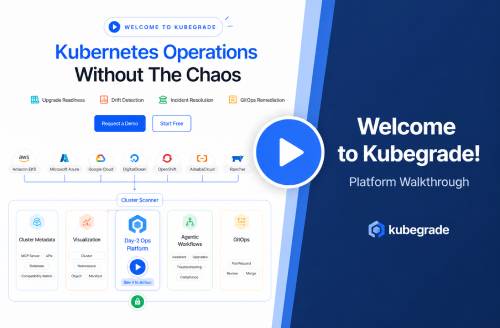
Kubegrade is a platform designed to simplify Kubernetes cluster management. It provides secure and automated K8s operations, including monitoring, upgrades, and optimization.
“`
Key Benefits of Automating Kubernetes Clusters
Automating Kubernetes clusters offers several key advantages that can significantly improve operational efficiency and overall performance. These benefits include reduced operational overhead, faster deployment cycles, improved resource utilization, and better security.
Reduced Operational Overhead
Manual management of K8s clusters requires significant time and effort from DevOps teams. Automating tasks such as patching, scaling, and monitoring reduces the manual workload, freeing up engineers to focus on more strategic initiatives. For instance, automating routine maintenance tasks can decrease operational overhead by up to 30%.
Faster Deployment Cycles
Automation accelerates the software delivery pipeline. By automating the deployment process, teams can release new features and updates more quickly. Automated deployments can reduce deployment time by as much as 50%, enabling faster iteration and quicker response to market demands.
Improved Resource Utilization
Automated resource management optimizes the allocation of resources within the cluster. This ensures that applications have the resources they need while minimizing waste. For example, automated scaling can adjust resource allocation based on real-time demand, improving resource utilization by 20% or more.
Better Security
Automation helps enforce consistent security policies across the cluster. Automated security checks and compliance scans can identify and remediate vulnerabilities quickly. Automating security tasks can reduce the risk of security breaches and ensure compliance with industry standards.
Kubegrade helps organizations achieve these benefits through its automated features. It simplifies K8s cluster management, enabling automated monitoring, upgrades, and optimization. With Kubegrade, teams can reduce operational overhead, accelerate deployment cycles, improve resource utilization, and strengthen security posture.
“`
Reduced Operational Overhead
Manual management of K8s clusters demands significant time and effort from DevOps teams. Automating tasks such as patching, scaling, and monitoring reduces the manual workload, freeing up engineers to focus on more strategic initiatives. For instance, automating routine maintenance tasks can decrease operational overhead by up to 30%.
Specific tasks that can be automated include:
- Patching: Automating the application of security patches ensures that the cluster remains secure without manual intervention.
- Scaling: Automated scaling adjusts resources based on demand, optimizing resource use and reducing the need for manual adjustments.
- Monitoring: Automated monitoring tools track cluster performance and alert teams to potential issues, reducing the time spent on manual monitoring.
Kubegrade’s automation features contribute to this reduction by simplifying K8s cluster management. With automated monitoring, upgrades, and optimization, teams can minimize the time spent on routine tasks and focus on innovation.
“`
Accelerated Deployment Cycles
Automation speeds up the deployment process for applications and updates in Kubernetes clusters. By automating deployments, teams can release new features and updates more quickly. Automated deployments can reduce deployment time by as much as 50%, enabling faster iteration and quicker response to market demands.
The use of CI/CD pipelines plays a crucial role in achieving faster deployments. These pipelines automate the build, test, and deployment processes, making sure that code changes are quickly and reliably deployed to the cluster. Automated testing further accelerates the process by identifying and addressing issues early in the development cycle.
Data points on deployment frequency and lead time improvements include:
- Deployment Frequency: Teams using automation can increase their deployment frequency by up to 5x compared to manual deployments.
- Lead Time: Automation can reduce the lead time for changes (the time it takes for a code change to be deployed to production) by as much as 75%.
Kubegrade helps streamline deployments and reduce time to market with its automation capabilities. It simplifies K8s cluster management, enabling automated monitoring, upgrades, and optimization.
“`
Improved Resource Utilization
Several techniques contribute to better resource utilization:
- Autoscaling: Automatically adjusts the number of pods based on CPU utilization or other metrics.
- Resource Quotas: Limits the amount of resources that a namespace can consume, preventing any single team or application from monopolizing cluster resources.
- On-demand Resource Provisioning: Allocates storage and other resources on demand, avoiding the need to pre-provision resources that may not be used.
These techniques lead to significant cost savings and improved efficiency. By optimizing resource allocation, organizations can reduce their cloud spending and improve the performance of their applications.
Kubegrade’s automation features enable better resource management and prevent resource wastage. With automated monitoring and optimization, teams can ensure that their clusters are running efficiently and cost-effectively.
“`
Better Security and Compliance
Automation strengthens the security posture and compliance of Kubernetes clusters. Automated security patching, vulnerability scanning, and configuration management reduce the risk of human error and ensure consistent security policies.
Key aspects of automated security include:
- Automated Security Patching: Automatically applies security patches to the cluster, minimizing the window of vulnerability.
- Vulnerability Scanning: Regularly scans the cluster for known vulnerabilities and alerts teams to potential issues.
- Configuration Management: Enforces consistent configuration settings across the cluster, reducing the risk of misconfigurations that could lead to security breaches.
By automating security tasks, organizations can reduce the risk of security incidents and ensure compliance with industry regulations.
Kubegrade’s security features and compliance certifications provide added assurance. With automated monitoring and security checks, teams can maintain a secure and compliant K8s environment.
“`
Tools and Technologies for K8s Automation
Kubernetes cluster automation relies on a set of core tools and technologies that work together to streamline various aspects of cluster management. These tools can be broadly categorized into Infrastructure as Code (IaC) tools, configuration management tools, and CI/CD pipelines.
Infrastructure as Code (IaC) Tools
IaC tools such as Terraform and Ansible enable the automation of infrastructure provisioning and management. These tools allow you to define your infrastructure as code, making it easy to version, replicate, and automate the deployment of K8s clusters.
Configuration Management Tools
Configuration management tools like Helm and Kustomize simplify the deployment and management of applications within K8s clusters. Helm is a package manager that allows you to define, install, and upgrade even the most complex Kubernetes applications. Kustomize, lets you customize Kubernetes configurations without modifying the original YAML files.
CI/CD Pipelines
CI/CD pipelines automate the build, test, and deployment processes for applications running on Kubernetes. Tools like Jenkins, GitLab CI, and CircleCI enable teams to automatically build, test, and deploy code changes to their K8s clusters.
These tools work together to automate various aspects of cluster management. For example, Terraform can be used to provision the infrastructure for a K8s cluster, Helm can be used to deploy applications to the cluster, and a CI/CD pipeline can be used to automate the deployment of code changes.
Kubegrade is designed to be compatible and integrate with these tools, providing a unified platform for managing and automating K8s operations.
“`
Infrastructure as Code (IaC) Tools
Infrastructure as Code (IaC) plays a crucial role in Kubernetes cluster automation by enabling the automated provisioning and management of infrastructure resources. IaC tools allow you to define your infrastructure as code, making it easy to version, replicate, and automate the deployment of K8s clusters.
Tools like Terraform and Ansible are commonly used for IaC in K8s environments:
- Terraform: An open-source IaC tool that allows you to define and provision infrastructure resources across various cloud providers. With Terraform, you can define your K8s cluster configuration in code and automate the creation of the cluster and its associated resources.
- Ansible: An automation engine that can be used to provision infrastructure, deploy applications, and configure systems. Ansible uses playbooks to define automation tasks, making it easy to automate the deployment and management of K8s clusters.
For example, you can use Terraform to define the virtual machines, networks, and storage resources required for a K8s cluster. Once the infrastructure is defined in code, you can use Terraform to automatically provision these resources and deploy the K8s cluster.
Kubegrade integrates with popular IaC tools, providing a unified platform for managing and automating K8s operations.
“`
Configuration Management Tools
Configuration management is important in Kubernetes automation, as it simplifies the deployment and management of applications within Kubernetes clusters. Tools like Helm and Kustomize are commonly used for configuration management in K8s environments.
- Helm: A package manager that allows you to define, install, and upgrade even the most complex Kubernetes applications. Helm uses charts to package applications, making it easy to deploy and manage applications across different environments.
- Kustomize: Lets you customize Kubernetes configurations without modifying the original YAML files. Kustomize uses overlays to apply customizations to base configurations, making it easy to manage different versions and variations of your applications.
For example, you can use Helm to package a web application, its associated databases, and any other required resources into a single chart. Once the application is packaged, you can use Helm to easily deploy the application to a K8s cluster.
Kubegrade supports configuration management tools, providing a unified platform for managing and automating K8s operations.
“`
CI/CD Pipelines
CI/CD pipelines automate the build, test, and deployment processes for applications running on Kubernetes. These pipelines are important for automating the software delivery process, enabling teams to release new features and updates more quickly and reliably.
Key stages of a CI/CD pipeline include:
- Build: The build stage compiles the application code and creates a deployable artifact.
- Test: The test stage runs automated tests to ensure that the application is working correctly.
- Deploy: The deploy stage deploys the application to the Kubernetes cluster.
Tools commonly used in CI/CD pipelines include:
- Jenkins: An open-source automation server that can be used to automate the build, test, and deployment processes.
- GitLab CI: A CI/CD tool that is integrated with GitLab, providing a seamless experience for teams using GitLab for source code management.
For example, a CI/CD pipeline can be configured to automatically build a container image from the application code, run automated tests on the image, and deploy the image to a K8s cluster whenever a code change is pushed to the repository.
Kubegrade can integrate with CI/CD pipelines.
“`
Implementing Kubernetes Cluster Automation: A Step-by-Step Guide
Implementing Kubernetes cluster automation involves several key stages, each requiring careful planning and execution. This guide provides a step-by-step approach to help you automate your K8s operations effectively.
Step 1: Planning
Before you begin automating your K8s cluster, it’s important to define your goals and objectives. Determine which tasks you want to automate and how automation will improve your operations. Consider factors like security, reliability, and scalability.
Step 2: Setup
Set up the necessary tools and technologies for automation. This may include installing IaC tools like Terraform or Ansible, configuring configuration management tools like Helm or Kustomize, and setting up a CI/CD pipeline.
Step 3: Configuration
Configure your automation tools to work with your K8s cluster. This involves defining your infrastructure as code, creating Helm charts for your applications, and configuring your CI/CD pipeline to deploy changes to your cluster.
Step 4: Testing
Test your automation workflows thoroughly to ensure that they are working correctly. This includes testing your IaC code, your Helm charts, and your CI/CD pipeline. Pay close attention to security and reliability to avoid potential issues in production.
Step 5: Deployment
Once you have tested your automation workflows, you can deploy them to production. Monitor your automated processes closely to ensure that they are working as expected and to identify any potential issues.
Best practices for implementing K8s cluster automation:
- Security: Implement security best practices throughout the automation process. Use secure credentials, enforce access controls, and regularly scan your cluster for vulnerabilities.
- Reliability: Design your automation workflows to be resilient to failures. Use error handling, implement monitoring and alerting, and regularly test your disaster recovery procedures.
Kubegrade simplifies these steps with its interface and automated workflows. It provides a unified platform for managing and automating K8s operations.
“`
Planning Your Automation Strategy
The initial planning phase is important for Kubernetes cluster automation. It involves defining automation goals, identifying target areas for automation, and assessing existing infrastructure.
Key considerations during the planning phase include:
- Defining Automation Goals: What do you want to achieve with automation? Do you want to reduce operational overhead, accelerate deployment cycles, improve resource utilization, or improve security?
- Identifying Target Areas for Automation: Which tasks are good candidates for automation? Common target areas include infrastructure provisioning, application deployment, scaling, monitoring, and security.
- Assessing Existing Infrastructure: What tools and technologies are you already using? How will automation integrate with your existing infrastructure?
Aligning automation efforts with business objectives is important. Automation should support your business goals, such as increasing revenue, reducing costs, or improving customer satisfaction.
“`
Setting Up Your Automation Environment
Setting up the automation environment involves installing and configuring the necessary tools and infrastructure for Kubernetes cluster automation. This includes IaC tools, CI/CD pipelines, and access control.
Step-by-step instructions:
- Install and Configure IaC Tools: Install tools like Terraform or Ansible and configure them to work with your cloud provider or on-premises infrastructure.
- Set Up CI/CD Pipelines: Set up a CI/CD pipeline using tools like Jenkins or GitLab CI. Configure the pipeline to automate the build, test, and deployment processes.
- Configure Access Control: Implement role-based access control (RBAC) to restrict access to your automation tools and resources. Use secure credentials and regularly rotate them.
Best practices for securing the automation environment:
- Use secure credentials and store them securely.
- Enforce access controls to restrict access to automation tools and resources.
- Regularly scan your automation environment for vulnerabilities.
“`
Configuring Automated Workflows
Configuring automated workflows involves defining the steps and processes for automating common Kubernetes management tasks. This includes application deployments, scaling, patching, and monitoring.
Examples of automated workflows:
- Application Deployments: Automate the deployment of applications using Helm charts and CI/CD pipelines. Define the deployment process in code and automate the deployment of changes to your cluster.
- Scaling: Automate the scaling of your applications using Horizontal Pod Autoscalers (HPAs). Define scaling policies based on CPU utilization or other metrics and automatically adjust the number of pods based on demand.
- Patching: Automate the application of security patches to your cluster using tools like kpatch. Automatically apply patches to your nodes and pods to minimize the window of vulnerability.
- Monitoring: Automate the monitoring of your cluster using tools like Prometheus and Grafana. Define monitoring dashboards and alerts to track the health and performance of your cluster.
“`
Testing and Deploying Automated Processes
Testing automated processes before deploying them to production is important. This ensures that the processes are working correctly and will not cause issues in production. Testing should include unit testing, integration testing, and end-to-end testing.
Guidance on creating effective test cases:
- Unit Testing: Test individual components of your automated processes to ensure that they are working correctly.
- Integration Testing: Test the integration between different components of your automated processes to ensure that they are working together correctly.
- End-to-End Testing: Test the entire automated process from start to finish to ensure that it is working as expected.
Monitoring automated processes after deployment is also important. This ensures that the processes are functioning correctly and that any issues are identified and addressed quickly.
“`
Conclusion: Embracing Automation for K8s Management
Kubernetes cluster automation offers improvements in efficiency and security. By automating tasks such as deployment, scaling, monitoring, and maintenance, organizations can reduce operational overhead, accelerate deployment cycles, improve resource utilization, and strengthen their security posture.
Kubegrade is a solution for simplifying and automating K8s operations. It provides a unified platform for managing and automating K8s clusters, enabling teams to focus on innovation and deliver value to their customers.
Explore Kubegrade’s features and consider adopting automation to optimize your Kubernetes infrastructure. Visit the Kubegrade website or request a demo to learn more.
“`

