





Automated Kubernetes: Streamlining Cluster Management

by Tim
November 2, 2025
Kubernetes, often called K8s, is a system that automates the deployment, scaling, and management of containerized applications. Managing these clusters, however, can be complex and time-consuming. That’s where automated Kubernetes solutions come in handy, streamlining operations and improving productivity.
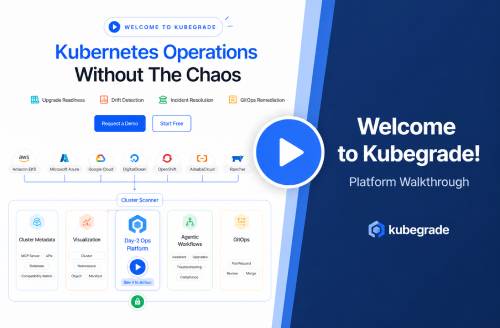
Automated Kubernetes simplifies tasks like deploying, monitoring, and scaling applications. It helps in managing multiple clusters across different environments, confirming consistency and security. By automating routine tasks, teams can focus on innovation and delivering value. Solutions like Kubegrade offer secure, adaptable, and automated K8s operations, including monitoring, upgrades, and optimization, making cluster management more manageable for businesses.
Key Takeaways
- Automated Kubernetes simplifies cluster management, enhances scalability, and improves security by reducing manual intervention.
- Key automation techniques include Infrastructure as Code (IaC) with Terraform, Blue/Green and Canary deployment strategies, and policy-based automation for governance.
- Automated monitoring and optimization are crucial for maintaining a healthy Kubernetes environment by detecting anomalies, optimizing resource utilization, and predicting potential issues.
- Kubegrade simplifies Kubernetes management by automating tasks like upgrades, patching, and configuration validation, ensuring a secure and resilient environment.
- Implementing Kubegrade involves setting up the agent, configuring automation policies, and integrating with existing infrastructure for a streamlined DevOps workflow.
Table of Contents
“`html
Introduction to Automated Kubernetes
Kubernetes (K8s) has become a key tool for managing containerized applications, but manually managing K8s clusters can be complex . Automated Kubernetes solutions address these challenges by streamlining operations, improving the ability to grow, and improving security . Automation simplifies tasks like monitoring, upgrades, and resource optimization, allowing teams to focus on development and innovation . Platforms like Kubegrade offer solutions for secure and safe K8s operations.
Automating Kubernetes offers several benefits:
- Improved Efficiency: Automation reduces manual effort and accelerates deployment cycles.
- Improved ability to grow: Automated scaling ensures applications can handle fluctuating workloads.
- Improved Security: Automated security policies and compliance checks minimize risks.
“““html
Key Benefits of Kubernetes Automation

Automating Kubernetes tasks offers several key advantages for businesses . It reduces manual intervention, allowing teams to focus on strategic initiatives . Automated systems can also effectively manage fluctuating workloads, making sure applications remain responsive . Also, automation strengthens security by implementing compliance checks and updates .
Reduced Manual Intervention
Manual management of Kubernetes clusters can be time-consuming and prone to errors . Automation reduces the need for manual configuration, deployment, and scaling, freeing up valuable engineering resources . For instance, Kubegrade can reduce time spent on routine maintenance by automating upgrades and applying patches .
Effective Workload Management
Kubernetes automation allows for workload management that changes as needed . Automated scaling adjusts cluster resources based on demand, making sure optimal performance . Horizontal Pod Autoscaling (HPA) and Cluster Autoscaler features adjust to match the load . This makes sure applications perform consistently, regardless of workload fluctuations .
Strengthened Security
Automation plays a key role in Kubernetes security . Automated compliance checks and security policies minimize risks and keep clusters audit-ready . Kubegrade automates compliance checks, detecting policy violations and configuration drift in real time . Automated security measures address threats in advance, securing the Kubernetes environment .
How Kubegrade Helps
Kubegrade simplifies Kubernetes management and delivers these benefits through its automation platform . Kubegrade automates tasks such as upgrades, patching, and configuration validation, making sure a secure and resilient Kubernetes environment . Its AI agents analyze real-time data and historical patterns to predict and prevent issues . By automating these processes, Kubegrade enables teams to move faster, stay secure, and grow reliably .
“““html
Enhanced Efficiency and Reduced Manual Intervention
Automation minimizes manual tasks, which improves efficiency in Kubernetes management . Several time-consuming manual processes can be automated, freeing up valuable resources .
- Deployments: Automating deployments reduces the risk of manual errors.
- Scaling: Automated scaling adjusts resources based on demand, optimizing performance.
- Rollbacks: Automated rollbacks quickly revert to previous versions, minimizing downtime.
By automating these processes, organizations can achieve significant efficiency gains. For example, deployment times can be reduced from hours to minutes, and the number of manual errors can be decreased .
Kubegrade automates upgrades, patching, and configuration validation, making sure a secure Kubernetes environment . Its AI agents analyze real-time data and historical patterns to predict and prevent issues . By automating these processes, Kubegrade enables teams to move faster and stay secure .
“““html
Improved Scalability for Fluctuating Workloads
Automated scaling mechanisms in Kubernetes allow applications to handle varying workloads effectively . By automating scaling, resources are adjusted based on real-time demand, making sure optimal performance and availability .
- Horizontal Pod Autoscaling (HPA): Automatically adjusts the number of pod replicas based on CPU utilization or other metrics .
- Vertical Pod Autoscaling (VPA): Automatically adjusts the CPU and memory resources allocated to individual pods .
Automation can adjust resources as needed based on real-time demand. For example, during peak traffic, HPA can automatically increase the number of pod replicas to handle the increased load. When traffic decreases, HPA reduces the number of replicas to save resources .
Kubegrade automates scaling processes to ensure optimal resource utilization. It analyzes real-time data and historical patterns to predict workload changes and adjust resources accordingly . By automating scaling, Kubegrade helps organizations maintain application performance and availability while minimizing resource costs .
“““html
Strengthened Security with Automated Compliance
Automation improves the security of Kubernetes clusters . Automated compliance checks and policy enforcement prevent misconfigurations and vulnerabilities .
- Vulnerability Scanning: Automatically identifies and reports vulnerabilities in container images and cluster configurations .
- Security Patching: Automates the application of security patches to address known vulnerabilities .
- Access Control: Automates the management of access control policies to restrict unauthorized access .
By automating these tasks, organizations can reduce the risk of security breaches and maintain a strong security .
Kubegrade’s security automation features help organizations maintain a secure and compliant Kubernetes environment. It automates compliance checks, detecting policy violations and configuration drift in real-time . Automated security measures address threats in advance, securing the Kubernetes environment .
“““html
Key Automation Techniques for Kubernetes
Several automation techniques streamline operations and reduce errors in Kubernetes cluster management . These techniques help organizations manage their clusters more efficiently and effectively .
- Infrastructure as Code (IaC): Using tools like Terraform to define and manage infrastructure through code . IaC automates infrastructure provisioning and configuration, making sure consistency and repeatability .
- Automated Deployment Strategies: Implementing strategies like Blue/Green and Canary deployments to automate application releases . These strategies minimize downtime and reduce the risk of deployment failures .
- Policy-Based Automation: Using policies to automate governance and security . Policy-based automation makes sure compliance with organizational standards and regulatory requirements .
Kubegrade incorporates these techniques to provide a comprehensive automation solution for Kubernetes. It supports IaC through its integration with Terraform, automates deployments using Blue/Green and Canary strategies, and enforces policies through its policy engine . By incorporating these techniques, Kubegrade helps organizations streamline operations, reduce errors, and maintain a secure and compliant Kubernetes environment .
“““html
Infrastructure as Code (IaC) with Terraform
Infrastructure as Code (IaC) involves managing and provisioning infrastructure through code rather than manual processes . This approach brings several benefits to Kubernetes management, including increased consistency, repeatability, and efficiency .
Terraform is a tool for implementing IaC. It allows users to define infrastructure in declarative configuration files, which can then be used to automate the provisioning and configuration of resources .
For example, Terraform can be used to automate the creation of Kubernetes clusters, configure networking and storage resources, and deploy applications . By defining these resources in code, organizations can ensure that their infrastructure is consistent across environments and can be easily recreated if needed .
Kubegrade integrates with Terraform to simplify IaC workflows. It provides a user-friendly interface for managing Terraform configurations and allows users to automate the deployment of Kubernetes infrastructure with just a few clicks .
“““html
Automated Deployment Strategies: Blue/Green and Canary
Automated deployment strategies streamline application releases, minimizing downtime and reducing deployment failures . Blue/Green and Canary deployments are two strategies used in Kubernetes environments .
- Blue/Green Deployment: This strategy involves running two identical environments, blue (the current version) and green (the new version) . Traffic is switched from blue to green once the new version is tested and verified .
- Canary Deployment: This strategy involves gradually rolling out the new version to a subset of users before fully deploying it . This allows for real-world testing and monitoring of the new version .
Blue/Green deployments offer a simple and fast way to deploy new versions, but require double the resources. Canary deployments minimize risk by gradually rolling out changes, but require careful monitoring and analysis .
These strategies minimize downtime and reduce the risk of deployment failures. For example, if issues are detected in the green environment during a Blue/Green deployment, traffic can be quickly switched back to the blue environment. In a Canary deployment, issues can be identified and addressed before they impact all users .
Kubegrade supports these deployment strategies through automation. It provides features for managing and automating Blue/Green and Canary deployments, allowing organizations to release applications with confidence .
“““html
Policy-Based Automation for Governance and Security
Policy-based automation is important for governance and security in Kubernetes environments . Policies enforce compliance and prevent misconfigurations, making sure a secure and well-governed cluster .
Policies can enforce requirements such as resource quotas, network policies, and security contexts. By defining these requirements as policies, organizations can automatically enforce them across their Kubernetes clusters, preventing violations and maintaining a consistent configuration .
Several policy-based automation tools and frameworks are available, including Open Policy Agent (OPA) and Kyverno. These tools allow users to define policies in a declarative language and automatically enforce them in their Kubernetes clusters .
Kubegrade enables policy-based automation for improved governance and security. Its policy engine allows users to define and enforce policies across their Kubernetes clusters. Kubegrade automates compliance checks, detecting policy violations and configuration drift in real-time .
“““html
Monitoring and Optimization Through Automation

Automated monitoring and optimization are key to maintaining a healthy Kubernetes environment . Automation helps detect anomalies, improve resource use, and application performance .
Automated monitoring tools detect issues and trigger alerts, enabling teams to address problems before they impact users. These tools monitor metrics such as CPU utilization, memory usage, and network traffic, providing insights into the health and performance of the cluster .
Automated optimization techniques improve resource use and performance. For example, automated scaling adjusts resources based on demand, guaranteeing applications have the resources they need without wasting resources .
Tools and strategies for automated monitoring and optimization include Prometheus, Grafana, and Kubernetes Metrics Server. Prometheus collects metrics from Kubernetes clusters, Grafana visualizes those metrics, and Kubernetes Metrics Server provides resource usage data for HPA .
Kubegrade provides capabilities in automated monitoring and optimization. Its AI agents analyze real-time data and historical patterns to predict and prevent issues. Kubegrade automates tasks such as resource optimization and scaling, guaranteeing a healthy and efficient Kubernetes environment .
“““html
Automated Monitoring for Anomaly Detection and Alerting
Automated monitoring tools continuously track the health and performance of Kubernetes clusters . These tools collect metrics and logs, providing visibility into the behavior of applications and infrastructure .
These tools detect anomalies, such as unusual resource consumption or application errors. By analyzing metrics and logs, monitoring tools can identify deviations from normal behavior and trigger alerts .
The process of setting up automated alerts involves defining thresholds for key metrics and configuring notifications. When a metric exceeds a defined threshold, an alert is triggered, notifying administrators of a critical issue .
Popular monitoring tools include Prometheus, Grafana, and Elasticsearch. Prometheus collects metrics, Grafana visualizes metrics, and Elasticsearch aggregates logs .
Kubegrade integrates with monitoring solutions to provide visibility into cluster health. It collects metrics and logs from Kubernetes clusters, providing insights into the behavior of applications and infrastructure .
“““html
Automated Optimization for Resource Utilization and Performance
Automated optimization techniques improve resource use and performance in Kubernetes environments . By automating resource management, organizations can reduce costs and improve application performance .
Strategies include:
- Right-Sizing Containers: Adjusting the CPU and memory resources allocated to containers to match their actual needs .
- Optimizing Resource Requests and Limits: Setting resource requests and limits to prevent resource contention and starvation .
- Autoscaling Based on Real-Time Demand: Automatically adjusting the number of pod replicas based on real-time demand .
Tools and techniques for automated optimization include Kubernetes Metrics Server, HPA, and VPA. Kubernetes Metrics Server provides resource usage data, HPA adjusts the number of pod replicas, and VPA adjusts the CPU and memory resources allocated to individual pods .
Kubegrade automates resource optimization and performance tuning. Its AI agents analyze real-time data and historical patterns to identify opportunities for optimization. Kubegrade automates tasks such as right-sizing containers and optimizing resource requests and limits, guaranteeing efficient resource use and performance .
“““html
Predictive Analysis and Issue Resolution
Predictive analysis anticipates and prevents issues in Kubernetes clusters . By analyzing historical data and identifying patterns, organizations can address problems before they impact application performance or availability .
Machine learning algorithms identify patterns and predict problems. These algorithms analyze metrics and logs to identify anomalies and predict potential issues .
Automated systems address issues before they impact application performance or availability. For example, if predictive analysis identifies a potential resource shortage, automated scaling can increase resources to prevent performance degradation .
Kubegrade provides capabilities in predictive analysis and issue resolution. Its AI agents analyze real-time data and historical patterns to predict and prevent issues . By addressing potential problems in advance, Kubegrade helps organizations maintain a stable and reliable Kubernetes environment .
“““html
Implementing Automated Kubernetes with Kubegrade
Implementing automated Kubernetes with Kubegrade involves a few steps. Kubegrade simplifies the automation process with its interface and pre-built automation templates .
- Setting Up Kubegrade: The first step is to set up Kubegrade in your Kubernetes environment. This involves deploying the Kubegrade agent to your cluster and configuring it to connect to the Kubegrade platform .
- Configuring Automation Policies: Once Kubegrade is set up, you can configure automation policies to automate various tasks. These policies define the conditions under which automation should be triggered and the actions that should be taken .
- Integrating with Existing Infrastructure: Kubegrade integrates with your existing infrastructure, such as monitoring tools and CI/CD pipelines. This allows you to automate tasks across your entire DevOps workflow .
Kubegrade’s features simplify automation. Its interface makes it easy to configure automation policies and monitor the status of automated tasks. Kubegrade’s pre-built automation templates provide a starting point for automating tasks, such as deployments, scaling, and security .
Explore Kubegrade’s platform to see how it can help you simplify Kubernetes operations and improve efficiency, scalability, and security .
“““html
Setting Up Kubegrade: A Step-by-Step Guide
Setting up Kubegrade in a Kubernetes environment is straightforward. This guide provides a detailed, step-by-step process to help you get started .
- Initial Installation: The first step is to install the Kubegrade agent in your Kubernetes cluster. This can be done using Helm or kubectl .
- Configuration: Once the agent is installed, configure it to connect to the Kubegrade platform. This involves providing your Kubegrade API key and specifying the cluster name .
- Basic Setup Procedures: After configuring the agent, verify that it is connected to the Kubegrade platform. You can do this by checking the status of the agent in the Kubegrade interface .
Kubegrade’s setup is user-friendly. The interface guides you through the process, and the documentation provides detailed information on each step .
Common setup challenges include network connectivity issues and incorrect API keys. Troubleshooting tips include verifying network settings and double-checking API keys .
“““html
Configuring Automation Policies in Kubegrade
Configuring automation policies in Kubegrade involves defining the conditions under which automation should be triggered and the actions that should be taken . Kubegrade offers a variety of automation policies to address needs .
Different types of automation policies include:
- Deployment Policies: Automate the deployment of applications.
- Scaling Policies: Automate the scaling of resources.
- Security Policies: Automate security tasks.
To create and customize policies, define the conditions and actions. For example, a scaling policy can be created to automatically increase the number of pod replicas when CPU utilization exceeds a certain threshold .
Kubegrade’s interface simplifies policy management. The interface provides a visual way to define policies and monitor their status. Kubegrade’s pre-built automation templates provide a starting point for automating tasks .
“““html
Integrating Kubegrade with Existing Infrastructure
Integrating Kubegrade with existing infrastructure components is key to automating tasks across your entire DevOps workflow . Kubegrade integrates with monitoring tools, CI/CD pipelines, and security systems .
Kubegrade integrates with popular platforms and tools, such as Prometheus, Grafana, Jenkins, and Slack. This integration allows you to automate tasks across your entire DevOps workflow .
To configure integrations, provide the necessary credentials and configure the integration settings in the Kubegrade interface. The documentation provides detailed information on configuring each integration .
Common integration issues include authentication problems and network connectivity issues. Troubleshooting tips include verifying credentials and checking network settings .
Kubegrade offers flexibility and compatibility with diverse environments. Its architecture allows it to integrate with various platforms and tools, making it a solution for organizations with existing infrastructure .
“““html
Conclusion

Automated Kubernetes offers significant benefits, including improved efficiency, improved ability to grow, and strengthened security. It is a key component of modern cloud-native environments, enabling organizations to manage containerized applications more effectively .
Kubegrade simplifies Kubernetes cluster management, delivering secure operations that allow for growth and are optimized. Its platform automates tasks, freeing up resources and improving application performance .
The future of Kubernetes automation is promising, with ongoing advancements in AI and machine learning driving innovation. Kubegrade is positioned to play a key role in this future, providing organizations with the tools they need to automate Kubernetes operations and achieve their business goals .
“`

